Meadow Muffin Gardens logo
Showing posts with label wound care. Show all posts

Sunday, February 9, 2020

Comfrey, A Living Medicine Chest


Comfrey or Symphytum officinale is a must have for the garden, whether you want it for medicinal healing purposes or for vegetable and flower growing, it is an invaluable plant. A European native and member of the borage family, comfrey acts as a soil conditioner, weed barrier, compost booster and fertilizer.

A hardy perennial to Zone 4, comfrey thrives in just about any type of soil (though moist and fertile is best), is drought tolerant and grows fine in full sun to partly shaded locations. Seldom bothered by disease or insect pests it really is a low maintenance herb. It does need its space, as it can grow to a height and width of about five feet.

The large dark green fuzzy leaves are full of potassium, nitrogen, magnesium, calcium and iron.  A reason for this is it has a long taproot which takes up nutrients from the soil. The deep roots make this plant great for preparing a new vegetable or flower bed. The taproot acts as a clay breaker to penetrate compacted soil. 

The leaves can be spread around garden plants to keep down the weeds or they can be shredded first to form a mulch. To make a liquid fertilizer, steep the leaves in a bucket of water to form a compost tea. Do this outside, since the resulting "tea" can be described as none other than "it stinks". Anyone who infuses comfrey in olive oil to make an herbal oil for salves learns quickly that if they want to use the fresh leaves the resulting salve will have an odor. Taking the time to dry out the leaves a bit before infusing greatly reduces the risk of not only the smell but against spoilage. The fuzzy leaves of comfrey can be irritating to some people and cause contact dermatitis, so it is advised to wear gloves when handling them. 

Add comfrey leaves to the compost bin or pile as an accelerator, and be sure to turn the pile to thoroughly mix and combine everything.

Also, comfrey makes a great trap crop to lure slugs and snails away from other garden plants or flowers. Just remember its size so it doesn't choke out other plants.

The fact that comfrey is also called Knit-bone and Bruisewort makes it easy to remember the medicinal purposes of this herb. Broken bones, pulled muscles, sprained ankles, wound care and bruises can all use this plant to aid and speed up healing. Difficult to heal pressure sores or slow to heal wounds often respond amazingly well to the use of comfrey salves. Just remember to be sure there is no risk of infection and to let the would heal a bit for a day or two before applying. The allantoin in comfrey may cause the skin to close over too quickly, causing the outer skin to heal before the inner wound is ready. Wounds need to heal from the inside out. Don't use it internally because there is controversy about its effects on the liver.

If you have access to the actual comfrey plant, take advantage of those leaves and make a poultice for self-care after a mishap to relieve inflammation, reduce pain and encourage healing.

1. Collect a handful of fresh comfrey leaves.
2. Roughly chop the leaves and add to a blender or Magic Bullet
3. Add just enough water to blend into a mash
4. If you added too much water, an option is to add a bit of flour to thicken it up
5. Lay out cheesecloth or t-shirt or whatever you have and dump the mash out onto the cloth.
6. Fold the edges over the mash to hold it in place and limit drips, but leave enough exposed to have direct contact to the injured area. If you use cheesecloth, it is porous enough that the mash can be completely wrapped. 
7. Lay the cloth containing the mash over the wounded area.
8. Using Saran Wrap, cover the cloth and wrap around the limb or torso to hold it in place and prevent leakage.
9. Leave the poultice in place at least two hours
10. Repeat as needed but prepare a fresh mash each time.

Below is a video with step-by-step instructions:


Lastly, bees and pollinating insects love it! A win win all around!


MEADOW MUFFIN GARDENS


Wednesday, February 10, 2016

Lamb's Ear, the Bee magnet, Pet a Plant


Once you get hooked on the fun of herbal gardening you soon want to know what the name of every plant you see and what it can be used for. Be it medicinal, edible, cosmetic, insect pollinator, butterfly gardening, companion planting, crafts, aromatics or even just to enjoy as a visual beauty.

One plant in particular that meets most of those criteria is Wooly Lamb's Ear (Stachys Byzantina). This fuzzy, wuzzy fun-loving plant is a favorite for any child's garden. It's thick, fuzzy leaves are soft, easily dried and a pleasure to simply play with whether you are an adult or a child. The soft leaves can serve as "worry stones" to stroke mindlessly while lost in thought. During imaginative play, children often pretend they are beds or carpet floors for the wood fairies. 
On a more practical note, this plant serves as a very good toilet paper, tissue or even menstrual pad if in a pinch.


Lamb's Ear has been used for centuries as a wound dressing on battlefields. Known as nature's band-aid, the leaves not only absorb blood and help with clotting, but they contain antibacterial, antiseptic and anti-inflammatory properties. 

For eye problems such as sties and pinkeye, knead a few leaves to release the juices and simmer in a small pot of water. Cool and strain (use a coffee filter) the infused liquid and use as an eyewash.

If stung by a bee, knead a leaf to get the juices released and apply to the bite to reduce swelling.

Lamb's Ear is also edible. The young leaves can be eaten fresh in a salad or gently steamed as greens.

Simmered and use as a healing hot tea for relief from a sore mouth and throat, fevers and diarrhea.

For those of you into crafts, you will love, love this herb. With its texture and soft gray color it dries easily and blends beautifully for wreaths, potpourri and can even be made into bows.

As a bee plant this choice is a true winner. Once in bloom you'll be amazed at the number of bees Lamb's Ear attracts. You'll have to resist the urge to cut it back once those flower spikes start losing their appeal and get lanky. You'll find bees on those flowers till the bitter end. Don't be too concerned about those bees becoming pests. They are only concerned about those flowers and really do mind their own business.


Easy to grow, this plant is a perfect solution for a low maintenance rock garden, around a homemade pond or as a ground cover. If happy where it is planted, it will easily spread and though some may find it invasive, it is not difficult to control. With shallow roots, it is simple to pull out and replant elsewhere if desired. Drought resistant, Lamb's Ear actually forms a mat, leaving little room for weeds. With a shallow root system, it doesn't like humid or wet conditions or it'll rot off.

Lamb's Ear happy around a homemade pond


Lamb's Ear easily spreads to thrive in an herb garden


Monday, April 20, 2015

Violets, Johnny-jump-up, Pansy, our Heart's Ease


Violets in full bloom by late April (zone 6)

 The appearance of springtime wildflowers can be like getting reacquainted with old friends. Feeling a connection with the land as the transformation of winter into spring unfolds before us has to be one of the most therapeutic remedies for a winter weary soul.

The unusual markings on pansy blossoms have given rise to many names describing these "faces";  monkey face, peeping Tom, tickle-my-fancy, three faces in a hood, love-in-idleness, kiss-her-in-the-pantry, heartsease and also herb trinity represented by the three petals.

The history behind the origins of flower names can be an interesting lesson in history, literature and even mythology. Our modern day pansy is a descendant of the tricolored violet, or Johnny-jump-up. The word pansy comes from the French penser, which means "to think".  The French believed that pansies could make your lover think of you.

 Thompson,the English gardener to Lord Gambier, the Admiral of the Baltic fleet. was the one who crossed varieties of violets and developed the first blotched pansy in 1810. Huge quantities of violets were grown for perfume on the French Riviera. By 1893, two German scientists, Tiemann and Kruger discovered the chemical formula of the violet scent and called it Ionone.

Originally, pansies came in three colors-purple, white and yellow. Legend says that they were all white until they were pierced by cupid's arrow and only then had they gained the colors purple and yellow. With the colors came the magic power to be used in love potions. Shakespeare had said "...before milk-white, now purple with love's wound".
It was in Midsummer Night's Dream that Oberon squeezed the juice of the violet on Titania's eyes so that she would fall in love with the ass-headed Bottom.

In mythology, Io was the young damsel whom Zeus loved but changed into a heifer to protect her from his jealous wife, Hera. Zeus gave Io a field of violets to eat. Her perfection raised the suspicions of Hera, who then tormented Io to the point she jumped into the Ionian Sea, which took her name as well. Zeus promised Hera he would no longer look at Io and turned her back into a girl. From that point on, violets were linked with love.

Elizabethans associated them with innocent, unspoiled love and so called them "heart's-ease". They're also called "love in idleness". Violet flowers aren't real flowers in the sense that real flowers go to seed. These flowers are just for fun and the real ones that do make seed come in autumn. They aren't the familiar purple, white or yellow, but rather are green and hidden in the mass of the foliage.

Violets can be recognized by their shiny green heart-shaped leaves with edges that roll in. The flowers have five petals and resemble little orchids. Good patches can be found where the ground remains damp and cool but with lots of sunlight. A tell-tale factor is the slimy, stickiness of the leaves. Violet leaf (Viola odorata) is what they call demulcent. This means they contain significant amounts of mucilage. This mucilage is what makes the violets medicinal and healing. It soothes and cools the skin while reducing inflammation and redness.

The parts used are the leaves and flowers. The fresh leaves themselves or an infusion in tea form has a bland but slightly sweet taste. Though labor intensive, picking the flowers can be a treat and since these flowers aren't the ones that produce seed there needn't be the worry of over-harvesting. Sit there and eat as you pick or perhaps save them for making candied violets.Violets are high in ascorbic acid (vitamin C) and vitamin A.

Fresh leaves have a high salicylic acid content, which make them valuable for treating some cancers. According to herbalist Susan Weed, the violet can be a powerful ally for reproductive problems such as an aid in dissolving cysts and tumors. The infused oil makes a soothing massage oil for breast inflammation.

Violets can be utilized as a tea, made into a syrup, a tincture, an herbal vinegar and put up in olive oil to be made into a salve. Being antiseptic, violet salve brings soothing relief for blisters, diaper rash, wound care, chapped dry skin, etc.

Viola is considered a very old-fashioned name and now we know why.
 
Plantain Violet Lip Balm

Herbal Infused Oil, Shea Butter Balm
Violet/Plantain Herbal Salve


  The following recipe for Candied Violets comes from Taste of Home magazine Feb/March 1993 issue

Ingredients

2 egg whites
Sugar
1 large bunch wild violets (including stems), washed

Directions

  1. In a bowl, beat egg whites with a wire whisk just until frothy. Place sugar in another bowl. Taking one violet at a time, pick it up by the stem and dip into egg whites, covering all surfaces. Gently dip into the sugar, again being sure all of the petals, top and bottom, are covered. Place on waxed paper-lined baking sheets; snip off stems. Using a toothpick, open petals to original shape. Sprinkle sugar on any uncoated areas. Dry in a 200° oven for 30-40 minutes or until sugar crystallizes. Gently remove violets to wire racks with a spatula or two-tined fork. Sprinkle again with sugar if violets appear syrupy. Cool. Store in airtight containers with waxed paper between layers. Yield: 12 servings.
  Be sure to use the common wild purple violet, not the African violet (often grown as a houseplant).


A fun game to play with children is from an English garden writer, Peter Coats.
There were five girls who went to see their grandmother (Pick off petals one by one) who was sick in bed (reveal little pouch, which looks like granny in bed with the sheets pulled up). 
"Grandma, you look so much better" said the girls. 
"Thank you," said the grandmother, "but just look how thin my legs are" 
(remove the spur and pull out two skinny stamens).


Monday, March 16, 2015

Chickweed, If you Can't beat it, Eat it


 Call it a weed if you must, but chickweed is actually a very nourishing food and sought out by foragers every spring. It can be added raw to salads, steamed as a hot side dish or made into an infusion and drunk as a tea. The glandular and lymphatic systems can benefit greatly from the "life energy" of this wild plant.

 Chickweed is high in chlorophyll, minerals such as calcium, magnesium, manganese, zinc, iron, phosphorus and potassium, and vitamins C, A, and B vitamins. Old-time herbal books recommended adding chickweed to the diets of the young, the old, the weak and those recovering from surgery.


Chickweed is one of those creeper plants hardly noticed unless you're looking for it or a gardener cursing its prolific ability to self-sow. It may seem to invade as it forms a low growing mat over the ground, but being it prefers cool, shadier spots, its presence in a sunny garden often just seems to disappear as the summer heat builds. For those who just want it out of there, they may get very frustrated and find it to be one of the hardest weeds to just pull out. Having weak stems, the upper section comes easily out of the ground, but left behind are the tiny roots and stems which cling to the soil. And even if pulled from the ground, plants left lay there will still ripen and spill its seeds.

Chickweed gets its common name because chickens love it. In fact, a good way to keep its production worthy for eating is to keep it cut so it doesn't get old and stringy. Give the extras to the chickens and you'll be rewarded with happy clucking. Older chickweed is mostly stalk and isn't nearly as tender as the young, leafy parts. Gathering this plant is simple, without dirt to wash off, if a small bunch at a time is carefully held off the ground with one hand while the other hand snips it with a scissors, like giving it a haircut. Eaten raw, the taste is juicy and without a strong taste. It isn't bitter at all like are many of the spring greens. 


Chickweed is Stellaria media which in latin means little star. The little white flowers appear to be made up of five petals but look closer and you'll see each petal has a cleft to become ten little slivers. It's a little fun to get poetic and compare the little star to the cool evening sky. Considered a cooling herb, conditions associated with heat such as fevers, infections and inflammation, can be eased with the use of chickweed. The plant contains what are called steroidal saponins, a soap-like waxy substance which emulsify and increase the permeability of all membranes. Saponins increase the absorption of nutrients from the digestive tract, its expectorant qualities moisten and greatly aid with lung conditions, and overall, help strengthen weak bodily functions.

Chickweed is an old wives' remedy for losing weight. Being a mild, mineral rich diuretic, weight loss can be attributed to temporary water loss. But it is more than that. Chickweed is a metabolic balancer and its effects on the thyroid may help with weight the healthy way. As a mild diuretic, excess moisture is removed from the cells without stressing the kidneys.

Externally, using the fresh plant as a poultice is hard to beat for drawing out infections while reducing inflammation and swelling. Bio-available vitamin complexes like A and C, and minerals are accessible directly to skin cells, while the plant itself actually dissolves and absorbs bacteria.
Eyes bothered by allergies, sties, fatigue as well as conditions like pinkeye can be soothed immensely from a cooling poultice made from fresh chickweed.
A poultice can be made by either applying the fresh herb directly over the affected area or cooking slightly first and wrapping in a cotton towel. Poultices used for unbroken skin or clean wounds can be used a few times, but if using on infections, throw away and get fresh plant material for each application. The time to leave on varies. If resting with the eyes covered then leave on till its time to get up but if covering a wound, it can be left on for a few hours. You'll find the poultice actually warms up as it draws out infection.

Green Wisdom Herbal Salve
For convenience with minor wounds, bug bits and rash, an herbal salve may be preferred. Ideal and safe for children and pets as there is little likelihood it will burn upon application and nothing is added that would be toxic if your pet licked it off.
This balm is also beneficial for the care of our elderly loved ones who may suffer with skin irritation as a result of trapped moisture or chaffing.
Salves are made by first preparing an herbal oil. Fresh or dried plant material is infused with a carrier oil such as olive oil, and left in a warm place for several weeks. The herbal oil is then strained and used as is or added to beeswax to thicken it into a salve.

To make a chickweed infusion for tea, pour 1 cup of boiling water over 1/4 cup of chickweed. Cover and let steep, off the heat, for 15 to 20 minutes. Strain out the herb and drink the tea hot.

Fresh chickweed can be added to the diet in salads, added to soups or as a side dish that will taste somewhat like spinach. Use the leaves, stems and flowers. 

Cooking shrinks chickweed by 3/4, concentrating the nutrients and compensating for whatever vitamins cooking destroys.

Greens:
12 cups chickweed, rinsed, drained and chopped
1 - 2 tbsp olive oil
1 - 2 tsp lemon juice
1 tsp salt
1/2 tsp pepper

 Steam the chickweed over low heat for 5 to 10 minutes, or until just wilted (avoid overcooking), covered, in a heavy saucepan, without any more water than what clings to the leaves after rinsing and draining. Add the rest of the ingredients and serve hot. Serve as is or over a grain such as rice, quinoa or barley.


The source for the this post is from the book, "Healing Wise", by the respected herbalist Susan Weed.

Monday, April 21, 2014

Traditional Remedies for Sunburn and Minor Burn Care

After a long cold winter season, many people look so forward to spring, that as soon as an opportunity presents itself, they soak up those warm rays by laying out in the sun. As therapeutic as that is for our moods, and most likely we do need the vitamin D, too much of a good thing all at once can easily result in a nasty sunburn.

Or perhaps, a distraction while preparing something on the stove resulted in a burn from the burner, a hot frying pan grease spatter, or even scalding water while draining pasta. Accidents happen and if you know how to handle these mishaps quickly, you can treat a first degree burn at home and help the damaged tissue to repair itself without too much pain or blistering.

Burns affect the skin by setting off immune responses within the body. It depends on the severity of the tissue damage that prompts a particular immune response.
When the immune response is prompted, platelets and inflammatory cells are sent to the affected area and cause the swelling and redness. With serious burns, infection is a threat, therefore the immune system sets off chemical reactions to stop invasion of bacteria.

With a first-degree burn the outer layer of skin, called the epidermis, is damaged. This results in inflammation and reddening. These burn types can be treated at home.

A second-degree burn has damage to not only the epidermis but deeper to the next layer of skin called the dermis. This results in not only the reddening and swelling, but also blistering. Blisters are very painful and infection is a possibility, therefore should be treated with medical attention.

The most serious burns are called third-degree, where multiple dermal layers have been burned away.
Third-degree burns require immediate medical attention. Depending on how much of the body is affected, these injuries are often down to the bone and can result in shock, infection and possibly be life threatening.

The following home remedies use ingredients that are known to help heal the damaged tissue from burns, but if you suspect your burn involves more than that described as first-degree, go to the doctor for advice on treatment.

The Meadow Muffin Gardens shop carries four varieties of sunburn and/or minor burn home remedy choices.

One uses the benefits of herbal oils and coconut, one uses the wonderful aloe plant,  one uses the properties of apple cider vinegar, and the last uses raw honey. They are all beneficial and suited for the different preferences of the consumer. Some people find salves too greasy for their liking, others don't like the smell of vinegar and others may have to be careful with allergies. So here you have choices from which to see what works for you.


The herbal balm/salve is based on the therapeutic properties of St. Johnswort and Comfrey. St. Johnswort flowers contains hypericin, which is beneficial for injuries involving the nerves.
Comfrey contains allantoin, which stimulates and accelerates tissue repair.
Coconut oil is wonderful for its cooling nature and often used for burn remedies. The unique combination of fatty acids in coconut oil help relieve inflammation and provide the needed moisture.


Added are three very beneficial essential oils: lavender, rosemary and carrot seed.
Lavender's reputation for burn treatment originates with the "father of aromatherapy", the french chemist Dr. Rene-Maurice Gattefosse. He burned his hand very severely and quickly immersed it into a vat of lavender oil. He was amazed how quickly his hand healed without scarring.
Rosemary, a cleansing and antiseptic oil, combines with lavender to increase circulation, reduce inflammation and relax the muscles. All of which aid in regenerating new tissue.
Carrot seed oil is added because its beta-carotene levels have been shown to protect against ultra-violet-induced skin cancer.

In using a salve on a burn, you have to remember to first cool down the skin. Don't apply the salve immediately since you don't want to trap in the heat.
First step for burned skin is to cool down the damaged skin with wet, cold compresses. Don't use ice water or ice cubes. Once the burn is cool, it is ok to apply applications of this soothing salve. You don't want to apply it before the skin is completely cooled or you'll be trapping in the heat. The advantage of a salve is that it stays put and provides protective coverage without needing a bandage, therefore the burn has needed exposure to the open air.


Radiation as part of cancer treatment can result in reddening to the treated area of skin. This herbal salve/balm can be very beneficial to help with radiation burns or if used right from the start of treatment, to help prevent the reddening.


The second choice is a very cooling Aloe Vera Spray utilizing the great reputation of Aloe Vera.
If the idea of touching your child's sensitive sunburned skin sends him/her into a panic, then perhaps a spray treatment is more ideal than a salve.

Aloe Vera (Aloe barbadensis) is known for its use in cooling, soothing and healing burns. The sword like leaves of this tropical plant contain a gel and a sticky yellow residue called latex. It's the perfect aid for burn emergencies. Aloe juice reduces inflammation and redness, heals the skin and helps prevent scarring.

As in the salve, this Aloe Vera spray contains the wonderful benefits of lavender and carrot seed essential oils. Aloe Vera gel or this type of spray can be applied as soon as possible. They will do a great job to cool down the heat in the skin and perhaps prevent the inflammation and reddening. Again, this is referring to first degree burns.


Next, we have yet another use for utilizing  popular Apple Cider Vinegar and Witch Hazel.

Rose & Elderflower Vinegar Spray uses the natural anti-inflammatory properties of Apple Cider Vinegar. When applied to sunburn, the skin receives soothing pain relief, and the nutrients naturally in apple cider vinegar help replenish those lost in the skin when damaged.

Vinegar acts as an antiseptic, meaning it prevents proliferation of bacteria, viruses and yeast that could trigger infection.

Roses have long been used in skin care due to their high content of vitamin C and ability to calm down inflammation.

Women have long used Elderflowers for their mildly astringent and stimulating properties. It was used to keep the face smooth, youthful and free from blemishes. Elder flower water alone is very good for sunburn, infusing it in vinegar enhances the therapeutic value even more.

The floral vinegar infusion is diluted with the cooling, astringent, anti-inflammatory benefits of witch hazel. Witch hazel is a standard home remedy in many a household.


Last we have the reemerging respect for using honey as a burn remedy.This picture and listing promote this as a facial mask but it can also be used for burns.

 Honey was a conventional therapy in fighting infection up until the early 20th century, at which time its use slowly vanished with the advent of penicillin. Topical use of honey has a long history. In fact, it is considered one of the oldest known wound dressings.
Now the use of honey in wound care is regaining popularity again, as researchers are determining exactly how honey can help fight serious skin infections.

When considering using honey for the treatment of wounds, it's extremely important to understand that there's a major difference between raw honey and the highly processed "Grade A" type honey you find in most grocery stores. The latter is more akin to high fructose corn syrup, which is more likely to increase infection, and should never be used to treat topical wounds.  High quality RAW honey will help draw fluid away from your wound and suppress the growth of microorganisms. Part of what gives raw honey its antibacterial properties is an enzyme called glucose oxidase, which the worker bees excrete into the nectar. This enzyme releases low levels of hydrogen peroxide when the honey makes contact with your wound. A chemical reaction between the honey and the tissue also makes your wound smell good. Heated honey will destroy this perishable enzyme which is why you want to only use raw honey for this application.
When applied to the skin, honey may serve as a barrier to moisture and keep skin from sticking to dressings.  covered it with a piece of gauze and changed the dressing with new honey every 12 hours.

St. Johnswort

Comfrey
Lavender
Aloe Vera
Rose and Elderflowers


Monday, April 22, 2013

Leaves of Three and Stings like a Bee....Be Wary of these Plants


With Earth Day upon us, many of us make an effort to increase our appreciation and awareness of our mother earth with all the goodness nature has to offer. If for you that means getting out there and getting in the nitty gritty of yard work, gardening, or naturalizing, then be aware of two plants that can easily sour your mood in a hurry. Poison Ivy and Stinging Nettles

Remember these old rhymes to help you recognize poison ivy   (Rhus toxicodendrun):

"Leaves of three; let it be."

"Hairy vine, no friend of mine." and
 "Raggy rope, don't be a dope."

  Vines on trees have a hairy appearance. Old, mature vines on tree trunks can be large and thick and the recognizable leaves may be higher up the tree where you may not see them.

 "Berries white, danger in sight."
 "Red leaflets in the spring, it's a dangerous thing."

In the spring, new leaflets have a red, shiny appearance. Later, during the summer, they are green and easily blend in with other plants. In the fall they turn a reddish-orange, making them more difficult to distinguish from other plants.

The itchy rash caused by poison ivy is from the potent urushiol oil which irritates sensitive skin. A person's sensitivity can vary from season to season or even change throughout a lifetime. The potent oils stay active on unwashed clothes, garden tools and even dead plants for up to five years. If you are clearing brush and poison ivy is part of the pile, do not burn it or you could end up in the ER with severe lung irritation.

Our body reacts to the urushiol oil by releasing histimine, which is what causes the itch. The miserable cycle starts when the irritation begins to itch and we scratch. Scratching feels good for the moment but only aggravates things and since the urushiol is now on your fingernails it is likely to spread to other areas of your body that you touch. Be sure to change your clothes because you will continue to reinfect yourself if the oils are on your clothes.

Poison ivy, oak and sumac do all serve a purpose. The urushiol oil coats the leaves of the plant and is a natural defense mechanism for them. Also, the small, white or bluish berries feed a number of bird and small animals, and the tangle of the plant form a source of shelter.

Thank you Angelina for this great explanation of what is happening when exposed to plant allergens:
" It's an immune system response.The body's immune system is normally in the business­ of protecting us from bacteria, viruses, and other foreign invaders that can make us sick. But when urushiol from the poison ivy plant touches the skin, it instigates an immune response, called dermatitis, to what would otherwise be a harmless substance. Hay fever is another example of this type of response; in the case of hay fever, the immune system overreacts to pollen, or another plant-produced substance.
Here's how the poison ivy response occurs. Urushiol makes its way down through the skin, where it is metabolized, or broken down. Immune cells called T lymphocytes (or T-cells) recognize the urushiol derivatives as a foreign substance, or antigen. They send out inflammatory signals called cytokines, which bring in white blood cells. Under orders from the cytokines, these white blood cells turn into macrophages. The macrophages eat foreign substances, but in doing so they also damage normal tissue, resulting in the skin inflammation that occurs with poison ivy. ­"


Fascinating in nature is that where one poisonous plant grows its antidote is most likely growing nearby. Jewelweed (Impatiens capensis) is actually a wild native Impatiens. It favors wet soil and averages 4 - 5 feet tall. Found throughout the eastern United States, it is recognizable in that it has a lovely light green shade and after a rain, the droplets seems to lay on the surface. Should you find this plant after exposure to poison ivy or stinging nettles, break off the stems and crush them in your hands. You'll see that the stems are hollow and contain the itch relieving juice inside. Apply like a poultice to the areas of exposure for relief.

Jewelweed is often one of the first wildflowers children learn about, not only because of its usefulness but because it is so much fun. The flowers are orange in color and shaped like little trumpets so are adorable to look at. It has a second kind of flower other than the orange one. These are tiny petal-less flowers that don't open but that form the majority of the seeds. Once ripe, the slightest touch sends these seeds hurling everywhere, much to the delight of any child. The other name given to this plant is Touch-Me-Not.


Young Nettles mixed with Dock
Jewelweed is also great for the sting of Stinging Nettles (Urtica dioica), a herbaceous perennial found almost worldwide. Many of us discovered this plant the hard way. Brushing up against this plant results in a stinging that one isn't soon going to forget. The leaves and stems are covered with brittle, hollow, silky hairs that contain three chemicals, a histimine that irritates skin, acetylcholine which causes the burning feeling and serotonin.


Nettles are a foraging favorite for those seeking out the nourishing spring greens. They cannot be eaten raw, but used in tea form or cooked like spinach, you can just taste the green energy. For health purposes, nettles are known as a kidney and adrenal ally, great for removing toxins from the blood, reducing inflammation, help with eczema, the list goes on. When skin and hair are a problem, nettles come to the rescue to restore balance.

To gather nettles, you must wear long pants and uses gloves to touch them so avoid the nasty sings. Best when gathered while tender and young, April and May are the best months to cut and harvest the plant.

Even if you have no interest in dealing with a nettle patch for food or medicinal purposes, let it alone to help out the butterflies. Members of the Nymphalidae or Brush-footed butterflies, depend on nettles for the growth of their caterpillars. Look for Red Admirals, Tortoiseshells, Peacocks, and Commas.

Nettles also make a great fertilizer for the gardener. Soaked in a bucket of water, the resulting tea once strained is great for the plants and can be used as a spray for aphids and black flies. Add chopped up nettles to the compost heap to act as a natural activator which speeds up decomposition.


Even with precautions, no doubt you will get against the plant anyway, so it is best to know what to do. The plant that often grows nearby is Dock.

Tinged with red on the leaves, once you recognize this plant it is easy to spot. Tear off the leaves and crush them good into a mushy poultice. Apply this to the stinging area of skin. Don't rub or you may just aggravate it. You want the juice from inside the leaves to drip onto your skin to offer its neutralizing relief.


Nettles in flower (behind the orange Daylilies)

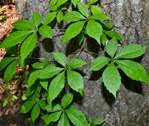
A look-a-like plant that is often growing amidst Poison Ivy is Virginia Creeper. A harmless vine that may be annoying because of its aggressive growing habits, but is a beautiful red in the fall and offers dark blue berries for wildlife. Virginia Creeper has five leaves, whereas Poison Ivy has three leaves.


Virginia Creeper


It is always a good idea to have on hand a natural remedy in your medicine cabinet in preparation for those time when you are exposed to the misery of Poison Ivy or Stinging Nettles. Jewelweed infused with apple cider vinegar results in an itch relieving spray. Lavender essential oil is added for its healing properties to help with the inflammation and harm done to the skin from scratching.


Jewelweed Vinegar Spray


Wednesday, January 23, 2013

Raynaud's and Winter's Chill


As uncomfortable as is the cold of the winter season, for someone suffering with Raynaud's Syndrome, cold hands and feet just may be a way of life. Anybody out in the cold too long knows the pain one feels in the hands and feet once returning to the warmth of the indoors again. Imagine going through that just by grocery shopping in the frozen foods section, or digging through the freezer looking for something for dinner.

A person may have Raynaud's Syndrome as the primary condition or it may be part of an underlying autoimmune condition such as Rheumatoid  Arthritis,  Scleroderma, or Systemic Lupus Erythematosus.  Raynaud's is a very annoying condition in which the constriction of the blood vessels in the affected areas is exaggerated. Usually this involves the fingers and toes but the nose, ear lobes and lips can also be affected.

Attacks are usually triggered by exposure to the cold or even emotional stress. A decrease in blood supply to the extremeties causes discoloration such as the skin turning white. Under normal exposure to cold the body slows the loss of heat to maintain core temperature. Blood vessels which control blood flow to the skin move blood from arteries near the surface to veins deep within. In a person  with Raynaud's phenomenon, this reaction goes overboard. The blood  vessels constrict tightly, starving the tissues of  blood,  however,  circulation  to the rest of the body is perfectly normal. These attacks are quite painful and can last for just a few minutes up to a few hours. When blood flow returns to normal, the white color turns to blue, then red, then back to a normal pinkish skin color.

Of course prevention is moving to a warm climate or by bundling up before going out in the cold weather, but even so, it isn't easy to avoid simple everyday things like air conditioning or holding a cold drink at a social gathering.

There is medication to dilate the blood vessels but usually the physician will first have a patient try lifestyle management. Besides being prepared for exposure to the cold, one must absolutely not be a smoker. We know how cigarettes compromise the circulation system and in a system already not working properly, to smoke is just asking for trouble. Emotional stress is another culprit which can trigger a flair.

A medication used to help increase blood flow to the extremities and heal tissue damage and ulcerated skin is Procardia, generic name being Nifedipine. It is taken at bedtime since it may cause dizziness. Grapefruit juice is to be avoided while taking this medication. Be aware that some people have an allergic reaction to calcium channel blockers. Red, itchy, scaly, dry and sometimes painful red splotches can appear on the face and perhaps any other part of the body. Topical steroids may be prescribed but be aware of the risk of potential damage to the skin when used on the face. Do not continue use of a steroidal cream if no results are seen within the time frame set by the physician. Once the Nifedipine is discontinued the problem areas probably won't get any worse but it may take months for the skin to heal and the red spots to fade. Believe it or not, Viagra had been found to be another option to help increase blood flow to the extremities. The side effects with Viagra could be dizziness and headaches.
 
Besides the pain involved, the fingertips and toes can become chronically tender to the touch and may drive one crazy with itch. This photograph of the toes shows what can happen over time to toes that are continuously irritated. The tips are sore, hard, peel and itch all at the same time. There may be periods of time where just wearing shoes is painful.

It is very important to take care of your toes. Should the wearing of shoes irritate the tips and ulcerated sores develop take measures to help these hard to heal areas. When circulation is compromised we need to pay attention before things get any worse.

To reduce the risk of infection, (this soak is great for wounds in general), Prepare an epsom salt and tea tree oil warm water soak to help reduce inflammation and oxidize the wound. The heat and salinity inhibit proliferation of bacteria. Epsom salts are crystals of hydrated magnesium sulphate.
 According to the Epsom Salt Council, epsom salt soaks can raise magnesium levels and improve blood circulation and skin integrity. Adequate circulation and oxygen saturation are necessary for wound healing. Epsom salt is not like table salt, it will not burn. Don't put salt directly on the wound.

Tea tree oil is known as the Australian wonder, renowned for its unbelievable antimicrobial qualities.  It can be found at most pharmacies and natural food stores. Look for it in 1 oz. amber glass dropper bottles. You want true therapeutic essential oil.

1. Fill a basin with warm water
2. Add a few tablespoons of Epsom salts and stir till dissolved
3. Add 10 drops of tea tree oil
4. Soak for about fifteen minutes
5. Let the area dry thoroughly
6. Repeat the soaking 2 -3 times a day
  • Ask your doctor if epsom salt soaks are appropriate for your wound. Do not use epsom salt soaks on an actively infected wound or a wound with nonviable tissue. 
Lavender Honey
 Once the toes are thoroughly dry, apply a dab of raw honey to the pad of a band-aid along with 1 drop of lavender essential oil. Cover the toe tips loosely with the band-aid. If using the lavender honey listed here than additional lavender essential oil isn't necessary.
Be sure to use raw honey, not the pasteurized type found in the grocery store.  Raw honey will help draw fluid away from your wound and suppress the growth of microorganisms. Part of what gives raw honey its antibacterial properties is an enzyme called glucose oxidase, which the worker bees excrete into the nectar. This enzyme releases low levels of hydrogen peroxide when the honey makes contact with your wound. Heated honey will destroy this perishable enzyme which is why you want to only use raw honey for this application.When applied to the skin, honey may serve as a barrier to moisture and keep skin from sticking to dressings.
Lavender has been called the 'mother of all essences'.  A very important property of lavender is that it stimulates the regeneration of damaged tissues.

Heat Holders proved to be a godsend.

Thick and chunky, chronically cold feet or tender, sore toe tips can find relief from cold floors. A tog rating of 2.34, these socks use heavy bulk yarn with extreme thermal qualities. Anyone with either diabetes or circulation problems should have a few pairs of these socks. Even if you find them too thick to be comfortable in your shoes, they are awesome for around the house or to wear with outdoor boots that have more room.
They also carry gloves with the same heat holding qualities to help protect those fingers from the bitter cold temperatures.

Like most of the symptoms associated with an autoimmune condition, these flairs come and go. It is imperative that the patient pay attention and take care of his/her body. Always carry a pair of gloves in your purse or glove compartment. These liner gloves are awesome to still be able to work while wearing them, and these make excellent liners underneath heavier gloves in the winter.

Liniments and massage oils can also be a comfort and offer relief for the numbness and tingling as blood flow returns to fingertips and toes.
Herbs rosemary and peppermint combine with aromatherapy for a blend which helps with circulation and pain relief.
Another option is the benefits of ginger root. Known as one of the "hot" herbs, ginger root helps to bring blood to the surface of the skin. By increasing circulation, ginger's warming qualities help to decrease muscle soreness and stiffness.

Warming Liniment Pain Relief
Ginger Root Warming Massage Oil


Other than the pain associated with the loss of blood flow during a flair, one has to understand that there may also be no feeling and clumsy numbness in the finger tips or toes. This can put one at a very real risk of injury. The fine tactile abilities of our hands and feet are usually not fully appreciated until one loses these functions. Be very careful when handling knives or power equipment while going through a Raynaud's flair. An injury can occur very quickly and without any initial pain until the surreal realization of what just happened.

Running warm water over cold fingers or toes helps increase blood flow but don't let the water get hot. The luxury of a warm bath on cold, winter nights can be therapeutic for both the mind and body. Add a cup of hot tea or hot chocolate and you're all set.

Bath oils, Salts, Scrubs