Meadow Muffin Gardens logo

Sunday, September 21, 2014

Rosemary, Help Me Remember


 "That's Rosemary, that's for remembrance; I pray you, love, remember."  William Shakespeare

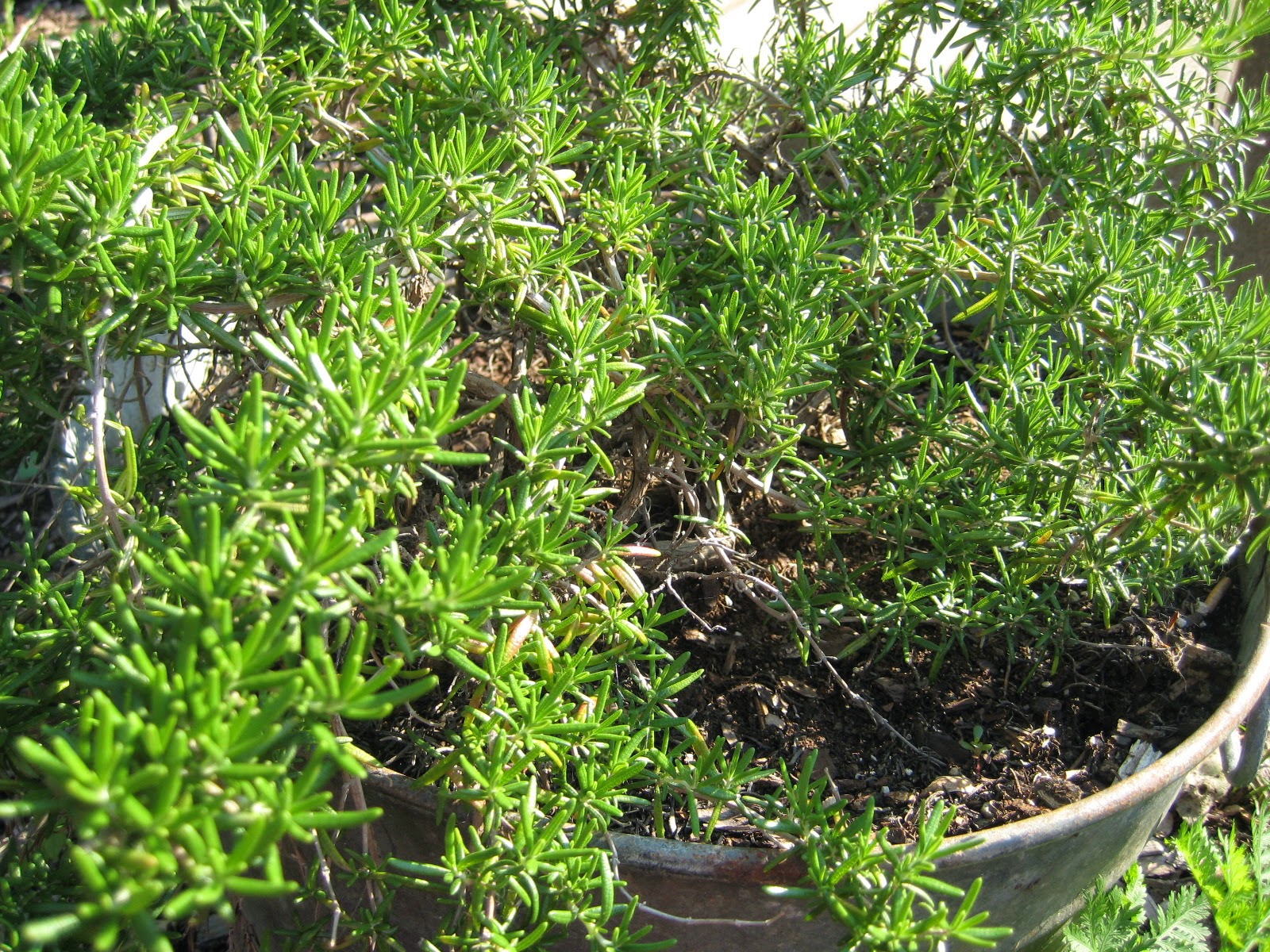
Rosemary, an ancient folk remedy for improving memory, is the herb of love and remembrance, steeped in thousands of years of myth and tradition.  A member of the mint family, this herb is native to seaside regions of the Mediterranean and North Africa. The Latin name Rosemarinus means dew of the sea, probably in reference to its little beautiful blue flowers when in bloom.

Herbalist Jeanne Rose states, "Inhaled scents feed directly into the limbic system, the part of the brain that controls memory and learning." Being rosemary is a mental stimulant, it is a good choice for the aromatherapy diffuser or simmer pot.

Rosemary can become a very good friend for the student, someone giving a speech or presentation, or so many of us with a long to-do list trying to multitask. This herb can help one remain focused and retain the information.

 According to James A. Duke in "The Green Pharmacy", oxidative damage caused by free radical oxygen molecules in the body plays a role in Alzheimer's. Rosemary contains antioxidants which are compounds that help eliminate free radicals, particularly rosmarinic acid.
Also, people with Alzheimer's often have an acetylcholine deficiency. It isn't clear whether this deficiency is part of the cause of the disease or results from it. Rosemary is said to help prevent the breakdown of acetylcholine, therefore there is good reason to make use of this safe and pleasant herb. It certainly couldn't hurt to try it.

Aside from memory issues, rosemary is said to offer a wide range of health benefits.
Being several of the plant's compounds are absorbed through the skin and blood-brain barrier, forms of its use include herbal massage oils, bath oils, balms, shampoos, body sprays and herbal vinegars and tinctures.

Just breathing in the scent of rosemary, be it the fresh plant or its essential oil, often helps to relieve stress and anxiety. Test taking can be a little less of an ordeal with the help of a rosemary body spray or even sniffing a tissue to which a drop or two of the essential oil had been added.

Rosemary infused in a carrier oil such as olive oil or almond oil results in a wonderful massage or bath oil to help relieve joint pain and relax tight, stiff muscles.

Rosemary stimulates circulation, therefore very useful for those cold days when you come in from the cold with numb fingers and toes.

Rosemary Liniment

Rosemary & Lavender Body Spray
 
If interested in historical stories associated with the herb Rosemary read this post.

Rosemary essential oil should not be taken internally.
Rosemary essential oil should be avoided during pregnancy.
Don't self treat a chronic condition such as depression or Dementia with essential oils. Such conditions should be monitored under the care of a physician.

Rosemary grown in colder climates needs to be brought indoors for the winter.  


Thursday, September 18, 2014

Autumn fun with children


It may be difficult to say good-bye to those lazy summer days, but the arrival of September brings with it the stir of excitement as school buses roll again and holiday displays begin to appear in department stores. As much fun as it is for children to prepare for Halloween dress-up, parades and trick-or-treating, autumn can be so much more.

Get them outside, open their world to the glory of the fall season. Introduce children to the beauty of autumn's color palette and notice things like the smell of dry leaves, the thrill of jumping on hay bales, and the taste of an apple cider slushie. Give them opportunities for hands-on experience at fall festivals with their corn mazes, hay bales, pumpkin patches and leaf piles.

With a little imagination there is also a lot of fun you can create right at home.  These pictures were taken years ago when my kids were small, but we just loved creating stuff like this:

                                                   
Homemade scarecrows are easily made by stuffing hay or straw into an old shirt and a pair of bluejeans. Here we used a big sunflower head and plucked out the seeds to form a face. In its hands it is holding a bouquet of seed pods from the Chinese Lantern plants. Add a bundle of cornstalks, a few pumpkins and potted mums, and you and your kids can be proud of your front door display.


This one is our pumpkin man. I don't remember how I held them together, probably a stick is stuck from pumpkin to pumpkin. The hair looks like I used a little bunch of Cockscomb flower, the arms are Cockscomb as well. The mouth looks like a green bean, the eyes are an everlasting type of flower called Strawflowers, and the buttons are Globe Amaranth. Most likely, the flowers were held on with toothpicks. Use whatever you have on hand to decorate. The important thing is to encourage your child to be hands-on and use his or her imagination.


 A fun fall activity to do with children is to make these cute bird seed hangers. Not only is it a fun craft to do together, but children learn the importance of helping our wild birds survive the upcoming cold weather.


This book, Green Fun, by Maryanne Gjersvik is from the 1970's but is the cutest little book of ideas to have fun with natural plant material such as flowers, weeds, seeds and leaves.

Enjoy and create memories!


Sunday, August 17, 2014

Feathering The Nest Bird Seed Hangers


Our daughter's bridal shower theme was "Feathering The Nest", which opened up a whole array of ideas in which to expand on that theme. What to do for favors to give out to her guests was decided with the help of the many ideas found on Pinterest. What we did before Pinterest now escapes me, for having such a file cabinet of ideas for anything we can imagine is awesome. I don't know who to give credit to for the original source for these bird seed hangers, but hope this clever craft idea gets passed around again.

These would also make great projects to do with  children. To learn about our environment and helping out the birds is always much more enjoyable when the activity is a hands-on.

Before you get started, gather your materials. You will need:

- One bag of bird seed.
The type is up to you. I used the more inexpensive blend of white and red millet, black sunflower seeds, cracked corn and safflower seed.
 

- Unflavored gelatin.
One small box holds four packages or envelopes gelatin. This recipe calls for two packages or envelopes. I doubled the recipe and used all four envelopes, which resulted in about 24 seed hangers.
That may vary depending on the size of your individual mold shapes.
 

- Silicone molds or trays.
The flexible molds can be found in cake decorating stores, candy making departments, and in craft sections. The come in a variety of shapes and sizes and themes.
 

- Ribbon or cord for hanging.
I used raffia cord to go with my natural, country theme, but you can use anything you want for hanging purposes.
 

From your kitchen supplies you will need:
A large bowl for mixing
A one cup size measuring cup for measuring out the birdseed.
A pyrex measuring cup used for liquids for measuring out the water.
A small whisk to quickly dissolve the gelatin into the water.
A large spoon for mixing and dipping out into the molds.
 

Have your loops for hanging ready:
Cut pieces of raffia or ribbon into lengths of about 4 - 5 inches.
Knot the ends together to make the loops.
 

To assemble:
 Pour 2 packages of unflavored gelatin into the large bowl.
Add 1 cup water to the gelatin and whisk to dissolve.
Add 2 cups birdseed to the liquid mixture and stir to blend well.

Using the spoon, scoop out the moistened bird seed and press firmly into the mold shapes.
Press the knotted part of each ribbon or raffia down into the molds so its about half way down, then cover over.
 

Place the mold trays into the refrigerator for about two or more hours so they firm up.
Remove the trays from the refrigerator and pop each mold out onto a cookie sheet of plates.
Let them undisturbed to air dry for a few days. They will harden. If using a cookie sheet or plate you will need to turn them every day so the bottoms dry.
 

Once hardened, the bird seed hangers are ready to hang outside for the birds.

If using as a gift, put each one in a baggie, twist tie the top closed and add a tag if you want.
For our shower, we added a business card size tag which had the bride's name, the date and a little message printed on them. We punched a hole in a corner and using additional raffia cord, the baggies were tied shut.

For our table display, we put all the favors into a large crafted bird nest I found through an Etsy seller.
 

 These favors were a delight, but we did notice a few things worth mentioning:
1. Once in the baggies, unless the favors were totally dry before putting in the baggie, they tend to soften a bit again. Hopefully the guests will open them once they get home so they receive some air, or they may mold.
2. Unflavored gelatin has its own distinct odor once mixed with water. Not a big deal, just an observation.


Wednesday, July 30, 2014

What is Eating my Blueberry Bushes?!

Another blog post found out what was eating my Dogwoods and now I searched for what is eating my poor blueberry bushes. They are still small and at the moment, they look quite pitiful.

Notice the cluster of caterpillars clinging to the branch on the left


I found that the culprit is from the genus Datana and is one of four moth species that feed as caterpillars on the leaves of blueberry. Yellownecked caterpillars are found throughout the southeastern United States and feed on a variety of hard woods such as blueberry, apple, cherry, basswood, birch, witch-hazel, and oak.

Yellownecked Caterpillars
The telltale markings include a black head, a yellow neck, a body marked with 8 thin yellow lines against a black background, and long sparse hairs. Fully grown, they reach a length of about 2 inches. When disturbed, they cling with both ends lifting up to form a U shape.

The pupae stage passes the winter months in the soil and emerge in early summer. They lay their eggs on the undersides of leaves. The hatch larvae feed together on nearby foliage. Once development is complete in late summer, they drop to the ground and pupate in the soil under these host plants. There is only one generation a year.

Notice what is left of this leaf
They are voracious eaters and can defoliate smaller bushes to the point where they look like skeletons. Groups of 30 - 100 feed together for protection. Natural predators such as the Tachinid flies and parasitic wasps keep caterpillar populations in check, therefore it usually isn't necessary to spray. Females lay their eggs on the host caterpillar larvae, and the young flies that hatch feed internally on the host.

In forests where the trees have abundant coverage of foliage, the cycles of growth may pass and only a few branches are stripped. But on smaller trees and bushes, the damage may be very obvious. The growth of the bush may be slowed, but the plants are seldom actually killed. This is because the feeding occurs late in the growing season when the bush has already given fruit.

 Often, the problem isn't noticed until the damage is done. Beginning in June and July, if blueberry bushes are inspected every week or two, severe defoliation can be prevented by manually removing the caterpillars and dropping them into a jar of soapy water.

If the trees are weak or of high value, the least toxic insecticide Bacillus thuringiensis k. is a good choice, but only if applied when the larvae are still small. If used on fully mature caterpillars, it won't be effective. Also, keep in mind that pesticides may also kill the predators you want to naturally keep the numbers down.

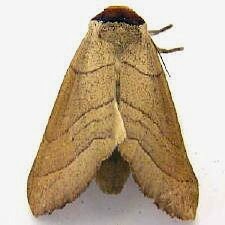
Adults are light brown moths with a wingspan of 1.5 to 2 inches. The fore wings have dark brown lines and darker in color than the hind wings. Since moths are active at night, they are seldom seen.
Pictured below is the adult Yellowneck Caterpillar moth. Photo credit goes to Bob Patterson.


Blueberry bushes are grown for their fruit. Keeping blueberry bushes healthy is key to fruit production. Blueberry bushes are susceptible to caterpillar infestations that feed on the leaves and damage the plant. Early detection and identification are important to managing these damaging pests.


  1. Types

    • The yellownecked caterpillar is found in many areas of the United States. It commonly feeds on blueberry, cherry, apple, birch, oak, witch-hazel and basswood. The yellownecked caterpillar is a voracious feeder causing extensive damage to blueberry bushes. Another leaf-feeding pest of blueberry bushes is the azalea caterpillar. This pest prefers feeding on azaleas, but has recently been discovered feeding on blueberry bushes. Azalea caterpillars often defoliate large portions of blueberry bushes before discovery.

    Identification

    • The yellownecked caterpillar has a black head capsule, orange or yellow rings around its neck and yellow lines along its sides. Long white hairs cover caterpillar that measures approximately 2 inches in length. Light-brown moths are its adult form. The azalea caterpillar is yellow with lines along is sides and a black head capsule. As this caterpillar ages, its colors brighten. Azalea caterpillars measure 2 inches in length at maturity, and its adult form is a light-brown moth.

    Effects

    • The yellownecked caterpillar young larvae skeletonize blueberry leaves, feeding together on leaves. Older yellownecked caterpillar larvae can completely defoliate a blueberry bush. Blueberry bushes with heavy infestations are stunted from feeding injury, but rarely die. The azalea caterpillar feeds on blueberry foliage, causing it to become skeletonized, dry and brittle. Young larvae skeletonize leaves, while the older larvae completely consume blueberry leaves.

    Control

    • Both the yellownecked caterpillar and the azalea caterpillar have several natural enemies that feed on them. Tachinid flies and parasitic wasps are two predatory insects that feed on caterpillars. If light infestations of caterpillars are found on blueberry bushes, remove them by hand and drop them into a bucket of soapy water. Heavy infestations are controlled with insecticidal sprays purchased at your local garden center.


Read more : http://www.ehow.com/info_8147177_caterpillars-eat-blueberry-leaves.html
At least the birds got a few blueberries off of these bushes before this invasion. 
Well, everything has to eat and we all must share in nature's bounty.
We just have to accept the cycle of life and that what eats foliage then becomes a food source for something else and the rise in the food chain continues.
yyellBlueberry bushes are grown for their fruit. Keeping blueberry bushes healthy is key to fruit production. Blueberry bushes are susceptible to caterpillar infestations that feed on the leaves and damage the plant. Early detection and identification are important to managing these damaging pests.


  1. Types

    • The yellownecked caterpillar is found in many areas of the United States. It commonly feeds on blueberry, cherry, apple, birch, oak, witch-hazel and basswood. The yellownecked caterpillar is a voracious feeder causing extensive damage to blueberry bushes. Another leaf-feeding pest of blueberry bushes is the azalea caterpillar. This pest prefers feeding on azaleas, but has recently been discovered feeding on blueberry bushes. Azalea caterpillars often defoliate large portions of blueberry bushes before discovery.

    Identification

    • The yellownecked caterpillar has a black head capsule, orange or yellow rings around its neck and yellow lines along its sides. Long white hairs cover caterpillar that measures approximately 2 inches in length. Light-brown moths are its adult form. The azalea caterpillar is yellow with lines along is sides and a black head capsule. As this caterpillar ages, its colors brighten. Azalea caterpillars measure 2 inches in length at maturity, and its adult form is a light-brown moth.

    Effects

    • The yellownecked caterpillar young larvae skeletonize blueberry leaves, feeding together on leaves. Older yellownecked caterpillar larvae can completely defoliate a blueberry bush. Blueberry bushes with heavy infestations are stunted from feeding injury, but rarely die. The azalea caterpillar feeds on blueberry foliage, causing it to become skeletonized, dry and brittle. Young larvae skeletonize leaves, while the older larvae completely consume blueberry leaves.

    Control

    • Both the yellownecked caterpillar and the azalea caterpillar have several natural enemies that feed on them. Tachinid flies and parasitic wasps are two predatory insects that feed on caterpillars. If light infestations of caterpillars are found on blueberry bushes, remove them by hand and drop them into a bucket of soapy water. Heavy infestations are controlled with insecticidal sprays purchased at your local garden center.


Read more : http://www.ehow.com/info_8147177_caterpillars-eat-blueberry-leaves.html
Blueberry bushes are grown for their fruit. Keeping blueberry bushes healthy is key to fruit production. Blueberry bushes are susceptible to caterpillar infestations that feed on the leaves and damage the plant. Early detection and identification are important to managing these damaging pests.


  1. Types

    • The yellownecked caterpillar is found in many areas of the United States. It commonly feeds on blueberry, cherry, apple, birch, oak, witch-hazel and basswood. The yellownecked caterpillar is a voracious feeder causing extensive damage to blueberry bushes. Another leaf-feeding pest of blueberry bushes is the azalea caterpillar. This pest prefers feeding on azaleas, but has recently been discovered feeding on blueberry bushes. Azalea caterpillars often defoliate large portions of blueberry bushes before discovery.

    Identification

    • The yellownecked caterpillar has a black head capsule, orange or yellow rings around its neck and yellow lines along its sides. Long white hairs cover caterpillar that measures approximately 2 inches in length. Light-brown moths are its adult form. The azalea caterpillar is yellow with lines along is sides and a black head capsule. As this caterpillar ages, its colors brighten. Azalea caterpillars measure 2 inches in length at maturity, and its adult form is a light-brown moth.

    Effects

    • The yellownecked caterpillar young larvae skeletonize blueberry leaves, feeding together on leaves. Older yellownecked caterpillar larvae can completely defoliate a blueberry bush. Blueberry bushes with heavy infestations are stunted from feeding injury, but rarely die. The azalea caterpillar feeds on blueberry foliage, causing it to become skeletonized, dry and brittle. Young larvae skeletonize leaves, while the older larvae completely consume blueberry leaves.

    Control

    • Both the yellownecked caterpillar and the azalea caterpillar have several natural enemies that feed on them. Tachinid flies and parasitic wasps are two predatory insects that feed on caterpillars. If light infestations of caterpillars are found on blueberry bushes, remove them by hand and drop them into a bucket of soapy water. Heavy infestations are controlled with insecticidal sprays purchased at your local garden center.


Read more : http://www.ehow.com/info_8147177_caterpillars-eat-blueberry-leaves.html
Blueberry bushes are grown for their fruit. Keeping blueberry bushes healthy is key to fruit production. Blueberry bushes are susceptible to caterpillar infestations that feed on the leaves and damage the plant. Early detection and identification are important to managing these damaging pests.


  1. Types

    • The yellownecked caterpillar is found in many areas of the United States. It commonly feeds on blueberry, cherry, apple, birch, oak, witch-hazel and basswood. The yellownecked caterpillar is a voracious feeder causing extensive damage to blueberry bushes. Another leaf-feeding pest of blueberry bushes is the azalea caterpillar. This pest prefers feeding on azaleas, but has recently been discovered feeding on blueberry bushes. Azalea caterpillars often defoliate large portions of blueberry bushes before discovery.

    Identification

    • The yellownecked caterpillar has a black head capsule, orange or yellow rings around its neck and yellow lines along its sides. Long white hairs cover caterpillar that measures approximately 2 inches in length. Light-brown moths are its adult form. The azalea caterpillar is yellow with lines along is sides and a black head capsule. As this caterpillar ages, its colors brighten. Azalea caterpillars measure 2 inches in length at maturity, and its adult form is a light-brown moth.

    Effects

    • The yellownecked caterpillar young larvae skeletonize blueberry leaves, feeding together on leaves. Older yellownecked caterpillar larvae can completely defoliate a blueberry bush. Blueberry bushes with heavy infestations are stunted from feeding injury, but rarely die. The azalea caterpillar feeds on blueberry foliage, causing it to become skeletonized, dry and brittle. Young larvae skeletonize leaves, while the older larvae completely consume blueberry leaves.

    Control

    • Both the yellownecked caterpillar and the azalea caterpillar have several natural enemies that feed on them. Tachinid flies and parasitic wasps are two predatory insects that feed on caterpillars. If light infestations of caterpillars are found on blueberry bushes, remove them by hand and drop them into a bucket of soapy water. Heavy infestations are controlled with insecticidal sprays purchased at your local garden center.


Read more : http://www.ehow.com/info_8147177_caterpillars-eat-blueberry-leaves.html
Blueberry bushes are grown for their fruit. Keeping blueberry bushes healthy is key to fruit production. Blueberry bushes are susceptible to caterpillar infestations that feed on the leaves and damage the plant. Early detection and identification are important to managing these damaging pests.


  1. Types

    • The yellownecked caterpillar is found in many areas of the United States. It commonly feeds on blueberry, cherry, apple, birch, oak, witch-hazel and basswood. The yellownecked caterpillar is a voracious feeder causing extensive damage to blueberry bushes. Another leaf-feeding pest of blueberry bushes is the azalea caterpillar. This pest prefers feeding on azaleas, but has recently been discovered feeding on blueberry bushes. Azalea caterpillars often defoliate large portions of blueberry bushes before discovery.

    Identification

    • The yellownecked caterpillar has a black head capsule, orange or yellow rings around its neck and yellow lines along its sides. Long white hairs cover caterpillar that measures approximately 2 inches in length. Light-brown moths are its adult form. The azalea caterpillar is yellow with lines along is sides and a black head capsule. As this caterpillar ages, its colors brighten. Azalea caterpillars measure 2 inches in length at maturity, and its adult form is a light-brown moth.

    Effects

    • The yellownecked caterpillar young larvae skeletonize blueberry leaves, feeding together on leaves. Older yellownecked caterpillar larvae can completely defoliate a blueberry bush. Blueberry bushes with heavy infestations are stunted from feeding injury, but rarely die. The azalea caterpillar feeds on blueberry foliage, causing it to become skeletonized, dry and brittle. Young larvae skeletonize leaves, while the older larvae completely consume blueberry leaves.

    Control

    • Both the yellownecked caterpillar and the azalea caterpillar have several natural enemies that feed on them. Tachinid flies and parasitic wasps are two predatory insects that feed on caterpillars. If light infestations of caterpillars are found on blueberry bushes, remove them by hand and drop them into a bucket of soapy water. Heavy infestations are controlled with insecticidal sprays purchased at your local garden center.


Read more : http://www.ehow.com/info_8147177_caterpillars-eat-blueberry-leaves.html
Blueberry bushes are grown for their fruit. Keeping blueberry bushes healthy is key to fruit production. Blueberry bushes are susceptible to caterpillar infestations that feed on the leaves and damage the plant. Early detection and identification are important to managing these damaging pests.


  1. Types

    • The yellownecked caterpillar is found in many areas of the United States. It commonly feeds on blueberry, cherry, apple, birch, oak, witch-hazel and basswood. The yellownecked caterpillar is a voracious feeder causing extensive damage to blueberry bushes. Another leaf-feeding pest of blueberry bushes is the azalea caterpillar. This pest prefers feeding on azaleas, but has recently been discovered feeding on blueberry bushes. Azalea caterpillars often defoliate large portions of blueberry bushes before discovery.

    Identification

    • The yellownecked caterpillar has a black head capsule, orange or yellow rings around its neck and yellow lines along its sides. Long white hairs cover caterpillar that measures approximately 2 inches in length. Light-brown moths are its adult form. The azalea caterpillar is yellow with lines along is sides and a black head capsule. As this caterpillar ages, its colors brighten. Azalea caterpillars measure 2 inches in length at maturity, and its adult form is a light-brown moth.

    Effects

    • The yellownecked caterpillar young larvae skeletonize blueberry leaves, feeding together on leaves. Older yellownecked caterpillar larvae can completely defoliate a blueberry bush. Blueberry bushes with heavy infestations are stunted from feeding injury, but rarely die. The azalea caterpillar feeds on blueberry foliage, causing it to become skeletonized, dry and brittle. Young larvae skeletonize leaves, while the older larvae completely consume blueberry leaves.

    Control

    • Both the yellownecked caterpillar and the azalea caterpillar have several natural enemies that feed on them. Tachinid flies and parasitic wasps are two predatory insects that feed on caterpillars. If light infestations of caterpillars are found on blueberry bushes, remove them by hand and drop them into a bucket of soapy water. Heavy infestations are controlled with insecticidal sprays purchased at your local garden center.


Read more : http://www.ehow.com/info_8147177_caterpillars-eat-blueberry-leaves.html

Sunday, July 27, 2014

Tired of Being Tired?


Is This How You Feel?

It seems no matter who you talk to, when asked "how are you", the answer may be the automatic response of "fine", but it doesn't take long before those words are followed with "I am so busy I'm going nuts".
Most of us don't need a lot of convincing that half the problems within families is that they are just not getting enough rest. It seems to take a major blow-up or melt-down, and then a period of reflection before anyone realizes how things have crept up and escalated.

The thing is, we already know we are overextending ourselves. We know acting like the energizer bunny may eventually catch up with us. We're tired of being told what to change for a healthier lifestyle because we already know. But as with many health issues, people usually don't truly commit to a change until they are faced with a medical crisis which becomes the turning point in their lives.

A certain amount of stress is good, it gets us moving, keeps us alert, and challenges us to achieve success. But to be continuously in overdrive without getting adequate rest for the body to repair itself cannot go on indefinitely without repercussions.

Located in southeastern Pennsylvania is a Center for Natural Healing called The Clymer Center.
Take a look at the videos under the blog section that discuss Adrenal Fatigue and Adrenal Dysfunction. 
Founded by Dr. Poesnecker in 1968, this center was one of a kind in that they specialize in Chronic Fatigue Syndrome and Adrenal Dysfunction. Back before most doctors had even heard of these conditions, this center was helping people uncover the underlying cause of their symptoms. Rather than going through the whirlwind of various specialists for symptoms that include depression, anxiety, insomnia, skin flairs, exhaustion, menopausal issues, fertility problems, and autoimmune conditions, these professionals get to the bottom of where it all began, rather than treat each symptom as its own condition. They help the patient get the immune and hormonal systems back into balance.

Here is a very informative video on Adrenal Fatigue:


The suggestion in the use of bath oils, massage oils, or bath salts, is too often followed with the response that there just aren't enough hours in the day.
No one is denying that as fact, but once you develop chronic fatigue, depression, hypertension, or anger issues, you'll end up in a physician's office and be told something has go to change. You'll go home with the comfort of a label to your ailments and a handful of scripts to "fix" things, and hopefully that physician will also inform you that unless you make lifestyle changes there is no magic pill.

Taking care of yourself is not at all a selfish thing to do. All caregivers are told again and again that unless you are mentally and physically strong, you are not going to be up to the demands of caring for someone else for very long.
Start small with your goal to squeeze in time for yourself.

Utilize your crock pot more often. Just knowing in advance what you'll be having for dinner is a stress reliever in itself. If you get home and it is ready to be served, you've just gained an hour of your time.
All you need is 15 minutes to give yourself a foot and calve massage. You can do this while making necessary phone calls or relaxing with your favorite TV show.
A warm bath needn't take more than 30 minutes. Get the kids to bed earlier, they probably need more sleep anyway. Take your nightly cup of tea or glass of wine, a book and run that tub. Or else use that time to reflect on your day and put your worries into perspective. Or don't think about anything, meditation is great.

You'll be amazed at how your mind and body will respond. There are ways to calm your nerves and help you sleep without automatically reaching for prescription or over the counter medications. Once you give yourself permission for these small luxuries, you'll start to look forward to your "me" time. With renewed spiritual energy, you just may find the physical energy to claim another time slot for perhaps a bit of stretching.

Many of us have learned the hard way that though we so often put others' needs before our own, burn-out is a very real possibility. The phrase "If Mom isn't happy, no one is happy" may be said with humor but there is no denying that a home filled with positive energy and laughter is a much happier place to be than one where its occupants are too tired to smile anymore.
The work gets done eventually.

Below are just a few options to help. Remember the Calgon slogan, "Calgon, Take Me Away!"? The fact that years later people still remember that TV commercial shows just how effective consumer psychology can be.
We should also remember the Clairol commercial's phrase, "Because You Deserve It!"

Below are a few options as a means to bring a little serenity into your life.
A few choices include a calming air or linen spray, bath salts, massage oils and bath oils.


CALMING, SLEEP AIR AND LINEN SPRAY

LAVENDER BATH SALTS

TROUBLE SLEEPING MASSAGE OIL
NERVOUS TENSION BATH OIL
EASE THE ACHE ANTI-INFLAMMATORY BATH OIL


Friday, July 25, 2014

But It Says Blueberries On The Box! What's Really In Your Food


It seems wherever we turn we are bombarded with articles sending the message that the food industry cares little about the health of those consuming its products.  Truth is, these corporations are 'for profit' organizations with the priority being to give the consumer what they want at the least possible cost to the company. As long as they are following labeling laws and pass FDA inspections, they certainly aren't going to let ethics interfere. How they shop and feed their own families is their business. That is why it is imperative for families to do their own research and not be gullible to the power of slick advertising.
Click here to watch a video using blueberries as an example of why we as consumers have to do our own homework.

Mega supermarkets and convenience foods didn't take off until consumers were willing to pay for such time saving solutions in their meal planning. With all the pressures in life, it would be nice to know the food we buy for our families is what it claims to be and not just a convincing advertising ploy. Reading labels is the only way to be sure of what you are buying. As educated adults we know that as long as the label says what is in the product the food companies have done their part, and if we as consumers choose to buy packaged and prepared food that is our decision.

The irritation is why should we have to pay top dollar for the natural, organic, "better" foods. Why should our food bills be twice as high if we want wholesome food that is nutritious and not just empty calories to satisfy hunger. It's enough to make one paranoid that everything we put in our mouths is altered or tampered with, and not really food at all, just artificially colored, flavored, scented, salted, sweetened stuff. If it tastes good, the customer seems happy, maybe not healthy, but good enough. Do most people even know what wholesome fresh food is supposed to taste like to even make a comparison?

As a parent, it is very frustrating to feel no matter which way we turn there is something to make us feel insecure and inadequate. Few decisions in life have more anxiety wrapped up in them than the decision for parents whether to be traditional, and have one spouse put a career on hold and focus on the home front, or try to do it all and juggle home, spouse, children and career.

Can it be that unless we are in a position to be able to grow and put up our own food, bake our own goods and keep the pots simmering from scratch, we're not doing what is in the best interest of our families? But how many can realistically do that? Not many people are in a position to become a homesteader. When you don't get in the door until dinnertime there often isn't the time to prepare many of the main meals from scratch. (Thank goodness for the crock pot.) Many folks just don't have access to convenient seasonal co-ops or farmers markets. Therefore, they are dependent on their grocery stores and just hope the fresh foods available aren't too laden with pesticides and the soil it grew in had some value to it. Not everyone can afford the organic section when they try to stick to a food budget.

So what is a parent supposed to do? There is no way we as a society can turn back now. Our age of technology is so interdependent and woven we usually have to pay for every little thing we need. I can remember the thrill of eating foraged plants or out of the garden and thinking "wow, this is really free!" It is almost comical when you compare that way of thinking with how our hunter, gatherer ancestors survived.

We need air filters for our homes for clean air to breathe, water filters on our taps for purified water, access to a Trader Joe's, Whole Foods or co-ops for decent food. So the choice becomes ours.
We can run a little faster on the hamster wheel of the workplace to make more money to afford it all in hopes for better health, only to lose our mental or physical health anyway from all the stress.

Or, we can reevaluate our lifestyles and walk away from it all to become more self-sustaining. But to grow and put up our own food requires time, effort and a commitment not everyone is willing to give.

Most of us will take the middle road and try to become more aware in our consumer choices, better organize our free time to perhaps plant a garden, shop at farmer's markets and co-ops, learn how to can or freeze extra produce, and just do the best we can with our individual situations.

An interesting article written by Scott Morefield, entitled "Four Ways Our Family Says No to GMO's" addresses the concern with genetically modified organisms in our food supply. He believes the best thing we can do for our health is to remove GMO's from our diets. In this article he focuses on the problem with corn, soy, white sugar and canola oil. He sums it up by saying the best way to avoid these "franken-engineered crops" is to just avoid the center aisles in the grocery store.

This code chart is handy to remember while shopping for produce at your supermarket.


Now back to blueberries. July is the month to take advantage of the availability and best prices for fresh blueberries. Very easy to freeze for use all year long, this fruit is considered one of the 'must eat foods'.

Try making these delicious blueberry muffins. As with any home baked goodie, without preservatives they only stay fresh for a few days. If a batch of 24 at a time is just too many, simply freeze the extras.


HOMEMADE BLUEBERRY MUFFINS

4 eggs
2 cups sugar
1 cup vegetable oil
1 tsp. vanilla extract
4 cups all-purpose flour (or 2 cups all-purpose and 2 cups wheat or another whole grain of choice)
1 tsp salt
1 tsp baking soda
2 tsp baking powder
2 cups (16 oz) sour cream or plain yogurt)
2 cups fresh or frozen blueberries

In a mixing bowl, beat eggs. Gradually add sugar. While beating, slowly add the oil and then the vanilla.
Combine the dry ingredients in another bowl. Sift to blend thoroughly. I just toss with a pastry blender.
Add the dry ingredients alternately with the sour cream or yogurt to the egg mixture.
Don't over mix muffins, stir only till moistened; don't worry about pressing out every lump.
Gently fold in blueberries, try to keep the blueberries whole.
Spoon into greased muffin tins. The typical muffin tin uses about 1/3 cup batter per muffin. 
This batch will make about 24 muffins.
Baked at 400 degrees for 20 minutes.