Meadow Muffin Gardens logo

Wednesday, March 30, 2011

Fitness, Fun, and Getting Things Done

With temperatures beckoning us outdoors, the tendency to go overboard with fitness programs, gardening or home maintenance chores may result in stiff and sore muscles.

The following listings offer a selection of handy additions to your medicine chest or gym bag. Personal preference depicts which type works best for each individual. Two of them are herbal oils, one is an alcohol-based spray, one is a balm, one is a massage/body oil and last is a dead sea salt bath blend. The entire description that goes with each listing is provided.


Rosemary has long been depended upon for relief from rheumatic and muscular pain. This sharp, earthy smelling herb is especially useful for warming up cold hands and feet stiff from cold weather.

Arthritis and sore-muscle liniments from long ago utilized rosemary as their basic ingredient. A story is told of Queen Elizabeth of Hungary back in 1235 seeking the formulas of an old hermit. What she discovered was the various uses of rosemary in either oil or vinegar for both medical and cosmetic purposes.

Rosemary needles are infused in cold-pressed olive oil for several weeks after which it is strained and with the addition of essential oils, becomes a potent liniment convenient for both the medicine cabinet as well as the gym bag.

Prior to strenuous physical activity, it is important to warm up your muscles and keep them supple. The application of a liniment before exercise increases blood flow thereby helps to warm up the muscles and decrease the chance of injury.

Should there be pain from over-exercised muscles, liniments can also help after soreness has set in. The muscles need to rest and relax.
Liniments have a way of tricking the brain. Pain creates a loop between the area of pain and the message to the brain reinforcing this pain. The focus on the pain makes it hard for the muscles to relax. The combination of the liniment and the friction caused by the rubbing application from our hands creates an increase in heat. This provides an opportunity for the muscles to relax. Certain plants activate both hot and cold nerve impulses in the skin. The contrast between the two makes a liniment seem hotter than it actually is.

Various essential oils are added to the oil base to provide a sensation of heat along with muscle relaxants. Eucalyptus and peppermint are penetrating as they activate both hot and cold nerve impulses. Ginger, marjoram, thyme and rosemary all help relax the muscles as they stimulate circulation. Cinnamon and cloves are warming and stimulating, creating the "hot" which is why some liniments need to be regarded with respect.
*** Be aware of possible skin sensitivity and do not get the liniment near your eyes.****

***Joint and muscle pain can be caused by either an acute or a chronic condition.***

Should the muscle pain continue or you experience swelling, you may have an injury beyond just overexertion.
Acute injuries such as sprains and strains may need immediate care such as the RICE treatment which is rest, ice, compression and elevation. See your physician if you have any doubts as to the severity of the injury.

Once released to your own means of healing an herbal anti-inflammatory liniment can be very effective at relieving the swelling, discoloration and pain.

Liniments can temporarily relieve inflammatory joint pain but chronic inflammatory conditions should be monitored by your physician.

Rosemary Oil Pain Relief Liniment comes in a 2 oz. glass amber dropper bottle.
Use as needed by applying a small amount and use a rubbing action to create friction.
Look for skin sensitivity. May be too irritating for delicate skin.
Not for use on young children. Keep out of the reach of children.
Keep liniment out of direct sunlight. Sunlight will break down the properties of the essential oils.

Herbal Pain Relief Liniment is an alcohol based preparation useful in the relief of muscle aches, joint pain, inflammation, bruises, as well as part of the warm- up routine prior to exercise.
It can be used as a disinfectant but not to be applied to broken skin.
Useful for the treatment of headaches as well. Spritz fingertips so as not to get into eyes and rub into temples, forehead and the back of the neck.

Ideal for those who dislike the oily feel of oil based liniments and balms.

Prior to strenuous physical activity, it is important to warm up your muscles and keep them supple. The application of a liniment before exercise increases blood flow thereby helps to warm up the muscles and decrease the chance of injury.

Should there be pain from over-exercised muscles, liniments can also help after soreness has set in. The muscles need to rest and relax.
Liniments have a way of tricking the brain. Pain creates a loop between the area of pain and the message to the brain reinforcing this pain. The focus on the pain makes it hard for the muscles to relax. The combination of the liniment and the friction caused by the rubbing application from our hands creates an increase in heat. This provides an opportunity for the muscles to relax. Certain plants activate both hot and cold nerve impulses in the skin. The contrast between the two makes a liniment seem hotter than it actually is.

Isopropyl alcohol 70% is the liquid base in which fresh or dried herbs are infused for several weeks. The idea behind using alcohol is that upon application the alcohol evaporates leaving behind the therapeutic herbs to penetrate the skin's surface.

Herbs and spices used for this liniment are peppermint, rosemary, comfrey, oregon graperoot, echinacea, ginger, cinnamon and cayenne. These combine to activate both hot and cold, relax muscles, increase blood circulation, and soothe bruising.

Spray the affected area every one to two hours as needed. Use rubbing action with your hands to increase friction.

***Joint and muscle pain can be caused by either an acute or a chronic condition.***

Should the muscle pain continue or you experience swelling, you may have an injury beyond just overexertion.
Acute injuries such as sprains and strains may need immediate care such as the RICE treatment which is rest, ice, compression and elevation. See your physician if you have any doubts as to the severity of the injury.

Once released to your own means of healing an herbal anti-inflammatory liniment can be very effective at relieving the swelling, discoloration and pain.

Liniments can temporarily relieve inflammatory joint pain but chronic inflammatory conditions should be monitored by your physician.

*******PLEASE KEEP IN MIND THE FOLLOWING:********
1. Avoid use while pregnant.
2. Avoid use on infants and young children.
3. Brief exposure should not be irritating to the skin but avoid use on large areas of the
body. Too much absorption of isopropyl alcohol can lead to toxicity.
4. Use in a well-ventilated area. Inhalation may be irritating to the respiratory tract.
5. Not to be used in the bath.
6. Do not ingest, external use only!
7. Rubbing alcohol is flammable.

Herbal Pain Relief Liniment is bottled in a 4 oz. plastic spray bottle.
Keep liniment out of direct sunlight.


Joint and muscle pain can be either acute or a chronic condition.

Using a muscle in an unaccustomed manner can result in a strain or a sprain. The difference between the two is a sprain occurs at the joints when ligaments are overstretched.
Strains are when the muscles or the tendons that hold the muscles are torn or pulled too hard.

Whatever the cause it is usually inevitable that following an acute injury, pain, swelling and limitation of function will follow.
The most immediate thing to do is the RICE treatment which is rest, ice, compression and elevation. Any concerns as to the severity of the damage should be appeased by a visit to your physician.
Once released to your own means of healing an herbal anti-inflammatory liniment can be very effective at relieving the swelling, discoloration and pain.

Neuralgia or nerve pain can be caused by pressure on the nerve as a result of an injury or from what is termed Repetitive Strain Syndrome. This covers a wide range of conditions which develop as a result of doing the same motions continuously to the point of damaging muscles and joints. Without treatment and a change in the way we work, RSS can become a chronic condition.

Chronic pain is usually something we just have to manage. Conditions without a known cure can rely on herbal remedies to help improve one's quality of life. Perhaps not as strong as prescription drugs in relieving pain, at least you won't have to deal with addictive or mind dulling side effects. Herbs and essential oils are like a team of allies who all help out using their own attributes.
They help heal your nervous system rather than only suppressing the pain.

The chosen herb for this oil base is a yellow wayside wildflower called St. Johnswort. Named after John the Baptist, this flower is sought out after the summer solstice. After a two month infusion period and much anticipation it is ready to offer us its anti-inflammatory, anti-viral, and anti-bacterial benefits. These attributes are from high concentrations of the chemical component, hypericin. This red juice is what gives the oil its wonderful red color.

St. Johnswort helps you recover when your nerves are inflamed or damaged because this herb is a nervous system relaxant.
For sore, stiff muscles, St. Johnswort acts as a cellular oxygenator that helps remove lactic acid build-up in muscles and can release nerve tension.

Chamomile, marjoram, lavender, eucalyptus and ginger are added in the form of essential oils.
Ginger is wonderful in that it increases blood circulation for warming the joints and enhances tissue repair.

Chamomile serves as an anti-inflammatory and excellent relaxant as it calms and soothes achy muscles and joints.

Lavender stimulates healing while at the same time relaxes muscles. A great companion with chamomile.

Marjoram is great for tired, stiff muscles and spasms. Definite tonic for the nerves.

Eucalyptus is often used for nervous system, muscular and skeletal conditions. It acts as an analgesic for nerves as well as helps to remove toxins in the joints.

Sprain, Strain & Nerve St. Johnswort Liniment is more potent than typical massage oils. It is bottled in a 2 oz. amber glass dropper bottle. Apply as needed to specified areas. The rubbing action into the skin creates friction, which in turn increases the muscle relaxing sensation of heat.
Chronic conditions should be under a physician's supervision.


Overexertion Relief is a balm which utilizes two herbal infused oils, comfrey and ginger root.

Time away from our work schedules is precious so of course we try to make the most of every minute.
We cram as much into our free time as possible and risk paying the price with a stiff back, shoulders, knees or whatever else put in overtime.

Called the living medicine chest, both the leaves and roots of the comfrey plant are important. High in silicic acid comfrey can reduce swelling, bruising and strengthen ligaments and tendons. Also known for its allantoin content, a crystalline oxidation product of uric acid, comfrey stimulates and accelerates tissue repair.

Ginger root is used for its aid in increasing circulation which enhances blood flow to the damaged tissue or achy muscles and joints.

The addition of shea butter adds to the therapeutic value since this rich soothing butter helps to heal bruising.

The cool, refreshing aroma of wintergreen and peppermint essential oils greet you upon application of this balm. They both contain analgesic properties which help soothe tired, sore muscles and joints.
Helichrysum essential oil is from the garden flower you probably know as immortelle. This oil has a reputation for improving circulation and the regeneration of nerves and tissue repair.

Apply as needed to stiff and sore areas.
Overexertion Relief balm comes in a 2 oz. jar

Wintergreen essential oil contains menthyl salicylate. If you are allergic to aspirin, pregnant or breastfeeding please consult with your doctor before using a product containing menthyl salicylate. Be aware of this product containing menthyl salicylate before using on children.


Whether it be the result of stress, over-exertion, chronic pain or simply wear and tear from age, our bodies send a clear message....aches and pains.

Inflammation is the body's reaction to irritation, injury or infection. The resulting symptoms are pain, swelling, reddening of the skin color and perhaps diminished freedom of movement.

Long days on our feet, poor posture hunched over at a desk, carrying heavy loads, all puts strain on our necks, backs and knees. These are very touchy areas in our physical make-up and need to be respected.

A flexible, stretched spine is very important. Tension and compression in the vertebrae creates blocked energy and painful pressure points which we feel as tight knots of pain.
Crimps in the neck are not pleasant, especially when they get so tight we can't turn our heads with ease.

The power of touch can do wonders to work out those hard, ropey, knots in our strands of muscle. You don't necessarily need another person or a massage therapist to benefit from a massage. Whatever area you can reach will appreciate a good deep kneading to work out those painful points. Use kneading motions as you apply an anti-inflammatory massage oil blend into your neck, shoulders, lower back, calves or your own feet. In fact, one of the most effective forms of utilizing essential oils is to apply them to the soles of the feet where they are easily absorbed throughout the bodily system.

Should you have assistance for your back, enjoy the warm, flowing motion of their touch as the anti-inflammatory properties of the essential oils in this oil blend help you relax and find relief.

The chosen essential oils for this blend are lavender, eucalyptus, juniper and chamomile. All contain anti-inflammatory properties which means they help reduce inflammation, pain and swelling in the joints and muscle tissues. Useful for relaxing those muscle spasms, the aches of arthritis, and tension headaches. Elimination of bodily toxins and fluid retention are both helped along by the increase in circulation.

Carrier oils used are almond and jojoba oils. Almond oil is very popular for massage oils because it is nourishing, gentle and glides easily over the skin. It absorbs quickly but not fast enough that you feel you'll need to stop and reach for the dropper bottle. Jojoba oil is very similar to our natural skin oils and easily penetrates and nourishes. Should you have a nut allergy and need a nut free oil convo me and we'll use another blend.

For use on the feet as in reflexology or just a good foot massage you will only need a dropper amount per foot.
For a full back or body massage you may need up to a tablespoon.

As a body oil for moisturizing be your own judge how much is needed, but for best results apply when the skin is slightly damp, such as after a bath or shower.

Our skin absorbs essential oils while the carrier oil will remain to soften and moisturize. Don't be surprised if you find the aroma doesn't seem as strong after a period of time. The nose will stop registering as it becomes tired of the stimulation. Essential oil molecules continue to work long after our sense of smell stops detecting them. Should someone else enter the room they would definitely smell the aromatics.

Such relaxation techniques as massage just may reward you with an improved temperament, less irritability, and a more restful night's sleep.

Anti-Inflammatory Massage and Body Oil comes in a 4 oz. amber glass dropper bottle. Should you prefer a white plastic pump or pop up type bottle let me know.


Salt baths are so common that we often forget the fact that "the simpler the better". A soak in warm salt water has long been used for achy joints and muscles as well as periodic detoxification. The addition of essential oils add their own therapeutic value as well as the pleasure of the aroma.

Epsom salts are not the same as regular table salt. Epsom salts are known as magnesium sulfate. Magnesium and sulfur are naturally present in sea water. Modern diets consisting of primarily processed foods are often deficient in these minerals. When you soak in a salt bath containing epsom salts your body will benefit as these minerals are absorbed through your skin.

Sea salt is also different from table salt in that rather than being pure sodium chloride which is refined from mined rock salt(halite), sea salt is evaporated sea water. It still contains natural minerals.

Dead sea salts originate from the Dead Sea, which is a salt lake located in the Middle East. The saline and mineral rich marshes have been used since ancient times for therapeutic and beautifying purposes.
Adding these luxurious salts to your bathing experience will help you understand why even the beautiful Cleopatra demanded rights to these mineral rich natural salts.

Being soluble in water, bath salts leave behind no residue therefore help keep your tub clean. Those of us with water softeners are aware that salt is what softens the water so it only makes sense that bath salts create soft water which enables any soap you use to clean better. And last, the addition of salt compared to a bath without salts is warmer for a longer period of time.

The usual recommendation for use is to add 2 - 4 TBS to a warm bath. Essential oils can increase the salt's potency so use your own discretion for the amount. You may only prefer 1 - 2 TBS.

Salt can be drying therefore a touch of vegetable glycerin is added, but you may want to moisturize following your bath. Also be sure to rehydrate by drinking water.

Those with heart conditions should avoid taking salt baths.
If pregnant please check with your physician before taking salt baths and check the safety of essential oils used during pregnancy.


Locations for Meadow Muffin Garden products are the website or my Etsy shop:


Words of wisdom many of us already know but have trouble following:
EVERYTHING IN MODERATION!

Disclaimer:
Meadow Muffin Gardens is the result of a passion to recognize the abundance of natural gifts provided to us by our Creator. Our desire is to utilize the healing power of plants and encourage people to educate themselves towards a greener footprint in their lives.
We supply an alternative choice for personal care products. We are not intending to treat or cure any particular condition. As with any herbal remedy, information and formulas have not been regulated by the FDA. Herbal lore has been trusted and handed down through the years but it is within your discretion how you use this information in treating a condition. Meadow Muffin Gardens does not take responsibility for your use of these products. Ingredients are listed so you as the consumer can use your own discretion as to which herbs, oils and essential oils may be beneficial to your needs.

Wednesday, March 23, 2011

Vermicomposting Can Add To A Self-Sustainable Lifestyle


A major part of sustainable living is dealing with your own garbage. Adding kitchen scraps to your trash only adds to landfill bulk and because of its moisture content, lowers the temperature of the heap slowing down decomposition.

Perhaps you have a garbage disposal system but would rather utilize the waste. Those vegetable scraps, egg shells, coffee grounds and tea bags are a great source of nutrients.

Or if you're like our family with the "garbage bucket" under the sink, that bucket has to get dumped on a daily basis. In the middle of winter it is far nicer to just go into the basement rather than trudge out to the frozen compost pile. Besides, that compost pile just sits there during cold weather and attracts wild critters.

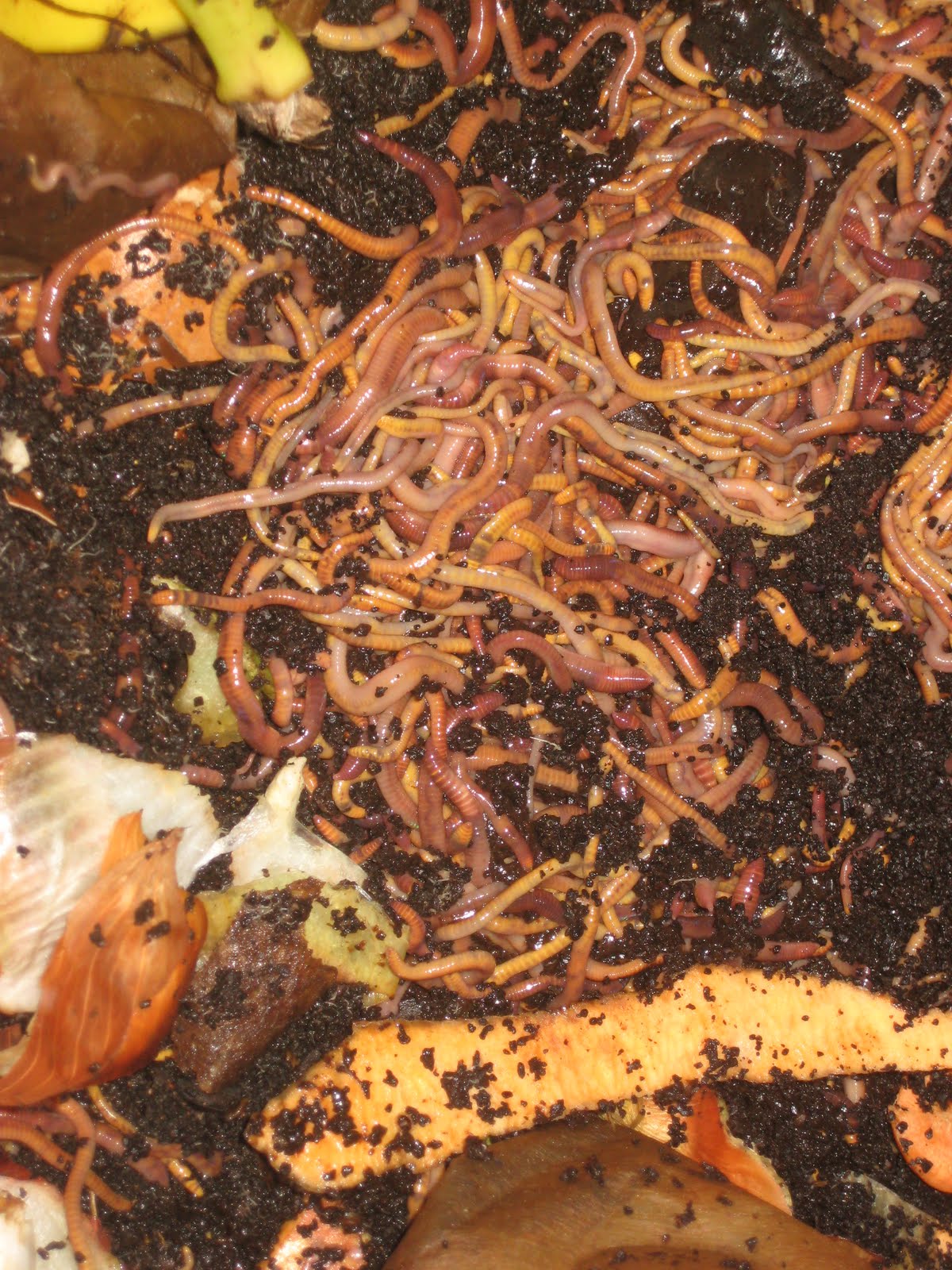
The main question most people have with an indoor worm bin is "Does it smell?" If properly maintained, meaning you don't overload it, the only odor should be a musty, earthy smell and little to no fruit flies. You'll learn for yourself how much is too much. The general rule is one pound of kitchen waste a day. Anaerobic conditions can be remedied simply by turning and aerating the garbage which also redistributes the worms. Fruit flies can be taken care of with a mason jar of apple cider vinegar. Vinegar attracts the flies and they fly right in.

A good source for information on vericomposting is the book "Worms Eat My Garbage" by Mary Appelhof. She explains the entire set up process and answers most any question thought up on the subject.

The Gardener's Supply Company, is a great source in which to purchase your worm bin. The worm bin itself will cost about $125 and the red wigglers worms (Eisenia foetida) are about $40 for 2 pounds which is around 1500 worms. My bin is round in shape but they can also be square.

How it works is the bin is made up of four sections. You have the base with four legs which serves as the drainage part by collecting the leachate, which is the liquid by-product of the break down of the garbage. This "tea" gets collected in a small bucket (you have to provide) as it drains from an attached spout. Actual worm tea is the liquid fertilizer created by steeping the castings/compost in water for a period of time, then diluted and used to foilage spray your plants or add to the watering can. The leachate can be used too, just be aware that if your worm bin isn't the healthiest (anaerobic conditions) the liquid may have unstable metabolites which can harm your plants. If unsure, let the liquid aerate and dilute before using. Outdoor plants aren't as touchy as houseplants and can tolerate such variations. I use my liquid tea and haven't had a problem but my bin has been established for a few years so I'm assuming is pretty stable.


To begin your set up, add the following to the top tier: shredded newspaper and twigs, bark or leaves. Just use the black ink part of the newspaper. Colored inks may contain toxic metals. The twigs and bark are good as aerators for drainage. Add about one pound of kitchen waste followed by your red wigglers. If you have pets such as guinea pigs, rabbits, chinchillas, rats, mice, their bedding and droppings are great additions to your worm bin. Don't add any waste from meat eating animals. Do not add bones or fatty scraps. Your worms will really appreciate egg shells. When it comes time to sort your worms you'll notice how many worms make egg shells (the halves from when we crack out eggs) their little home.

The worms you dig up in your yard won't survive for this purpose. Soil-dwelling types don't process large amounts of organic material. Besides, earthworms don't like when their burrows are disturbed as we dig around. Anyone with horses is probably familiar with these redworms living in the manure piles. They are also at home in piles of decaying leaves. Transferring red wigglers to your garden may seem like a good idea but most likely they won't survive being they aren't soil dwellers.


Over the next few months, you'll notice how your garbage is transformed into black, moist castings. This manure is like gold for your plants. When the top tier is full, rotate the top tier to the middle and bring an empty tier to the top. The worms will work their way through any remaining scraps and then work their way up through the holes in the tier bottoms seeking fresh garbage. You'll notice that once the worms have exited the worm castings they are ready for your use. The rotation process can be done again with the remaining empty tier.


I empty my full tiers about twice a year, spring and late autumn. Let the castings in the tiers until spring and by then the whole unit will be pretty heavy. The easiest way to sort out any remaining worms before transporting the castings/compost to your garden is to get an old tablecloth or shower curtain and lay it on the basement floor (somewhere you can easily clean up) or outside. Carry one tier at a time, it will be heavy. Dump the castings out of the tier onto the tablecloth or shower curtain. The redworms do not like light so they will escape the light by going to the bottom of the pile. They will sort themselves. Just wait a bit and scoop off the top layer by layer until you are left with your pile of worms on the bottom. Repeat with remaining full tiers.

Refresh the empty tiers with shredded newspaper and twigs again, add fresh garbage and return your worms. If you have a healthy worm bin you won't have to purchase new worms again. They reproduce easily which you'll recognize as little white babies. Should your population dwindle it may mean your bin is too wet. Provide dry paper and aerate by turning the mix.

The castings can be used either by adding a scoop directly to your planting hole when first putting in your tomatoes, peppers, etc. or use as a side dressing later in the growing season. What is great about worm castings is you needn't worry about burning your plants. This type of fertilizing isn't like chemical fertilizers. It becomes part of your soil as it breaks down and the plants use what they need when they need it.

The worm bins are now ready for the next six months before emptying again before winter. Add these castings to your garden in readiness for the next growing season.

So get past the "eewwwness" of touching these little guys and enjoy your new hobby!

Sunday, March 20, 2011

Willows and Vines Make Great Finds!


March may be too cold and wet to start digging around outside, but there are fun and rewarding projects to accomplish.

Using grapevines lets you use your imagination, they're free, and the trees you pull them off of will breathe a sigh of relief. Just be aware of what you are pulling on, grapevines or poison ivy vines. Both will wrap tightly around tree branches but poison ivy is hairy whereas grapevines have a more peeling look to the vines. Do these projects now before the shrubs or trees bud out and its hard to see what you're doing.

Directions on how to make wreaths usually tell you to gather your materials, soak in warm water till pliable, then wrap around a bucket. If you've ever tried doing battle with these clingy things to get them into a tub of water, you may never do it again. A much easier method is to gather your vines and let them lay outside somewhere until it rains. Let the rain soften them for you. Get outside before the weather clears up and keep the mess outside. A five gallon plastic bucket is an ideal size for a wreath hole diameter of twelve inches. Wrap the vines around and around the bucket until the wreath is the size you desire.
Tuck in the ends as you go. When it is as large as you want, pull the wreath off of the bucket. Take additional pliable vines and wrap through and around all the way around the circle. Your wreath is now complete and can be hung to dry.
The pictured wreath above is two years old and as you can see the circle shape eventually pulls down into an oval. Eventually the vines will become brittle and it'll be time to make a new wreath.

Older, larger vines, cannot be manipulated very easily into a form, but a neat way to utilize them is to accent existing fences. Pictured here is my garden fence to which I just draped the heavy vines along the top, then held them there either by tucking the ends into the fence openings or using cable ties to hold them in place.

Also adding interest to my formally boring fence are the remains of a huge Corkscrew Willow branch that ripped off its tree during one of our winter storms. This type of willow has such fascinating twists and turns to its branches that I hated to just add them to the brush pile.

I cut them into manageable pieces and plugged them into the fence openings to hold them in place. I want to plant my peas and runner beans along the fence and observe how they climb along these art forms.

Returning birds are scoping out the areas for ideal nesting sites.
If you planted birdhouse gourds last year and have them drying somewhere, now is the time to clean them up and get them hung. Need to know how to grow birdhouse gourds? Wrens, in particular, like a swaying birdhouse and most likely will check out several of these gourds before choosing one.

This time of year, your gourds have been drying for about 5 - 6 months and if they made it through without rotting they should look like the picture on the left. They will be very light in weight, the seeds inside will rattle, and the outside appearance will look like dried, flaky mold spots. Just take a wire brush or sandpaper and brush this off till it is nice and smooth. With a serrated knife cut out a hole about midway from the bottom with a diameter hole size of about 3/4 - 1 inch. Poke additional little holes or small slits into the bottom of the gourd for drainage. Using an ice pick poke holes through the top near the stem so that you have two holes, one on each side. Now take a crochet hook and poke through both of these holes. Loop a length of about 12 inches of weatherproof cord rope around the hook and pull back through these holes. Now your cord rope is through the birdhouse and it is ready to hang. Be sure to hang these bird house gourds at least five feet off of the ground to be out of the reach of nosy predators, such as cats.
It is difficult to clean these types of birdhouses after the season is over, so I don't even bother. Usually by winter's end, they either have fallen, have woodpecker holes in them, or they become a home to a mouse or a bees nest. I never cared since I try to have a fresh batch of gourds each spring.

Enjoy such little projects these early springs days before the overwhelming work of lawn mowing and garden planting begins!

Tuesday, March 15, 2011

Keep Those Birds Coming Back!


Cedar Waxwings make a brief appearance
I have seen my first bluebird, red-wing black bird, mockingbird and a few robins. Spring is so close but don't stop filling those feeding stations yet.

Returning birds are often insect eaters and must rely on what is available until temperatures warm up enough for the return of available insects.

Migrating cedar waxwings seek out remaining berries still hanging from shrubs such as Winterberry and the various Viburnums. Mockingbirds can be seen pecking at the suet blocks or suet fat.
Bluebird enthusiasts often provide meal worms in a dish or tray to help these cheery little flashes of blue get needed protein until their normal diet can be consumed.

The feed we use consistently is black oil sunflower seeds. These nutritious seeds are a powerhouse of needed fat and protein for a variety of birds, such as the black-cap chickadee, sparrows, cardinals, and finches. Though a common sight during the winter months here is PA, the little juncos have by now begun their journey north to reach their nesting sites.
I add a bit of what is called Flyer's Choice which is a combination of sunflower seeds, safflower, and white millet. Don't bother with the inexpensive feeds with red millet. The birds often just bypass it and knock it out of the feeder. I used to mix cracked corn with the feed for the ground feeders such as mourning doves, but stopped because I just attracted more starlings, who then cleaned me out of suet.


  You can see in the one picture that we also have a small critter feeder in the the crook of a tree as an attempt to keep the squirrels out of the bird feeders. Downy woodpeckers and nuthatches are so neat to watch. Try to continue offering kidney fat suet or suet blocks at least until temperatures warm up and these birds can find hatching larvae and crawling bugs.


Finches love niger or thistle seed which is best offered in thistle feeders which allow them to feed upside down or a thistle sock as shown.


If you supply food, try to offer a water source as well. The heated bird bath pictured was purchased from The Garden Supply catalog but most likely they are offered at any good farm supply store or nursery. You'll need a power outlet, but what is convenient is that this bird bath is made of heavy duty plastic yet isn't that heavy. Therefore, you can move it from wherever you put it in your gardens for the summer months to a place supplying power for the winter. The cord wraps neatly inside the stand when not being used. Birds don't like deep water so I keep a rock in the middle of the bowl for them to have a solid perch. Plus the weight helps keep the bowl from tipping on a windy day.


So you now have food and water provided, but if you want the birds to stick around during nesting season, offer a variety of protected areas of varying type. Offer tall deciduous and evergreen trees, smaller shrubby types which often are safe havens due to intertwining branches or thorns, and tall dense ornamental grasses.

If you own cats or dogs you can make a bird's work a little easier by saving that shedding hair which is so plentiful in the spring when animals shed their undercoat. Another idea for nesting material is to save leftover yarn from craft projects and cut it up into smaller pieces.
Stuff the fur or yarn pieces into some type of mesh bag, sock, suet holder or even an old tube bird feeder missing the perches (the squirrels have chewed through many of mine). In the coming weeks you'll notice the birds pulling out pieces for building their nests. It is neat to know you've helped keep baby birds warm and cozy.

As seen here you don't need a lot of space to provide all this. Here we have meal worms, an orange, suet, and dog hair in the netted bag.

Just try to keep your cats inside. Most critical is during the busy feeding times in the early mornings and at dusk. Once birds sense danger they are less apt to visit your stations.

Soon enough I'll have a glimpse of flitting little hummingbirds with their nervous energy and demanding hunger. Every year I have good intentions to be better at keeping those feeders full of fresh sugar water and giving them proper cleanings in between.

So Happy Spring!
Enjoy the first peek of the Fiddlehead ferns, the bloom of the Forsythia, the arrival of the Swallows; all the little things that served as a reminder that the gray of winter will soon be behind us.

Sunday, March 13, 2011

Lupus- Red Riding Hood isn't a fairy tale


With the movie "Red Riding Hood" coming out in March 2011 it seems an appropriate time to put aside the fairy tale and face my own demons. This month I can say I have dealt with and survived the ever luring, shadowy presence of my own wolf for 25 years. At that time Systemic Lupus was as mysterious an illness as the luring predator after which it was named. Life expectancy was anything between being a pest to deal with during a normal life span to a rapidly downhill battle to be lost within five years.

The following information is from the Lupus Foundation of America:

Lupus is a chronic, autoimmune disease that can damage any part of the body (skin, joints, and/or organs inside the body). Chronic means that the signs and symptoms tend to last longer than six weeks and often for many years. In lupus, something goes wrong with your immune system, which is the part of the body that fights off viruses, bacteria, and germs ("foreign invaders," like the flu). Normally our immune system produces proteins called antibodies that protect the body from these invaders. Autoimmune means your immune system cannot tell the difference between these foreign invaders and your body’s healthy tissues ("auto" means "self") and creates autoantibodies that attack and destroy healthy tissue. These autoantibodies cause inflammation, pain, and damage in various parts of the body.

  • Lupus is also a disease of flares (the symptoms worsen and you feel ill) and remissions (the symptoms improve and you feel better). Lupus can range from mild to life-threatening and should always be treated by a doctor. With good medical care, most people with lupus can lead a full life.
  • Lupus is not contagious, not even through sexual contact. You cannot "catch" lupus from someone or "give" lupus to someone.
  • Lupus is not like or related to cancer. Cancer is a condition of malignant, abnormal tissues that grow rapidly and spread into surrounding tissues. Lupus is an autoimmune disease, as described above.
  • Lupus is not like or related to HIV (Human Immune Deficiency Virus) or AIDS (Acquired Immune Deficiency Syndrome). In HIV or AIDS the immune system is underactive; in lupus, the immune system is overactive.
  • Our research estimates that at least 1.5 million Americans have lupus. The actual number may be higher; however, there have been no large-scale studies to show the actual number of people in the U.S. living with lupus.
  • It is believed that 5 million people throughout the world have a form of lupus.
  • Lupus strikes mostly women of childbearing age (15-44). However, men, children, and teenagers develop lupus, too.
  • Women of color are 2-3 times more likely to develop lupus.
  • People of all races and ethnic groups can develop lupus.
  • More than 16,000 new cases of lupus are reported annually across the country.
March 9, 2010 marks the date for the first FDA approved drug specifically for the treatment of Systemic Lupus. Up until now the medications used helped control the symptoms of autoimmune disorder and inflammation but weren't formulated specifically for one condition. Fifty-six years later those with Systemic Lupus have a reason to celebrate.

New Lupus Treatment Benlysta

March 9, 2011 -- The FDA has approved Benlysta, the first new lupus treatment in 50 years.

An FDA advisory panel last November voted 13-2 in favor of approval. But the panel noted that Benlysta is no wonder drug. Overall, it offered a modest benefit. Only 30% of patients who took the drug in clinical trials saw a benefit.

And because the drug weakens the body's immune defenses, it comes with serious side effects. These include infections, cancers, depression, and suicide.

But the announcement comes as welcome news to patients and doctors frustrated by the limited treatment options available to lupus patients. And it comes even as scientists gain a new understanding of what lupus is, what goes wrong, and where researchers should look for new treatments.

What should lupus patients and their families know about Benlysta? WebMD consulted Eric L. Greidinger, MD, chief of rheumatism and immunology at the University of Miami Miller School of Medicine, FDA briefing documents, and the FDA approval announcement.

Why are new lupus drugs needed?

Officially known as systemic lupus erythematosus (SLE), lupus is an autoimmune disease. It's relatively common, affecting about one in 1,000 people. But some people with lupus have such mild disease they may never know they have it.

Others have relatively mild disease that can be controlled with current treatments. These include over-the-counter NSAIDs such as ibuprofen, corticosteroids such as prednisone, antimalaria drugs such as hydroxychloroquine, powerful immunosuppressants, and cancer chemotherapies. (Lupus is not caused by malaria and is not a cancer, but malarial drugs and chemotherapies suppress various manifestations of lupus).

Still other patients experience frequent lupus flare-ups and suffer devastating side effects from current treatments. And finally, there are patients with life-threatening lupus, at risk of major organ failure.

"In all those cases, the current drugs -- while not perfect -- provide a good series of choices," Greidinger says.

Patients with mild disease may not need treatment, or may be able to keep their symptoms under control with relatively safe antimalaria drugs.

Patients with the most severe disease -- including lupus affecting the kidneys or brain -- can benefit from more aggressive treatments.

But patients in the middle category are more difficult to treat, Greidinger says. They may not get relief from the safest lupus treatments. But stronger treatments, continued over time, may cause side effects that are worse than a patient's symptoms.

Which lupus patients might benefit most from Benlysta?

Many patients with mild-to-moderate lupus can't keep their flare-ups under control with antimalaria drugs.

"Their only real option at present is the use of corticosteroids like prednisone," Greidinger says. "But many of these patients have persistently active disease and thus may be exposed to substantial doses of steroids for months and years with a very high risk of serious side effects."

It is very good news indeed to those who are tired of people asking "What is Lupus?" Perhaps with more research being put into a chronic disease with so many unanswered questions, public awareness may bring about an increase in necessary research. For those of us who struggle with the daily decision to willingly take one drug to combat the damage done from another drug, all the while still only treating symptoms just so we can cope. What is good for one thing is bad for another, yet we are simply told to choose the lesser of two evils. Treat the immediate danger lurking in our midst with a particular medication and see what happens down the road and deal with it then.

At present my prayers have been answered in that I've survived long enough to raise my children. The battle isn't over yet and I aim to continue to elude the ever threatening presence in the shadows. The strength needed can only come from a good support system and wise lifestyle choices. May the Little Red Riding Hood within us continue to educate ourselves about our own health and not be naive in our decisions.


Chocolate Lovers No Time To Bake Snack - Granola Fudge Clusters


 Granola is such a convenient and healthy food, and not just for breakfast. Day trips, hiking, boating or camping, all need lightweight, portable foods to carry along. Granola is the perfect trail mix type snacking liked by kids and adults alike.

Then there is the pondering of how to add appeal to the lunchbox. Granola can be packed as is or made into a nutritious, kid satisfying sweet treat.

Most mother's go through the frustration of their child telling them at the last, usually least convenient, minute that they need something for bake sale.

A Granola Fudge Cluster is the perfect, no stress solution, and contains only three to four ingredients.

You will need granola (either store bought or homemade), butterscotch chips, semisweet chocolate chips and walnuts (optional depending on what is already in your granola).

Keep these items on hand and you'll have your child's snack ready to go within 30 minutes.

HOMEMADE GRANOLA

6 cups rolled oats
2 cups shredded coconut (up to you whether to use sweetened or unsweetened)
1 cup wheat germ (I use raw but can use toasted)
1 cup chopped nuts (slivered almonds, chopped pecans, chopped walnuts, its up to you)
1 cup hulled sunflower seeds (I use raw)
1 cup sesame seeds (I use hulled)

Combine the above ingredients in a large bowl

1/2 cup vegetable oil
3/4 cup honey
2 tsp. vanilla extract

Combine the above three ingredients in a saucepan, heat and stir until blended, no need to get hot enough to boil.

Stir wet ingredients into dry until well coated. Spread onto two greased cookie sheets. Bake in a 250 degree oven for about 30 minutes, stirring half way through. Granola hardens and gets crisper as it cools so don't overbake. Cool completely before storing in an airtight container. The ratio of dry to wet for this recipe is 8 to 1.

GRANOLA FUDGE CLUSTERS

1 cup or 6 oz. semisweet chocolate chips
1 cup or 6 oz. butterscotch chips
2 - 3 cups granola (2 if adding the additional nuts, 3 if have nuts already in granola)
1 cup chopped walnuts (optional)

In a microwave-safe bowl, melt the chocolate chips and butterscotch chips. Depending on microwave wattage melt on high for 1 minute, stir, then another minute and stir. When smooth, stir in the granola and walnuts if using.
Drop by spoonfuls onto wax paper-lined baking sheets.
Refrigerate for 15 minutes or until firm.
Store at room temperature in covered container.
Yields about 2 dozed depending on size of each cluster.

Thursday, March 10, 2011

Give The Butterflies an Invitation to Stay


Dreaming of a landscape which provides a home for hummingbirds and butterflies? With a little planning, patience and effort it is very possible. When food, water, shelter and nesting sites are available the wildlife will find their way to your yard.
For a successful butterfly garden you have to remember to provide food sources for both the caterpillars as well as the adults.

This is as easy as just letting the naturally wild "weeds" alone. Food sources for caterpillars are Plantain, Wild carrot, Violets, Milkweeds, and Nettles. Trees such as the Sassafras, Willow, Cherry, Tulip Poplar, and bushes such as Roses and Spicebush are often in the natural landscape anyway.

 Early spring arrivals include violets, nettles and,dandelions.
Violets
Stinging Nettles
Natural plant sources for feeding adult butterflies include Milkweed, Red clover, Thistles, Goldenrods, and Eupatorium (Joe Pye weed).

Joe Pye Weed

Goldenrod

Milkweed
Plants to consider adding to your natural landscape should include a variety so that something is always in bloom from spring right through till autumn. If these perennials like where they are planted they'll return year after year. Choose sunny locations with good drainage.

Butterfly Bush
Butterfly Weed
When you think butterflies the most common plant to come to mind is the Butterfly Bush. Easy to grow these bushes are hardy in zones 5-9, get to be 8-10' tall and need full sun. The buddleias are stunning landscape plants with gorgeous purple, white or even orange flowers. They bloom all season and usually are left alone till spring when they are cut back to green growth or all the way to the ground. Though the Butterfly Bush is so popular, it is now on the list of invasive plants that compete with our natives.

Butterfly weed (Asclepius tuberosa) is a butterfly magnet growing in zones 3-9, getting about 2' tall, and likes full sun. Drought resistant, if this plant likes where it is planted it will be trouble free for years. The Asclepius family of plants is an important food source for both caterpillars and adults, particularly the Monarch butterflies.


Keys of Heaven
Another winner for butterflies is the Keys of Heaven (Centranthus ruber). These red beauties are drought-tolerant and long lasting. Grown in zones 4-9, they get to be 2-3' tall and need full sun. After flowering if you cut back the spent blossoms you may get another bloom time closer to Autumn.


Pretty pink Phlox (Phlox paniculata) is a must for both butterflies and hummingbirds.
They grow in zones 4-5, get 18-24 inches tall and like full sun. For the best show these plants do best in mass plantings.
Monarda or Beebalm will happily naturalize if you let it. These dark pink to magenta flowers love full sun, grow in zones 4-8 and will reach about 4 ' tall. Loved by birds, hummingbirds, and butterflies alike.
Phlox
Beebalm

Honeysuckle

Honeysuckle with its tubular flowers are loved by visiting hummingbirds. Just offer a trellis or some structure for them to grow with lots of sun and they'll do well.

For late summer some wonderful considerations to include are the American native Coneflowers (Echinacea), Asters, Sedums and Tithonia (Mexican sunflowers).

Coneflower
The butterflies and bees love the nectar provided by coneflowers all summer long, and then come fall they turn into this neat porcupine looking seed pack which offers seeds to the birds during the winter. Heat, drought and neglect won't faze these usually dark pink or white beauties. The grow in zones 4-8, get 18-30" tall and like full sun. If the word Echinacea sounded familiar that is because these are the plants where the roots are utilized as an immune system booster.

New England Asters
Coinciding nicely with late summer migrations the stunning New England Asters unfold their awesome blue display at a time when most of our summer blooms have said goodbye. Grown in zones 5-9, these carefree flowers grow to 2' and spread out a good 2-3 ft. and they also like sun.

Sedum
Sedums are pretty all summer with their succulent type leaves, but you will love to watch the late summer progression of color as they start out pink and fade to a mahogany color.

Tithonia
Tithonia or Mexican sunflowers are late summer blooming annuals worth the wait. Their multi-branching stems are not only visibly beautiful, but are very appreciated for the arrival of the monarchs in August and September.


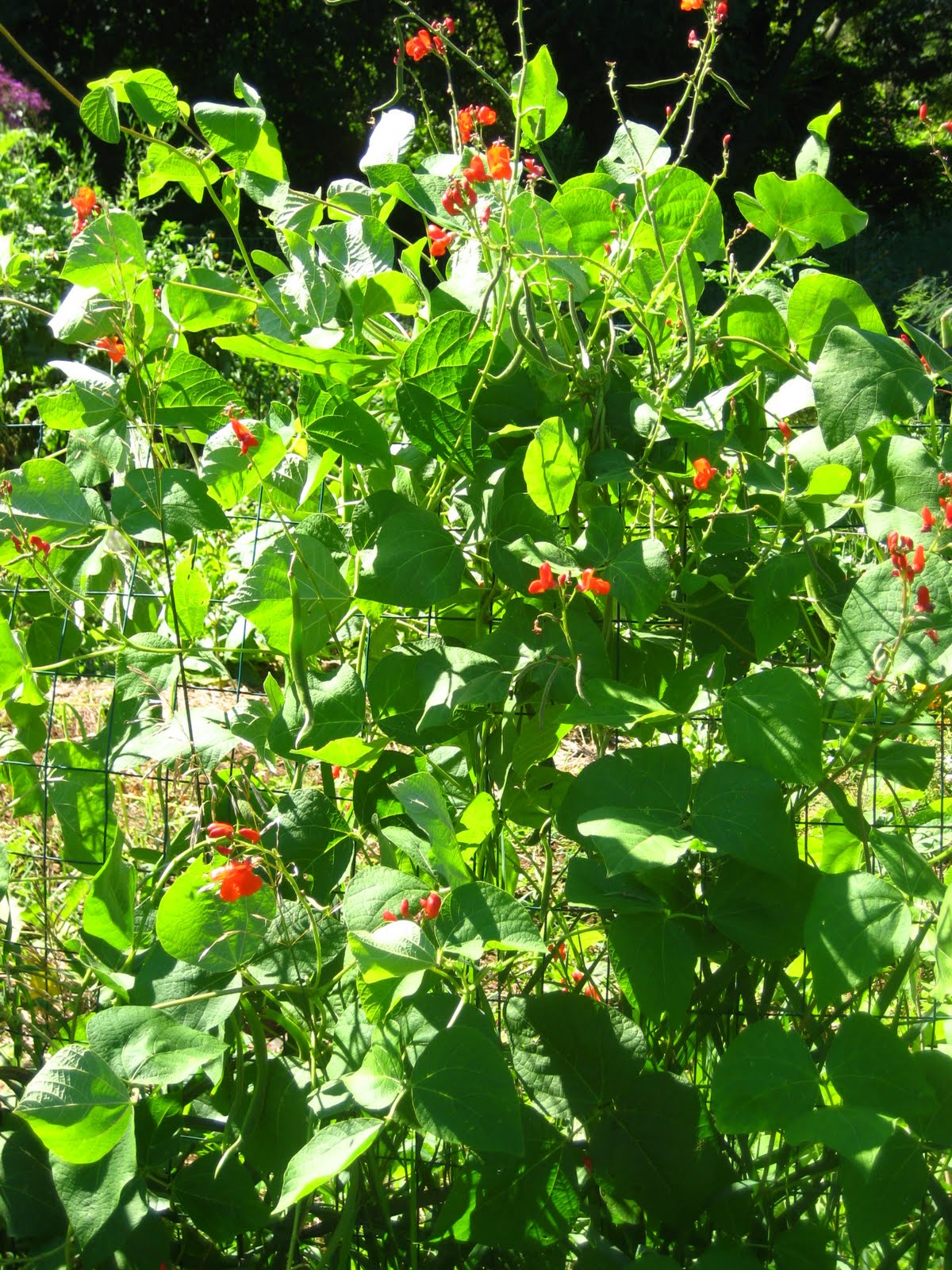
Even if you don't intend to plant a vegetable garden, consider the Scarlet Emperor Pole Bean. These climbing beans need some type of support as they can climb 8-10'. This pretty annual will provide large 6-8" fuzzy beans which are certainly edible, but often people grow them for their scarlet-orange flowers which are a draw for hummingbirds.

Scarlet Emperor Pole Bean

These are just a few of the many options you have as a homeowner wanting to be more in tune with your natural environment and help these little creatures survive. What's more I haven't had too much of a problem with deer bothering the above plants. As long as they have the right conditions they do fine. As far as maintenance, these perennials do need to be cut back in the Fall after frost. I do let the Butterfly Bush alone until late Spring and cut back till I see green growth. Some types die back all the way to the ground.
Of the above, the Coneflowers and Beebalm will spread if given the chance. Even the Butterfly Bush will pop up here and there if you let it.

The best way to learn is by doing. Keep notes on what does best in what location. Expect to lose some as you learn. I transplanted many a time to see if a plant will do better somewhere else, as well as had to spend money a second time around. Perennials need 2-3 years to establish their roots before they can put forth their full energy above the ground. Be patient and just enjoy the life and energy.