Meadow Muffin Gardens logo
Showing posts with label alzheimer's. Show all posts

Wednesday, August 26, 2015

The Slow Fade of Dementia, Ambiguous and Anticipatory Loss, Grief


Caregivers bear the tremendous burden of witnessing the early signs of change in the behavior of their loved one and dealing with the anger and denial of trying to get through to the rest of the family. One very important thing family members don't understand is that unless you actually live with someone day in and day out you just don't see the same person as does the caregiver. The social stimulation of visits and the fussing from loved ones brought out conversation and smiles, only to return home and sink right back down under that black cloud.

Taking care of my mother for over two years has left me a puddle of tearful grief for the slow fading of my precious Mom and the bewildering, questioning of my own sanity. Changes in behavior brought the constant questions of what is normal for her personality, what is part of her condition, what could be a side effect from medications? Dealing with memory loss and confusion is bad enough for a person, but to add a chronic condition such as COPD on top of that and the resulting depression was enough to pull her down into a pit of despair. My desperation for her to fight only resulted in the wall between us to build brick by brick.


Together, we went through all the stages of grief: denial, anger, bargaining, depression and acceptance. Accepting this "new normal" as her life, having no choice but to leave her home and give up control and independence, was incomprehensible.  My reaction was to push, nag, beg, cry, whatever it took to get her to fight to maintain her strength, physically and mentally.  It was all- consuming, while my Mom continued to slowly lose a bit more of her spirit with each new day she woke to realize she had to get through another day. Fast forward three years and now that another sibling is caring for our mother, she is a medicated, zombie of her former self. The solution to the constant anxiety of struggling to breathe is that if the anxiety is relieved we can avoid the tendency to hyperventilate and thus panic. Welcome to the world of narcotics.

The stage of acceptance has arrived and she just doesn't care anymore. The version of Mom that is in the present is what the siblings actually interpret as her being "better". There is quiet and peace in the household only because there is no longer anyone "making waves" by pushing for alternatives and therapies. Palliative care is all there is now.

Gone is the frustration between what she "won't" versus "can't" do for herself. Now it is just the tender care as though she were our child. Now we deal with the guilt associated with our past reactions and emotions while dealing at that time with the craziness. But at that time we didn't understand what was going on. To reflect back now, bits and pieces make more sense. But that war of guilt continues to rage within our own minds, struggling for self-forgiveness for whatever we imagine we did so wrong.

Ambiguous loss and Anticipatory grief can be described as unresolved grief. It is different from the loss and grief surrounding a death. Closure is not possible and there is no peace because the loved one is still physically alive. This is the world surrounding and consuming a family dealing with dementia. This is the world of the patient herself as she must accept the slow loss of her own self and be very aware of it while it is happening.

There is confusion of the use of the words dementia and Alzheimer's disease. They are used interchangeably, but are not the same thing. Alzheimer's is a disease, dementia is not. Dementia is group of symptoms that affect mental tasks like memory and reasoning. Dementia can be caused by a variety of conditions, with Alzheimer's being the most common.

One of those conditions is called Vascular Dementia which is problems with the blood vessels. The brain needs a good supply of oxygen rich blood and if this supply is hindered and the brain is deprived of enough oxygen, as is with COPD, the brain cells could die. Symptoms may appear suddenly or gradually. A major stroke will cause symptoms to appear suddenly, while a series of mini strokes that may have happened over time, will cause a slower progression of symptoms.

There are several ways that COPD may affect thinking and memory. As less air is taken into the lungs, over time the blood oxygen levels in the blood become too low. Low levels of oxygen to the brain may cause neural damage with could increase the risk for memory problems. One big problem with a condition like COPD is that there is inflammation not just with the lungs, but inflammation of the entire body. Elevated levels of certain body chemicals related to inflammation can be linked to memory problems. Another issue is that because the body is working so hard to breathe and get enough oxygen there is the need to sleep more. If a person has trouble sleeping, the resulting fatigue can further interfere with thinking straight.

Since behavior changes can be so subtle, they may only be noticed by the patient himself/herself or by those who live with him or her. So the battle can begin with getting the message across to other family members that something is wrong and getting them to respect the patient or the caregiver's suspicions. It is interesting how differently people react to a physical condition versus something being wrong with the mind. At a time when family should be sticking together and supporting one another, it can become a nightmare when denial, fear, and/or the need for control over decisions, interferes with the big picture of what is best for the loved one.


Aside from going on and on with that, what it all boils down to is the fact that we miss our Mom. I miss the phone calls to rehash whatever event just happened in the family. I miss rambling on and on about the busy lives of our children. Gone is the interest she used to have in our world. Our children are going through the most exciting times in their lives with graduations, weddings, new careers, new homes...and though their beloved Nana is physically here, there is no longer the two way street of sharing in all those precious moments. The conversation is sadly one sided and often forgotten by the next day.
The strain to maintain a close relationship is becoming more difficult and though they call and visit, their lives are going on and their Nana is being left behind.

Witnessing the slow fade of someone we love is heart wrenching and everyone reacts differently in terms of their personal loss. Some hover and some run. We all deal with grief and loss in our own way and we need to respect one another without judgement. The emotional strain and pain of losing someone bit by bit is such a crazy state of limbo to have to go through. Though the mind may come to terms with the realities of the disease and expected outcome, it is unrealistic to expect the heart to be on the same time schedule. We have no choice but to anticipate that final loss, but to have to play the waiting game can be a horrendous, surreal roller coaster ride.


The best medicine in this world is love. When there is little else anyone can do, it is time to up the dose!


Tuesday, September 23, 2014

Make a Doosie of a Smoothie

Smoothies are a very convenient way to sneak in plenty of nutrition for the picky eater, the person too busy to take the time to sit down to a decent meal, or even the elderly who often have poor appetites and it is a challenge to get enough calories into them.

All you need is your blender and ingredients you most likely already have in your freezer, refrigerator or pantry.

Buying bagged frozen fruit is always an option, but if you buy fruit or product in bulk during their growing season, freeze the surplus and have it available any time of the year.
Pictured here are peaches, but you can use strawberries, blueberries, raspberries, pineapple, cantaloupe, watermelon, whatever you prefer.
 Wash if necessary, (berries such as raspberries and strawberries lose flavor when washed). Dab the fruit dry with paper towels. Fruits like pineapple, cantaloupe, watermelon and peaches need to be cut up into pieces. Berries are simply spread out onto the baking sheet or plate. What you use depends on if you have a deep freezer which would hold a large baking sheet, or are limited to your kitchen size freezer. Spread out the fruit on the sheet or plate and put into the freezer. Don't just dump the cut up fruit into your zip-lock bag or container or you'll end up with a frozen lump of fruit. Optional to prevent peaches from browning is to stir a bit of lemon juice into the cut-up fruit. If you get them into the freezer quickly, browning shouldn't be a problem. 

Once frozen, put the fruit pieces into a freezer zip-lock baggie or container and store in the freezer. When ready to take some out for your smoothie, take what you need and return the rest to the freezer. Be sure to label your bags so that you can easily identify the fruit and so the old gets used before the new. This bag of peaches was taken from the freezer a year after originally frozen. Try to use them up within a year so they don't lose value from ice crystals building up.

Bananas have a very limited shelf life before they get spotty, soft and overripe. Don't throw them away! Peel them and then individually roll each one up in wax paper. Put the wrapped bananas into a freezer ziploc baggie and pop into the freezer. Then when you make your smoothie, a banana is always available. Bananas are often part of a smoothie recipe. This is because once frozen they are great to thicken up your blender concoction and adds a natural sweetness.
When ready to make your smoothie, simply take out of the bags the amount of fruit you need and put the bag back into the freezer. The fruit should break apart fairly easily. If it is a solid lump, just bang a bit and the pieces will separate apart again.

The recipes below are for fruit based smoothie drinks. Use your imagination and create your own recipes to include vegetables as well. Avocados and fresh spinach leaves are very nutritious and their mild flavor would not be overpowering.

Should your drink be too runny and you want to thicken it up, just add ice cubes and reblend.

An optional addition to any of these smoothies would be a raw egg. We use raw eggs in our smoothies but they come from my own chickens. Do not use raw eggs purchased at the supermarket if you even suspect they came from factory farmed chickens. Only consume raw eggs if you know their origins and are confident they are not possible carriers of the bacteria, salmonella.

PINEAPPLE SMOOTHIE

About 1/2 cup frozen or fresh pineapple chunks
1 frozen banana
1/2 cup plain or vanilla yogurt
Dash vanilla extract
Choice of either orange juice or almond milk, soy milk, rice milk, or dairy milk
1 heaping tbsp coconut powder or coconut oil (optional)
1 tbsp flax seed oil (optional)

Gradually add either the orange juice OR one of milk types while blending.
Add only enough until you reach your preferred consistency.
Blend about 30 seconds or until smooth and creamy.
 Serves 1

BERRY BERRY BLEND SMOOTHIE

About 1/2 cup frozen or fresh berries or combination of types of berries
1 frozen banana
1/2 cup plain or vanilla yogurt
Dash vanilla extract
Almond milk, soy milk, rice milk, or dairy milk
1 heaping tbsp coconut powder or coconut oil (optional)
1 tbsp flax seed oil (optional)

Gradually add one of the milk types while blending.
Add only enough until you reach your preferred consistency.
Blend about 30 seconds or until smooth and creamy.
Serves 1

CHOCOLATE PEANUT BUTTER SMOOTHIE 

1 frozen banana
1 tbsp peanut butter
1/2 cup almond milk, soy milk, rice milk, or dairy milk
1 heaping tbsp coconut powder or 1 - 3 tsp. coconut oil (optional)
1 tbsp flax seed oil (optional)
Dash vanilla extract
2 - 4 tbsp. chocolate chips, carob chips or raw cacao ribs 
Handful of ice cubes
 
Blend about 30 seconds or until smooth and creamy.
Serves 1


Enjoy!


Sunday, September 21, 2014

Rosemary, Help Me Remember


 "That's Rosemary, that's for remembrance; I pray you, love, remember."  William Shakespeare

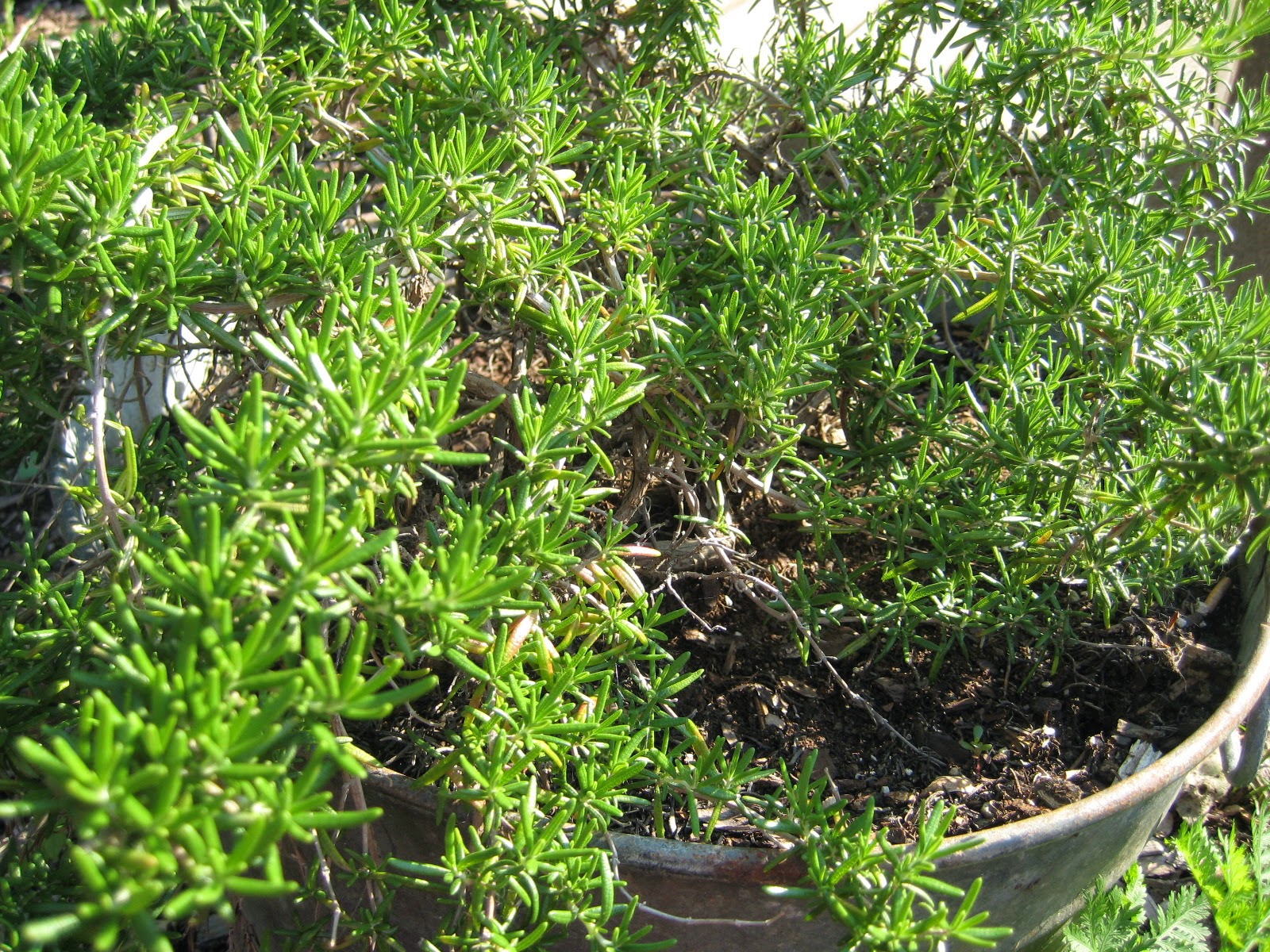
Rosemary, an ancient folk remedy for improving memory, is the herb of love and remembrance, steeped in thousands of years of myth and tradition.  A member of the mint family, this herb is native to seaside regions of the Mediterranean and North Africa. The Latin name Rosemarinus means dew of the sea, probably in reference to its little beautiful blue flowers when in bloom.

Herbalist Jeanne Rose states, "Inhaled scents feed directly into the limbic system, the part of the brain that controls memory and learning." Being rosemary is a mental stimulant, it is a good choice for the aromatherapy diffuser or simmer pot.

Rosemary can become a very good friend for the student, someone giving a speech or presentation, or so many of us with a long to-do list trying to multitask. This herb can help one remain focused and retain the information.

 According to James A. Duke in "The Green Pharmacy", oxidative damage caused by free radical oxygen molecules in the body plays a role in Alzheimer's. Rosemary contains antioxidants which are compounds that help eliminate free radicals, particularly rosmarinic acid.
Also, people with Alzheimer's often have an acetylcholine deficiency. It isn't clear whether this deficiency is part of the cause of the disease or results from it. Rosemary is said to help prevent the breakdown of acetylcholine, therefore there is good reason to make use of this safe and pleasant herb. It certainly couldn't hurt to try it.

Aside from memory issues, rosemary is said to offer a wide range of health benefits.
Being several of the plant's compounds are absorbed through the skin and blood-brain barrier, forms of its use include herbal massage oils, bath oils, balms, shampoos, body sprays and herbal vinegars and tinctures.

Just breathing in the scent of rosemary, be it the fresh plant or its essential oil, often helps to relieve stress and anxiety. Test taking can be a little less of an ordeal with the help of a rosemary body spray or even sniffing a tissue to which a drop or two of the essential oil had been added.

Rosemary infused in a carrier oil such as olive oil or almond oil results in a wonderful massage or bath oil to help relieve joint pain and relax tight, stiff muscles.

Rosemary stimulates circulation, therefore very useful for those cold days when you come in from the cold with numb fingers and toes.

Rosemary Liniment

Rosemary & Lavender Body Spray
 
If interested in historical stories associated with the herb Rosemary read this post.

Rosemary essential oil should not be taken internally.
Rosemary essential oil should be avoided during pregnancy.
Don't self treat a chronic condition such as depression or Dementia with essential oils. Such conditions should be monitored under the care of a physician.

Rosemary grown in colder climates needs to be brought indoors for the winter.  


Tuesday, May 20, 2014

Notes From The Heart of a Caregiver


“Believe, when you are most unhappy, that there is something for you to do in the world. So long as you can sweeten another's pain, life is not in vain.” – Helen Keller

1. Caregivers don't plan on this bend in the road of their lives. No one can possibly know what they are going to do in a given situation until it is upon them. There is no job training to prepare one for the demands of a job that often only seems to be going downhill. With medical conditions and the effects of the drugs to manage those conditions, it may seem that there is always something popping up, adding another specialist to the list of diagnosis codes.
This is a journey that takes both the loved one and the caregiver down one of the most vulnerable, emotional, guilt ridden, physically exhausting roads imaginable.

2. Opening up your home to an aging parent may seem the most practical, cost efficient, loving thing to do. But do not do this in haste or through emotion. Go into it with your eyes wide open and realize that once you make the decision, you are all in for the long haul.
Don't naively assume that other family members will be so grateful that the burden was taken off their minds that they will be making a trodden down path to your door offering empathy and help. Don't assume that their knowing their loved one is well taken care of amidst family and not forced to be placed in an Assisted Living facility that it will bring the family closer together. Don't assume the amount of money save will be appreciated in leaps and bounds.
Notice I mentioned the word "assumed" several times.

3. You cannot force anyone to become a caregiver or step up to the plate for a commitment. We all have busy lives, and carving out time for additional responsibilities, may not be welcomed with any kind of enthusiasm. Do not assume that just because the time has come, the children will offer their services. Yes, he or she is their parent too, but you cannot assume they will think the way you do, or for that matter, to even feel obligated. Be very prepared for the fact that you, the caregiver, just may be labeled the martyr, who has no right interrupting their lives or making demands based on principal. Their attitude may be on a subconscious level, it may be their way of handling the reality that they are slowly losing their parent. The outcome is that however things become construed, the caregiver may feel shunned and wonder where it all went so wrong.

4. With or without a family support system, the time may come where outside services are necessary. Physical limitations, chronic or terminal health considerations, and safety issues all take their toll on everyone involved and oftentimes it is best to get an opinion from a third party who can observe the family dynamics from the outside looking in.
When I took matters into my own hands and inquired into a support group and requested the help of a Case Manager, we all received wonderful advice about available services. But it also backfired. I opened up our family's business to an "outsider", to which in their minds I had no right to do. So, yes I got the information I needed and the siblings were educated a bit as to the reality of the situation, but in the end we became more estranged than before.

5. Don't bang your head against the wall trying to make someone happy. How people view things in life became ingrained throughout their lifetimes. Some people have trouble gracefully accepting from others without that feeling of something being owed in return. It is very hard to change such an attitude, since it is usually tied in with a fierce sense of pride and independence. Some people see the "cup as half full", others only see the "cup as half empty" and focus on the negative. If someone is unhappy with themselves, that attitude shows, and it has nothing to do with the other person. It has nothing to do with not being grateful. It's just a black cloud that won't rain itself out, it continues to hang low and heavy, blocking out any sunshine trying to poke through. If you as the caregiver are trying to maintain a home full of positive energy and warmth, be that ray of sunshine and just shine on. Continue to do what you've been doing as far as keeping the person safe, clean, fed and medically cared for. If they choose to wallow in their misery, it is their choice, don't get pulled down too.

6. Separate yourself, step outside the situation, or it will destroy you. Love them and supply their needs but consider it a job, and do it well. You cannot try to drag a mule to water for very long without finding yourself on the losing end of the rope.We all know that unless we take care of ourselves, we are of no use in caring for another. If you don't have family support for respite care so you can get away from the situation, even if it's just a few hours at a time, then seek outside services. There are agencies who have people who will come to your home, and just keep your loved one company at minimal cost to you. Check with your County's Area Agency On Aging for information as to what's available in your area for help in the care of your parent. They can also let you know where support groups are held. It is imperative that you have someone to talk to, vent to, to know there are others in your situation.
Be sure to try to get enough sleep, eat properly and exercise. Neglect of these basic needs will catch up to you and you may find yourself falling into your own state of depression or you may develop a chronic illness due to the prolonged stress.

7. You, the child, has now become the parent.
I don't know how many times I have asked myself the following questions:,
 "What am I dealing with?"
 "What is real and what is learned helplessness?"

When this journey began, satisfying my mother's every need was very rewarding. After a lifetime of hard work, worries and stress, she was simply worn out. Taking care of her was a pleasure if it made her life easier and a time of deserved rest. Our mother admitted she enjoyed being taken care of. But as any parent knows, that stage of being totally depended upon eventually ends. And by then the parent is more than ready for this next stage because it it physically and emotionally exhausting.

When a parent moves into their adult child's home, he or she may always feel a guest. You can do everything in your power to make them feel welcome, help them feel productive, and giving them their own space to make it their own. How the parent adapts to his or her new living situation has a lot to do with personality and medical condition.  Two years later we still do not know if our mother's refusal to learn anything new, such as the kitchen appliances, is simply her lack of accepting change or a realistic health concern with developing Dementia. Regardless, the lack of self-sufficiency is a daily drain on whomever is depended upon for meals, laundry, hygiene, medications, errands, doctor appointments, etc.

Over time, this daily frustration resulted in many an episode of an outburst, followed with bouts of guilt and apologies. Just like a parent nagging a child about what is good for them, the caregiver may be at wit's end trying to get through to the parent about what he or she should be doing to improve their mental and physical health. Too much television, too much laying in bed, unwillingness to exercise, refusal to go outdoors in the fresh air, refusal to leave their room and join the rest of the family, refusal to get involved in activities that would be wonderful mental stimulation with people, the list goes on and on. This nagging ends up being just like the type of parenting called "policing" where the child simply tunes out the tone of voice of the parent.

While very aware and empathetic towards the life she must now accept, it is maddening to witness  a person letting life pass her by, holed up in her room with little interest in much of anything. Anti-depressants may or may not work. For some people anti-depressants can make all the difference, but in other cases the side effects outweigh the potential benefits.
Do your research into these medications and consider natural supplements and alternative therapy.

8. Our children were a full time responsibility at one time, needing round the clock care and supervision. The difference between the demands of children and the demands of a elderly parent, is that with children, their learning experiences move them forward towards autonomy and independence. Older parents with failing health are moving backwards. Those who see them every day have no choice but to witness the heartbreaking loss of their losing a little more of themselves, bit by bit, and being fully aware of it. For those dealing with confusion and forms of Dementia, they say the hardest part is the early stages when the patient knows what is happening to them and feeling powerless to stop it. The denial, anger, and depression that follows can be overwhelming. To know one is losing their physical health on top of losing one's mental faculties is gut wrenching. It is very, very difficult for the caregiver to realize that no matter what efforts they make to try to bring a smile back on their loved one's face is often futile and it is time to just leave them alone. Accepting what is, is a monumental hurdle to being able to go on.

9. It is hard enough when a person is forced to deal with the loss of their physical abilities, but when their mental faculties become threatened as well, it can become a sinking hole.
It may feel like that person you knew may be gone. You have to remember that even if your parent cannot communicate or behave the way you are familiar, that person is still in there, and needs all the support possible.
With the stages of Dementia, it is often a grieving process that the family has to go through twice. We have to understand that this person who is our parent is still our mother or father. The person may not be who we remember, but we have to stop trying to force him or her to be that person again. It is different now, a new normal, and we must accept their loss even while they are still living. Then when the day comes when their physical body passes on, we must grieve their loss all over again.

10. Accept what is with each day. As you notice something new in behavior or level of ability, deal with another chip falling away and accept it. As with many things in life, it is what it is, and we have no choice but to accept what we cannot change.

11. The decision to place a loved one in an Assisted Living or Skilled Nursing facility is often the most guilt ridden, tortured decision a person has to make. But if the care of a parent becomes overwhelming, it may be what is best for everyone in the end.
Do your homework before you need a facility. Do not wait until your loved one is in the hospital and then you are scrambling to "find a bed" somewhere. You don't want to just find a place anywhere that has an opening. Yes, availability will fluctuate, but at least you'll already have an idea of what facilities are of the quality care you want and you are aware of the costs involved. Understand the difference between Assisted Living and Skilled Nursing Care. Find out what benefits your parent's insurance has in regards to long term care. Find out what the co-pays will be, and for how long, find out what will be the out-of-pocket expenses. Know ahead of time exactly what the financial status is so you'll know if your parent qualifies for medicaid, program benefits, or if it will be mostly private pay. Make sure someone is designated to be the Financial Power of Attorney and someone is designated to be the Medical Power of Attorney. Privacy laws are very strict and even though you may be immediate family, you'll be in for many a headache unless the paperwork is there, especially if the parent can no longer make important decisions regarding his or her welfare.

12. You may not be able to change a situation, but you can change your attitude towards that situation. When I was first told this little tidbit of advice I was furious. I felt my husband hadn't a clue what we were going through and was pointing a finger at me for being part of the problem. But the more I thought about it, I realized that my relationship with my mother was so intertwined and complicated that my frustrations resulted not in her change of attitude, but in pulling her down even further out of guilt and feeling a burden.


Try to maintain your sense of humor. Sometimes things can get so ridiculous that instead of losing your temper from exasperation, take a moment to breathe and you may end up just laughing.


Friday, January 3, 2014

Help the Homebound become Bird Enthusiasts


Boredom is a very real problem with shut-ins and the homebound, especially during the winter months when cold weather and conditions may limit their social lives.

To set up a bird feeding station is a wonderful, stimulating idea to give people something to occupy their time. To sit by a window and watch the fluttering bird activity can be very interesting and entertaining for those who would ordinarily rely on the television to pass the time. Anxiety and depression over failing health issues are common among the chronically ill and the elderly. To connect with a part of nature again can be psychologically healing and a boost for the spirits. An interest in something outside of one's personal problems is a wonderful thing.

There are various types of feeders from which to choose.
If squirrels are a problem, a hopper style is a good idea. If anything heavier than the weight of a bird sits on the perch, it lowers and closes off the feed openings.

Tube feeders are very common and many have interchangeable ports so you can use the perch type for regular seed and the slit type for using  thistle seed.

Another option for thistle seed is the tube sock. These are cheaper but don't last as long since eventually the sock gets torn. Finches love niger or thistle seed which is best offered in thistle feeders which allow them to feed upside down.


Suet blocks are very appreciated, especially by woodpeckers and nuthatches, who are so pretty to watch skimming up and down the tree trunks.

The feed we use consistently is black oil sunflower seeds. These nutritious seeds are a powerhouse of needed fat and protein for a variety of birds. On snowy days, there is a constant flow of activity from cardinals, bluejays, mourning doves, titmice, black-cap chickadees, sparrows, juncos and finches. Nothing is wasted. Any spillage of seed from the feeders themselves is soon cleaned up by those birds who don't usually perch at a feeder, such as the mourning doves.

I add a bit of what is called Flyer's Choice which is a combination of sunflower seeds, safflower, and white millet. Don't bother with the inexpensive feeds with red millet. The birds often just bypass it and knock it out of the feeder. I used to mix cracked corn with the feed for the ground feeders, but stopped because I just attracted more starlings, who then cleaned me out of suet.

If you supply food, try to offer a water source as well. The heated bird bath pictured as well as any of your feeders can be purchased from The Garden Supply catalog, but most likely they are offered at any good farm supply store or nursery. You'll need a power outlet, but what is convenient is that this bird bath is made of heavy duty plastic yet isn't that heavy. Therefore, you can move it from wherever you put it in your gardens for the summer months to a place supplying power for the winter. The cord wraps neatly inside the stand when not being used. Birds don't like deep water so I keep a rock in the middle of the bowl for them to have a solid perch. Plus the weight helps keep the bowl from tipping on a windy day.

 
If you have cats and let them outside, try to keep your cats inside during the busiest feeding times, which are in the early mornings and at dusk. Once birds sense danger they are less apt to visit your stations.

Below are pictures of birds commonly seen around feeders here in the Northeast, United States: 

Black-Capped Chickadee


Female Cardinal
House Finch
House Sparrow
Dark-Eyed Junco
Bluejay
Mourning Dove
Nuthatch
Titmouse
Red-Bellied Woodpecker
Downy Woodpecker

Tuesday, June 25, 2013

God granted us memory so that we might have roses in December, The hidden gifts of Alzheimer's


 "God granted us memory so that we might have roses in December."
J. M. Barrie

I was privileged to have had the opportunity to attend a Caregiver Conference on Alzheimer's offered by the by Lehigh Valley Aging & Adult Services in Bethlehem, PA. What I gained from the conference was not only a much better understanding of the physiological aspects of the disease but wonderful resources to file away for information and comfort should the need arise.

"The mere mention of the word "Alzhiemer's" evokes feelings of fear, sadness, and pain. And no wonder. Alzheimer's is a long heartbreaking journey into dementia. My husband and I have taken this journey together. But I have learned that, while we do not have control over the disease, we do have a choice to experience joy in spite of illness."
Marilynn Garzione

"Released to the Angels" 
Released to the Angels is a collection of reflections, memories, lost dreams and renewed hope.
The commitment between Marilynn and her husband brings us a love story that will leave you with a renewed strength to face the journey alongside your own loved one.
Be it a parent, spouse, sibling, child, or dear friend, as this cruel disease continues to steal what is held so dear, you will discover the importance of perspective and acceptance. You will realize the fine line between helping and dependency, the fine line between anger and fear, and the fine line between a loss and a gift.


 To companion our fellow human beings means to witness and learn as opposed to playing the “scientific expert.”

Dr. Alan Wolfelt is a bereavement counselor. His work helps us realize that to walk alongside someone facing a losing battle with a disease that will eventually try to steal their very soul, we are not only caregivers, but companions. We are in this journey together as we experience grief and loss  before the natural grief of death takes place. We must let each other go bit by agonizing bit long before the physical body takes its final breath. We must cherish whatever light peeks around the cracked doors within the mind, light that diminishes as those doors slowly close. We must take the time to slow down the pace to get through one day at a time. Take the opportunity to really look into our loved one's eyes and appreciate the sparkle and shimmer of recognition and connection. 
 
  • Companioning is about honoring the spirit; it is not about focusing on intellect.
  • Companioning is about curiosity; it is not about expertise.
  • Companioning is about learning from others, it is not about teaching.
  • Companioning is about walking alongside; it is not about leading or being led.
  • Companioning is about being still; it is not about frantic movement forward.
  • Companioning is about discovering the gifts of sacred silence it is not about a filling every painful moment with talk.
  • Companioning is about discovering the gifts of sacred silence; it is not about filling every painful moment with talk.
  • Companioning is about listening with the heart. It is not about analyzing with the head.
  • Companioning is about bearing witness to the struggles of others; it is not about judging or directing those struggles.
  • Companioning is about being present to another person’s pain; it is not about taking away or relieving the pain.
  • Companioning is about respecting disorder and confusion; it is not about imposing order and logic.
  • Companioning is about going to the wilderness of the soul with another human being; it is not about thinking you are responsible for finding the way out. 

Naomi Feil has done extensive research in her work with later stage Alzheimer's patients. She developed what is called Validation Therapy.
In the past, it was thought that it was necessary to "clear up any confusion" by correcting the patient. It is now believed that to deny what a person believes to be true only adds to the confusion, anger and frustration with what is real and not real. It is much more respectful and easier on everyone for the caregiver to "go where they are" and just go with the flow. It doesn't do anyone any good to continually feel the need to correct dates and events, or to renew the pain of accepting the death of someone lost. To validate their reality is a much better way to bring peace to people who cannot escape the anxiety of confusion.

Maternal touch is where we begin our journey in life, and so very comforting for those who return to that period in their lives during the later years. The power of a hug is very important during all stages of life, but especially for those who feel so lost as they first lose their independence, and then the fear of losing their mind as well. We as caregivers often retreat within ourselves as a means of keeping it together,  or in our attempts to detach in order to handle everything. But we have to realize that as our loved one loses the ability to physically reach out to us, it is imperative that we initiate the embrace.
Grab a tissue and watch this amazing five minute clip of how touch and music can reach those we may think are lost to us.

She's still my Mother

She's still my mother, who's standing there,
It's still her face, her eyes. It's her hair.
It's still her body, but it's just the shell,
Of the mother I once knew so well.
She's still my mother, who looks at me,
Then asks the question," who might you be?"
Her memory's fleeting and her gait is weak.
Loved ones long gone are those that she seeks.
She's still my mother, whose angry words,
Like a sharpened sword, my soul can hurt.
She's still my mother, who shares our home.
This one we dress and whose hair we comb.
She's still my mother...I know it's true.
And so dear God, I turn to you.
Please give me patience, wisdom and love,
Till the day you take her to Heaven above.
Let me return, if even through tears,
The love she gave me through all these years.
Though she may think that I'm her brother,
I'll love her yet...she's still my mother.

© 1997, Jerry Ham


the dark night of the mind
Perhaps her path to becoming a saint
is this forgetting,
this stigmata –
not chosen, prayed for,
the fearful abstinence, alzheimer’s,
something holy.
She gives it up to God,
this her sweetest pride, her thinking,
until only one prayer is herself,
the rose in the center,
where before synapses turned
like a Chartres labyrinth.
And when the fierce catechism –
who am I? where and why?
oh why? -- has ceased,
and the last of the words go,
some will say
poor old woman with dementia,
while others will seek her
as the new hermit
of our days
with beautiful broken wisdom.

Maren Tirabassi