Meadow Muffin Gardens logo
Showing posts with label bees. Show all posts

Sunday, February 9, 2020

Comfrey, A Living Medicine Chest


Comfrey or Symphytum officinale is a must have for the garden, whether you want it for medicinal healing purposes or for vegetable and flower growing, it is an invaluable plant. A European native and member of the borage family, comfrey acts as a soil conditioner, weed barrier, compost booster and fertilizer.

A hardy perennial to Zone 4, comfrey thrives in just about any type of soil (though moist and fertile is best), is drought tolerant and grows fine in full sun to partly shaded locations. Seldom bothered by disease or insect pests it really is a low maintenance herb. It does need its space, as it can grow to a height and width of about five feet.

The large dark green fuzzy leaves are full of potassium, nitrogen, magnesium, calcium and iron.  A reason for this is it has a long taproot which takes up nutrients from the soil. The deep roots make this plant great for preparing a new vegetable or flower bed. The taproot acts as a clay breaker to penetrate compacted soil. 

The leaves can be spread around garden plants to keep down the weeds or they can be shredded first to form a mulch. To make a liquid fertilizer, steep the leaves in a bucket of water to form a compost tea. Do this outside, since the resulting "tea" can be described as none other than "it stinks". Anyone who infuses comfrey in olive oil to make an herbal oil for salves learns quickly that if they want to use the fresh leaves the resulting salve will have an odor. Taking the time to dry out the leaves a bit before infusing greatly reduces the risk of not only the smell but against spoilage. The fuzzy leaves of comfrey can be irritating to some people and cause contact dermatitis, so it is advised to wear gloves when handling them. 

Add comfrey leaves to the compost bin or pile as an accelerator, and be sure to turn the pile to thoroughly mix and combine everything.

Also, comfrey makes a great trap crop to lure slugs and snails away from other garden plants or flowers. Just remember its size so it doesn't choke out other plants.

The fact that comfrey is also called Knit-bone and Bruisewort makes it easy to remember the medicinal purposes of this herb. Broken bones, pulled muscles, sprained ankles, wound care and bruises can all use this plant to aid and speed up healing. Difficult to heal pressure sores or slow to heal wounds often respond amazingly well to the use of comfrey salves. Just remember to be sure there is no risk of infection and to let the would heal a bit for a day or two before applying. The allantoin in comfrey may cause the skin to close over too quickly, causing the outer skin to heal before the inner wound is ready. Wounds need to heal from the inside out. Don't use it internally because there is controversy about its effects on the liver.

If you have access to the actual comfrey plant, take advantage of those leaves and make a poultice for self-care after a mishap to relieve inflammation, reduce pain and encourage healing.

1. Collect a handful of fresh comfrey leaves.
2. Roughly chop the leaves and add to a blender or Magic Bullet
3. Add just enough water to blend into a mash
4. If you added too much water, an option is to add a bit of flour to thicken it up
5. Lay out cheesecloth or t-shirt or whatever you have and dump the mash out onto the cloth.
6. Fold the edges over the mash to hold it in place and limit drips, but leave enough exposed to have direct contact to the injured area. If you use cheesecloth, it is porous enough that the mash can be completely wrapped. 
7. Lay the cloth containing the mash over the wounded area.
8. Using Saran Wrap, cover the cloth and wrap around the limb or torso to hold it in place and prevent leakage.
9. Leave the poultice in place at least two hours
10. Repeat as needed but prepare a fresh mash each time.

Below is a video with step-by-step instructions:


Lastly, bees and pollinating insects love it! A win win all around!


MEADOW MUFFIN GARDENS


Wednesday, October 11, 2017

Tithonia, Mexican Sunflower...A Butterfly Garden Must Have


Just as the yellows of sunflower season begin to fade, late summer unfolds the bold orange of Tithonia or Mexican Sunflower (rotundifolia). Beautiful and plentiful orange 3" wide daisy-like flowers on long stems, this plant makes for a spectacular backdrop in the garden or beautiful against a barn or fence.


A butterfly gardeners dream, Mexican Sunflowers attract several types of butterflies, bees, hummingbirds and later, seed loving birds. To further encourage butterflies to your garden, plant not only sunflowers for nectar, but Butterfly Weed or Common Milkweed for the caterpillars. Since the bloom time is late summer, the timing is perfect for traveling monarch butterflies on their way to Mexico for the winter.


Native to Mexico and Central America, Tithonia is a late season annual that will gladly thrive in a home garden as long as it gets enough sun, not too rich soil and not what they call wet feet. Not exactly drought tolerant, Tithonia is more of a water meter. During hot spells they can wilt a bit if not getting enough water. If given too much fertilizer (nitrogen) you'll get a lot of foliage growth and height but a lack of flowers. Since they can reach 6 - 8 feet tall, strong winds can topple them over, but unless the roots are actually pulled out of the ground, often they'll bend a bit to continue reaching upwards towards the sun. Some people pinch them back while young to encourage a more bushy look rather than height to lessen the risk of broken branches or falling over in a storm. Though not required, deadheading will prolong the blooming time and avoid their looking straggly by late season. In general, these flowers are survivors.

You can buy already started plants from the nursery in the spring, but these flowers are easy to start from seed. Two things to remember are to not plant too early and not to plant too deep. Here in zone 6 I wait till June to plant these heat loving sunflowers. They need light to germinate so barely cover with soil. These sunflowers are multi-branched so they need room to do their best. Thin out the plants to be about 36 - 48 inches apart. By October the flowers will start going to seed which are relished by the birds. Also, the dropped seed will happily return to reseed in the spring.

Tithonia is named for Tithonus, a Trojan prince who, in Greek Mythology, was the love of Eos, the goddess of the dawn.


By mid-October these beauties are a good 6 feet but soon to go to seed


Below is the tale of where Tithonia got its name:

Eos and Tithonus (A Greek Myth)
by Amy Friedman and Meredith Johnson

Long ago the goddess Eos fell in love with Ares, the god of war, and like so many others, he could not resist the beauty of this goddess of the dawn. Rosy-fingered Eos dressed in long robes of saffron, and sitting upon her throne she glimmered and cast a look upon Ares he could not resist.
Alas, Aphrodite heard news of Ares' love, and bursting with jealousy, she cast a curse upon Eos: The goddess of the dawn would never stop falling in love.

And so it was that time after time, Eos fell in love with mortal men. This was a sad fate for a goddess, for mortal men do not live forever as goddesses do. But of all the tales of heartbreak, there was no sadder story than the tale of Tithonus.

Tithonus was a proud young man, a prince of Troy, handsome and brave, and the moment Eos saw him, she fell deeply in love. That was her way, but this time she decided she must carry him away with her, and so she brought him to her palace, away from his homeland.

Naturally Tithonus loved Eos. Who could resist the love of such a beautiful goddess? Just as she does today, in those years long ago, Eos woke the world each morning with curling rings of light, and every morning she mystically brought the world out of darkness. Whenever Tithonus looked at her, he felt a glow, the way so many people feel at dawn -- as buoyant as an April morning on those days when the first buds begin to bloom.

Tithonus and Eos lived together happily, and they had two sons, Memnon and Emathion, who also became famous among men and gods. All seemed well, but as time passed, Eos remembered something she had forgotten: Mortals do not live forever.

Eos began to mourn the future. How would she survive without her love? She could not imagine such a life, and so she asked the greatest god of all, Zeus, to grant Tithonus immortality.
"Please," Eos pleaded, "let my beloved Tithonus live forever." Her eyes filled with tears, her skin flushed, and even Zeus was moved, and so he granted her request.
Now Tithonus was immortal.

Never was there a happier man. Loved by a beautiful goddess, he was a proud father and ruler of a bountiful land, and Eos too was joyful, but they hadn't realized one thing.
Tithonus would live forever, but even Zeus did not have the power to make him a god. And so, as time passed, Tithonus, like all mortals, began to age. First Eos noticed the wrinkles upon his brow, and as the years passed, his muscles began to grow weak, his arms and legs grew slender, his hair grew gray and thin. Even the light of his beloved Eos no longer gave him the strength it once had.
When Eos understood Tithonus's fate, the sight of him filled her with such sadness that she could not bear to look at him. So she left him alone and traveled, falling in love with others.

Eos fell in love with other mortal men and other gods, and when she returned to Tithonus she would see her once-handsome beloved withering away. Day after day, he grew older. Like a shadow he roamed silent palaces of the gods of the east, thinking of long-ago days, remembering Eos' wish for his immortality, and ashamed of his desire for it.

How arrogant he had been. He hadn't thought of the future. In his youth he had never even imagined waste, and now here he was wasting away. Even love and beauty and power could not save him. Soon he wanted to be like other mortal men. He wished for the return of the natural order of life.

Some mornings when a soft breeze parted the clouds, he looked down at the dark world where he had once lived, and again he looked at Eos. Seeing her mysterious glimmering face and her exquisite light, he remembered the way she had once loved him. He watched with longing as the gloomy darkness below parted, and the rosy light of his beloved Eos warmed the world. This made him still sadder, for her warmth and glow were now lost to him, and he began to sing, "Give me back my mortality." But even the gods could not grant this request.

And now the rosy shadows of Eos bathed him in coldness as he looked down at his wrinkled feet, and cried out to Eos: "Every morning you renew your beauty, but I am a fool, a fool who desired to be different from his fellow men, and now I cry to you, forever. I will never stop singing this song. I sit here remembering what I cannot be."


Eos could bear this no longer, and so she used her powers to transform this shell of a man into a cicada. She watched as he emerged from the ground, his body pale but fresh as he shed his old skin, wings spreading where once there were arms, and that voice, singing on, and on, and on.

Wednesday, October 4, 2017

Tobacco Flower, Heirloom Nicotiana Alata, Jasmine in the Air


By the end of the summer season when many of our annuals are petering out, the stately tobacco flower will be just coming into its own! A majestic plant named for the 16th century French diplomat Jean Nicot, he once believed it was a cure-all for just about everything. While historically the leaves were used as a relaxant, it is now known to be highly addictive so fell out of favor medicinally. However, it does make for a great pesticide. Soak the dried leaves to make like a tea and then put in a foliage sprayer to apply to your garden plants.

Gardeners looking for the large, old-fashioned heirloom Tobacco Flowers won't find what they're looking for at a nursery. These tall, Jasmine smelling, night blooming beauties need to be grown from seed which can be found through seed banks or catalogs. "Only the Lonely" and  "Perfume White" are good varieties. The seeds may reseed themselves on their own or you can save those seeds and replant in the spring (wait till about 2 weeks after the last frost date for your area).

Technically a perennial, Nicotiana alata, is grown as an annual in areas with a colder winter. Flowering tobacco belongs to the nightshade or solanaceae family. Since it is in the same family as potatoes and eggplant, don't plant near each other or there is a greater chance for the pests, hornworms and flea beetles, to have a feast. Should you have a problem with flea beetles, (pin holes in the foliage) try floating row covers while the plants are young and/or diatomaceous earth. If you have plants that seem to just loose their foliage, it is probably the tobacco hornworm. Large healthy plants won't actually die from these green caterpillars, so if you want the hummingbird moths to later visit your night blooming flowers, you cannot kill all the caterpillars. But if you must kill them, hand pick them off or apply bacillus thuringiensis.

Tobacco Flower at its full size
Tobacco Flower five petaled tubular flowers
Nicotiana seeds germinate quickly in warm soil and being so small, just barely cover when planting. Choose an area with full sun and rich soil. The tall type of tobacco flower grows a good 5 feet tall and don't bloom till late in the season. The garden pack varieties are small, compact and are bred to flower even while still in the nursery packs. What they have in color, they lack in fragrance. If you want the sweet scent of jasmine, you need to plant the heirloom type, Nicotiana alata. The leaves are large as you'd expect from the tobacco plant. Fuzzy and sticky, the flowers look like long trumpets with a flare on the ends which are actually five petals.


Though nicotiana likes full sun for best growth, the flowers tend to droop in the heat and wait to perk up in the cool of the evenings. Some shade is tolerated in areas with really hot summers.
Plant in an area where you can enjoy them at night. Spending time outdoors on summer evenings is wonderful with the intoxicating scent of jasmine in the air.

The flowers are a great attraction to bees, butterflies and hummingbirds during the day and moths during the evening.

Two good sources for getting your seed are Select Seeds and Renee's Garden

Once the flowers fade and go to seed, it is easy to save the seed. Below is a video showing how to gather and save tobacco flower seeds.


Tobacco Flowers going to seed

Sunday, September 10, 2017

Jewelweed...Can Native Species Be Labeled An Invasive Plant?


 Jewelweed (Impatiens capensis) is actually a wild native Impatiens to North America.  Also called Touch-Me-Not or Orange Balsam, this wildflower is a fun plant and often one of the first people learning to identify wildflowers can easily recognize. The flowers are a speckled orange and look like little trumpets. Personally, I think they resemble little shrimp. Preferring damp to wet soil, Jewelweed can grow to 4 - 5 feet tall and even before flowering in late summer, it isn't difficult to identify by its stalks, stems and leaves. The stalks are a lovely light green shade and after a rain, the droplets seems to lay on the surface. 

Should you find this plant after exposure to poison ivy or stinging nettles, break off the stems and crush them in your hands. You'll see that the stems are hollow and contain the itch relieving juice inside. Apply like a poultice to the areas of exposure for relief.

Children love to play with those little trumpets but actually they have a second kind of flower not usually noticed. There are tiny flowers without any petals that don't open but form the seeds. At the end of the summer season when they are ripe, the slightest disturbance sends the seed flying, very amusing for any age group. 


There are many articles out there calling this plant an invasive. Technically they are not an invasive species in North America, but can be aggressive when happy with its habitat.  Therefore it shouldn't be labeled as an invasive. They are native to North America, especially in the Northeast, but spread with such enthusiasm that many people consider them a pest. If they like their location they will spread and happily take over the space of other plants. What is nice to control this is to simply pull them out. They have shallow roots and gardeners just have to pull them where they aren't wanted, no gloves needed to get a grip as is the case with many plants considered weeds. 

Hopefully people encourage a natural habitat spot in their landscaping because these flowers are adored by bees, butterflies and birds. Insects need the nectar and the birds love the seeds. 

Exposure to poison ivy or stinging nettles is never planned so it is a good idea to have a remedy on hand. You don't want to push off applying something to appease the itch or you'll end up with oozing blisters and the tendency to spread. Jewelweed infused in apple cider vinegar is a perfect home remedy that works. Lavender essential oil is added for its healing properties to help with inflammation and harm done from scratching.

Once you learn what a wild plant is called and its beneficial uses, oftentimes attitudes change and it isn't just a weed. By September Jewelweed is in full bloom and brightens up roadsides, hedgerows and wet areas.

The natural world is a fascinating place and it is wonderful if children are introduced at a young age and learn to appreciate and take notice of it all.

Here is a good article all about "leaves of three, let it be" 


Monday, February 27, 2017

Tea Garden...It's What the Doctor Ordered


Themed herb gardens can be a lot of fun and many of these plants are not only suitable for a tea garden, but are also right at home in a kitchen theme, cosmetic theme or medicinal theme.

Most of us have only ever had tea from dried plants. Think how good it could be if picked fresh from your own backyard! Below are some ideal plants to get to know as they grow and it'll soon become apparent why people develop such a connection with their gardens. There is a certain pride in the nurturing, harvesting, storing and utilizing your own food, and knowing the conditions and quality of the plants makes it all the more satisfying.


Chamomile
For many, the introduction into the world of herbs all started with the famous children's book, The Tale of Peter Rabbit by Beatrix Potter. Most mother's can relate with how to handle mischievous children who don't listen and then come whimpering to Mom when hurting or upset. Mama rabbit simply put her little bunny to bed with a cup of chamomile tea and let him reflect on his lesson learned after such an adventurous day.

Be it frazzled nerves or an upset tummy, chamomile tea was the best remedy to calm both conditions at the same time. Better yet, chamomile tea lulled little Peter Rabbit into the la la land of sleep.
Much of chamomile's medicinal effects are targeted toward the digestive tract and the nervous system.


Chamomile tea can be a godsend for parents pacing the floor with a colicky baby. The build-up of intestinal gas is very painful. Just a teaspoon of cooled chamomile tea given every ten minutes can relieve a baby's misery amazingly fast. Catnip and lemon balm are two other wonderful herbs safe for babies.

Combine a hot water bottle placed over the lower abdomen and sipping chamomile tea every 15 minutes for a sure relief from those dreaded PMS menstrual cramps. 

Be it a child or an adult, everyone has occasional trouble falling asleep. A cup of chamomile tea with a spoonful of honey can become a nightly ritual to look forward to in readiness for bed. The nerve relaxing properties of this herb are wonderful for settling down overtired children and the cluttered minds of over stressed adults.

Growing your own chamomile is fairly easy. Chamomile is an annual which once it is planted and gets established, it will pop up on its own every year. The flowers are the parts collected and if you harvest on a regular basis during the growing season the flowers will continue before finally going to seed.


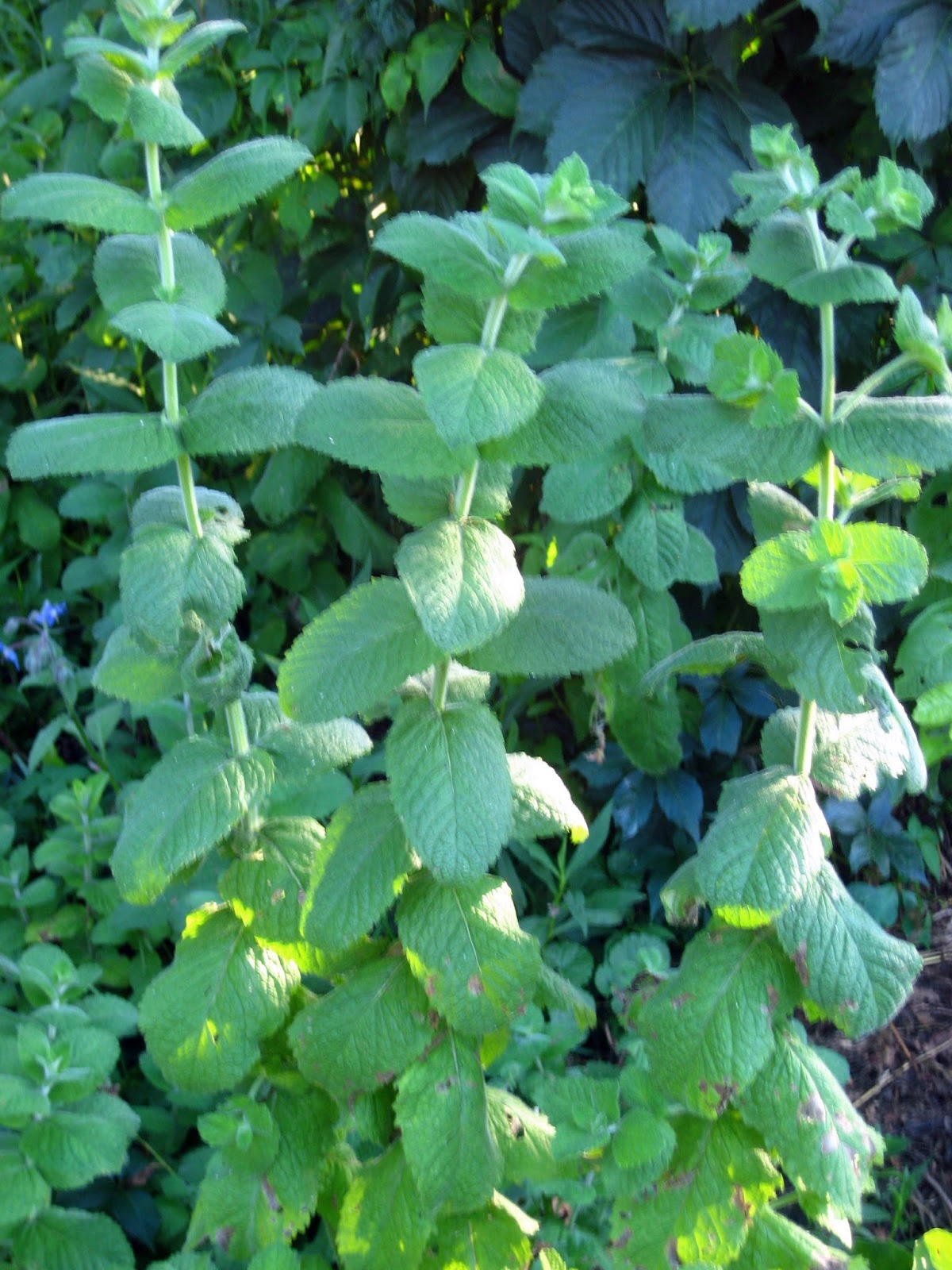
Apple or Woolly Mint
Spearmint and Peppermint

Peppermint and Spearmint are just two of many types of mint in the Lamiacae (Labiatae) family.
Known as the herb of hospitality, mint has long been used everywhere from the kitchen to the sickroom. Peppermint and spearmint are the most common types of mint, but there are several varieties that can be found at your local nursery in the herb section. You can find apple mint, chocolate mint, mimosa mint, mountain mint, pennyroyal, orange mint, catnip, etc A good way to identify whether a plant is in the mint family is to feel the stem. If it is squared rather than round it is in the mint family. Mints are low to no maintenance perennial plants. They are so hardy, they'll be happy to take over your entire garden. The roots spread by way of runners, so if you don't want it to continue to creep along, it is best to plant it in buried containers. These plants like the sun but do tolerate some shade. Another perk with mints is that the bees adore the flowering tops.

Peppermint in particular has a powerful, menthol aroma that refreshes, energizes and improves mental clarity just by inhaling the steam from a cup of hot tea. So many ailments can be eased with this one type of plant. Nausea can be relieved, cramping belly aches can be settles, pounding headaches can fade away, congestion can open up, aching feet can perk up, heat flashes can be cooled, and sore muscles can relax.


Lemon Balm is wonderful for relaxing children or anyone under stress. Called the "happy tea", lemon balm is invaluable for not only snapping a child out of a cranky mood, but can help anyone feeling down in the dumps. With it's hint of lemon, add some honey and you have a delicious tea most people really enjoy. With anti-viral properties, lemon balm is great for colds and fever blisters (cold sores). Also called Sweet Melissa, if you let it flower as in the photo below, you'll be making a lot of bees very happy. This type of mint spreads as any other mint but it is easier to control since it grows in clumps. One thing with lemon balm is that if you do dry it, don't crumble the leaves until ready to use or you'll lose a lot of the lemony scent.

Lemon Balm


Catnip
Catnip is great for colicky babies, upset tummies, jangled nerves and to bring down a fever. And of course you can grow it as a great treat and source of greens for your cat. Catnip spreads on its own but like lemon balm, it grows in clumps so is easier to control than some mints that creep over the ground. Without cutting back, catnip actually becomes almost shrub-like with woody stems.


Monarda
Bee Balm or Monarda is often grown in butterfly, bee and hummingbird gardens. It's red or pink tubular flower petals are beautiful when in bloom. Monarda gets taller than the usual 2 ft. mints. This plant reaches 3 - 4 ft. so makes a great backdrop plant. Also known as Oswego, this plant was used extensively by Native Americans as a medicinal tea. During the American Revolution, Bee Balm was the replacement for black tea after the Boston Tea Party. And you can guess why the word "bee" is in the name. Great beneficial plant.


Anise Hyssop
The last mint we'll mention is Anise Hyssop (Agastache foeniculum) which smells and tastes like anise. Although it is called a hyssop, it isn't the same plant as the Hyssopus officinalis, which is in the mint family, but of European descent. Anise hyssop is a must for anyone who wants a scent garden. Even if you don't like it as a tea, to resist the urge to take a moment to pick a leaf for a sniff is nearly impossible. 

Pineapple Sage
Any of the sages can be used as a tea but Pineapple Sage tastes much better than regular garden sage. This tea is a good remedy for indigestion and heartburn. Sage makes a good gargle for a sore throat, especially if first infused in vinegar. Garden Sage is a perennial but Pineapple Sage is a tender perennial which in colder areas is grown as an annual. This plant grows much larger than garden sage. It actually becomes like a shrub and by September it flowers beautiful red tubular flowers adored by the hummingbirds, a great late season food source.


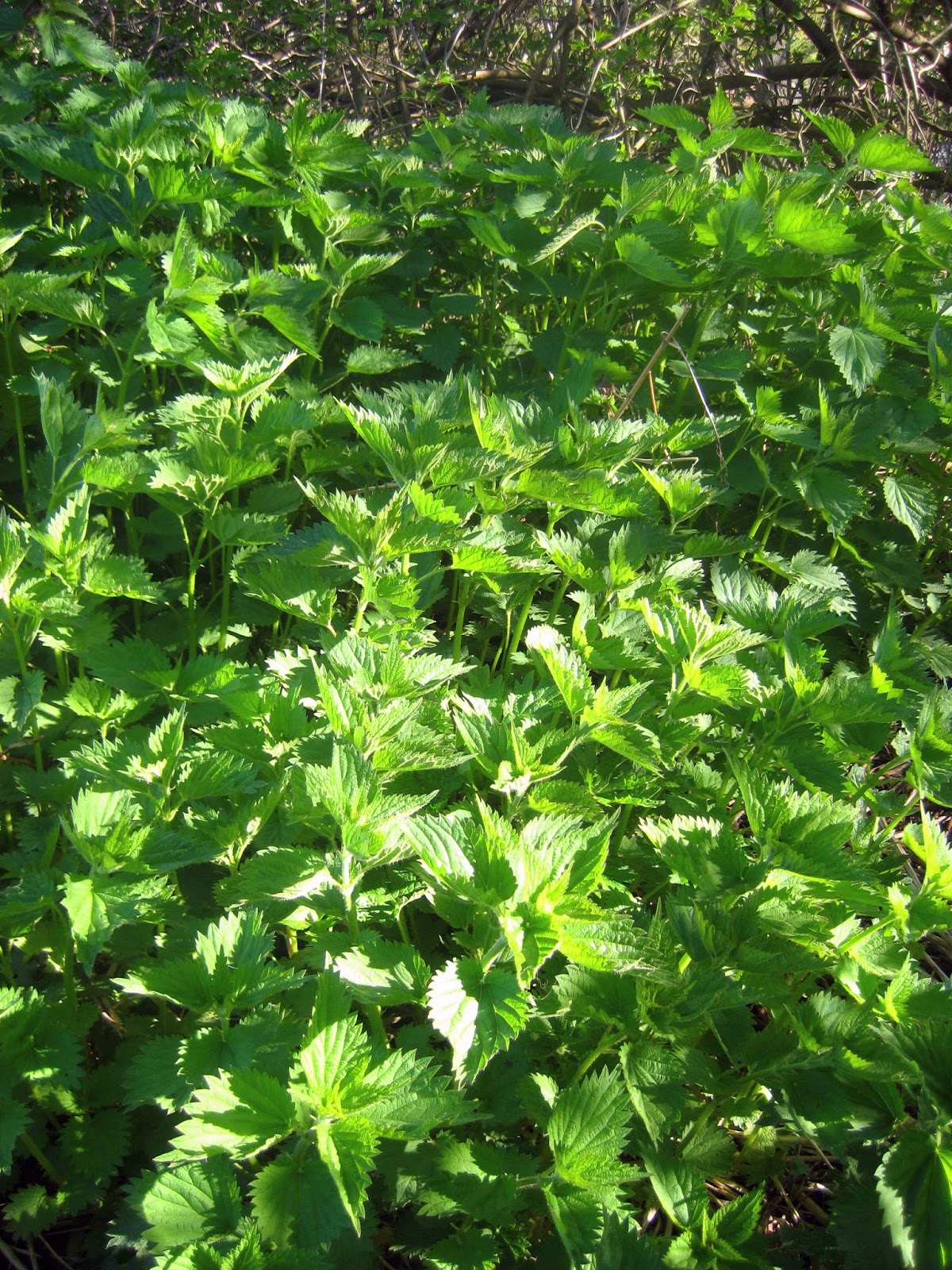
Stinging Nettles

Nettles, (Uritica dioica), are invaluable if you want one of the most nourishing plants around for your health. A word of caution though with stinging nettles, they sting due to the formic acid they contain. Nettles need to be grown somewhere where no one will be wandering around touching all the plants. It is a spreading perennial that will take over if allowed. But having access to the health benefits of nettle plants is wonderful for anyone needing a boost of energy or help with blah skin, hair or nails. Nettles make a great cooked green like spinach but best in the spring when the plants are young and tender. Be sure to wear long sleeves, long pants and gloves when in your nettle patch. Nettles are important as a food source for the larvae stages of many butterfly types, namely the peacocks, red admiral, commas, painted lady and tortoiseshell butterflies.


TIPS ON HOW TO HARVEST YOUR HERBS

Harvest late morning after they've dried off but before the heat of the day.

Most fresh herbs are highest in potency right before they bloom. But using the flowering tops is fine as well.

To dry, you can bundle small bunches by the stems and hang to dry in an airy, cool area out of direct sunlight. When dry, strip off the leaves and store in paper bags.
Don't crumble the leaves until you are ready to use them or you'll lose much of the essential oils.

Or you can spread your herbs out on the trays of a kitchen dehydrator for much quicker drying.

Before the arrival of frost, harvest all the herbs you desire and dry for storage. Herbs like basil are best if the leaves are frozen in ice cubes. Basil doesn't dry well without losing potency.

When ready to use the usual rule is 1 teaspoon dry herb to 1 cup of hot water.
If using fresh, use 3 teaspoons herb to 1 cup hot water.

You don't want to boil tender teas. You pour the hot water over them and let simmer. On average, teas only need about 3 - 5 minutes to simmer. then sweeten with honey and add a wedge of lemon if desired.

A very simple, yet delicious way to enjoy mint is to simply add a few fresh stems to a pitcher of water. The water will have a subtle, refreshing minty taste. Start with fresh plant material with each refill of the pitcher. If the water hasn't been drunk within about 3 days, toss and start again because it'll start to taste funky.

 A memory I have as a child is being sent down to the water's edge of a pond to collect enough fresh mint to fill a large soup pot. If you do collect plants outside of your own yard, be sure the plants you are cutting were not sprayed with pesticides or herbicides. Mint shouldn't need either one but just know for sure before using the plants. Rinse off the stems of any dirt, cut to fit in the pot (stems, leaves and any flowering tops), add enough water to cover the plants, cover the pot and gently bring to the boiling point but don't boil, Cock the lid so it doesn't overflow and let the tea simmer about 5 to 10 minutes, depending how strong you like your tea. You don't want to simmer it too long or you'll lose the important essential oils in the steam. Strain out the plant material and add sugar to taste. For sweet tea, 1 cup sugar to a gallon of tea is tasty. Enjoy a cup of hot tea right away and let the rest cool and store in the refrigerator for ice tea. This is wonderfully refreshing on a hot day.


Find a spot to set up a little table and chairs and enjoy your serenity time with a cup of tea. You'll soon discover that once your tea garden is established it returns every spring with little effort on your part. Annuals such as chamomile, fennel and dill reseed themselves and perennials such as the mints, lavender, sage, nettles and thyme return from the established root ball. If you had rosemary overwintering in the house, it can be brought back outside in the spring.


Sunday, February 5, 2017

Salve Garden...Some Wild, Some Weeds, All Welcome


The middle of winter is a time we really miss our time in the garden. Herbs satisfy all our senses at once as we touch, smell, nibble, watch and if we listen hard enough maybe even hear what they have to say. It's all about attitude and how healthy it is to return to that connection with our natural world.

That urge to get back outside as soon as the sun shines warm again is so very good for both our physical and emotional wellness. It's no secret that to get some fresh air on a daily basis can do wonders as both a mental and physical energy boost. Getting your hands back into the dirt and smelling that distinct scent of turned up soil is enough to get most gardeners excited about what they plan to do come spring.

You'll soon find that once you get an herb garden established, there isn't a whole lot of expense every year. The perennials return on their own and the annuals that dropped seed will be found here and there and anywhere they can thrive. The trick is in knowing where these plants like to call their home. You'll soon learn you can't force a plant to do well in a certain spot just because it is where you'd like it to be, such as in an orderly fashion in your garden. Which is why so many of our beloved herbs are also called weeds. They grow where they please because they know a lot better than we do what conditions they need to survive, and that may not be in the confines of our nice, manicured, rich garden soil.

Most herbs don't like to be coddled. They are usually naturally resilient, drought tolerant and very good at adapting to their environment. Most herbs like full sun but will still grow in partial shade. Good drainage is a requirement with most plants.

There are many, many plants that can be used as part of your medicinal garden but here we have really good ones for the making of salves. The flowers and/or leafy parts are picked and infused in carrier oils such as olive, almond, grapeseed or coconut for about six weeks. The plant material is then strained off and the herbal oils are thickened up with beeswax to create a variety of very healing, effective home remedies.

Encouraging these plants in your landscape is not just beneficial for our sake. They provide survival for our pollinators, an issue we hear so much about with the detrimental effects of habitat loss. Don't be scared off by the chorus of their buzz. The bees and other insects are just doing their thing. You'll be amazed how you really can work side by side without incident.

Anise Hyssop
(Agastache foeniculum)
A member of the mint family, hyssop has the typical square stem and the dense whirl of purple flowers along a spike. A bee magnet for sure. Anise hyssop has a wonderful licorice smell and flavor and while it does make a nice salve with its anti-inflammatory and antimicrobial properties, it is often used in teas and confections.


Calendula
(Calendula officinalis)
Cheery Calendula is a must have, not only because it is so useful, but because it is so easy to grow and reseeds itself. It is also a valuable companion plant for the vegetable garden. Plant this annual near beans and lettuce. Keep the flowers picked and it'll be happy to produce more and delay going to seed. Medicinally, Calendula is very well known for it's anti-inflammatory and healing properties, good for eczema, rashes, radiation redness, cuts and scrapes. Makes a good wound wash. Safe for babies, this salve makes a nice sore nipple balm during those months of breastfeeding.


Comfrey
(Symphytum officinale)
Comfrey is such a good healer for wound care that you have to watch you don't use it too soon. Puncture wounds cannot close up too quickly, as they heal from the inside out. It's name actually means "make grow together". Very useful for bone fractures. This perennial can spread out so give it room. The bees love the little purple tubular flowers and the fuzzy, rough leaves make an excellent compost tea for your gardening needs. Those large leaves are often used as a poultice for covering larger wounds.


St. Johnswort
(Hypericum perforatum)
This perennial is named for the summer solstice as it begins to flower during the month of June. Though labor intensive to pick just the yellow flowers, it's hypericin results in a deep red, crimson oil which is so worth it. Many people associate this plant as a remedy for depression which is true, but as a salve it is invaluable for any injury involving the nerves, as well as a sunburn remedy. Though planted as part of an herb garden, this plant is often seen wild in meadows and along roadsides, so be sure what you're picking has not been sprayed with herbicide.


Yarrow
(Achillea millefolium)
Yarrow is another perennial that can often be found growing wild but it can be added to your herb garden to return year after year and be divided easily to propagate. This plant makes for an awesome bug deterrent.and for healing it is very helpful for skin rashes and itchy spots. Yarrow is what is known as a styptic which means it can stop bleeding. Known as woundwort, yarrow had been indispensable for wounded soldiers on the battlefield. Containing antiseptic and analgesic properties this plant helped avoid infection and lessen pain. As an addition to the garden it's a good choice if you're interested in deer resistant plants.


Chamomile
(Matricaria Recutita) German chamomile
(Chamaemelum nobile) Roman chamomile
Though both types are great for calming anxiety, the German chamomile is better for skin conditions such as eczema and inflamed, irritated skin rashes. German chamomile is an annual that is taller and will pop up here and there, whereas the Roman chamomile is a low growing perennial. Chamomile is wonderful for relieving gas and belly pain, very safe for children. Gather the flowers for the perfect, apple scented cup of tea and go back for more to use for herbal oils. The more you pick the more they'll produce.


Plantain
(Plantago spp)
Plantain is so often a hated lawn weed because it's a space hog amidst the grass and has those tassels that for sure will escape the lawn mower blades and pop back up again. But when it comes to healing this plant is called the "mother of herbs". The astringent properties make for an excellent poultice to lay on wounds, thorns or bee stings to draw out toxins and neutralize pain. Should you get stung by a bee, quickly pick some plantain leaves, chew them into a mush, apply to the spot, and be amazed how quickly the pain diminishes.


Chickweed
(Stellaria spp)
This is another of those weeds gardeners often detest. An annual, chickweed arrives early in the growing season and can quickly creep over an entire garden. Actually, this plant is a very good springtime foraging food, very healthy and tender if picked before it gets stringy. It's often used to help loose weight. Itchy eyes during allergy season can be relieved by applying a chickweed poultice. As far as being used as a salve, this cooling herb is great for itch, rashes and bug bites.


Dandelion
(Taraxacum officinale)
Though dandelions spread their fluffy seeds every which way the wind blows, this plant is actually a deep rooted perennial. People who pull them aren't getting rid of them at all, since breaking off the root only makes it grow right back. This is a weed to most people which is a shame since dandelions are such a necessary food source for birds in early spring and such a nutritious herbal remedy. For use as a salve dandelions are very soothing for breast massage. It's properties get the body's lymphatic system moving to release fluids and relieve painful breasts during the monthly cycle.


Lemon Balm
(Melissa officinalis)
Lemon balm is wonderful for its soothing tea but did you know it's antiviral properties make it perfect for a herpes remedy. Be it from shingles, chicken pox, cold sores or genital herpes, lemon balm can help with those painful blisters during a flair-up. Best if applied at that first tingle.
If you do plant lemon balm, remember it is in the mint family and will spread. Therefore if you want to keep it where you want it, plant it in a big pot(s) and bury the pot if you'd like.


Violets
(Viola odorata)
Considered a weed by some, personally I love to see the splash of color violets add to a lawn. Also known as heart's ease, the common violet contains demulcant properties which give it significant amounts of mucilage which is what makes them so good for healing. Cooling to the skin, it reduces inflammation and relieves redness. Finding a good violet patch may prove difficult but this perennial is a treasure once established.


Jewelweed (Impatiens capensis) is a wild native impatiens to North America. Also called Touch-Me-Not, this wildflower is a fun plant and often one of the first people learning to identify wildflowers can easily recognize. The flowers are a speckled orange and look like little trumpets. At the end of the season, any little disturbance sends the seeds flying, much to the delight of children. The plant can often be found in the vicinity of poison ivy and stinging nettles. Break open the hollow stems and the juice is an effective relief when rubbed onto the itch resulting from poison ivy exposure. 
This plant can also be made into a great salve for the many skin miseries such as rash, bug bites, eczema as well as poison ivy, oak, sumac and nettles.


This list could easily become longer as more plants come to mind. But for now, think spring and all you want to do this season!


Tuesday, October 4, 2016

Bluebeard Shrub, Late Summer/Fall Color Blue/Purple


For late summer to fall color, try planting the 
Bluebeard shrub or Blue Spirea
(Caryopteris clandonensis).


This non-native perennial shrub is a very well-behaved plant great for foundation planting or as part of a low hedge. It only reaches about 5 feet tall and gets about 3-4 feet wide. 
It needs about six hours of direct sunlight a day and alkaline, well-drained soil. 
The Bluebeard is a deciduous shrub meaning it loses its leaves by the season's end. 
Hardiness zones include Zones 5,6,7,8,9
The entire shrub should be cut back to about four inches from the ground in early spring. This encourages denser growth each year.
Propagate by taking softwood cuttings in the early spring.
Established plants can be divided in either spring or fall.

This beautiful bush is an attraction to both bees and butterflies.
The powder blue/purple flowers have a nice fragrance and if you rub the leaves they smell like eucalyptus.


Wednesday, February 10, 2016

Lamb's Ear, the Bee magnet, Pet a Plant


Once you get hooked on the fun of herbal gardening you soon want to know what the name of every plant you see and what it can be used for. Be it medicinal, edible, cosmetic, insect pollinator, butterfly gardening, companion planting, crafts, aromatics or even just to enjoy as a visual beauty.

One plant in particular that meets most of those criteria is Wooly Lamb's Ear (Stachys Byzantina). This fuzzy, wuzzy fun-loving plant is a favorite for any child's garden. It's thick, fuzzy leaves are soft, easily dried and a pleasure to simply play with whether you are an adult or a child. The soft leaves can serve as "worry stones" to stroke mindlessly while lost in thought. During imaginative play, children often pretend they are beds or carpet floors for the wood fairies. 
On a more practical note, this plant serves as a very good toilet paper, tissue or even menstrual pad if in a pinch.


Lamb's Ear has been used for centuries as a wound dressing on battlefields. Known as nature's band-aid, the leaves not only absorb blood and help with clotting, but they contain antibacterial, antiseptic and anti-inflammatory properties. 

For eye problems such as sties and pinkeye, knead a few leaves to release the juices and simmer in a small pot of water. Cool and strain (use a coffee filter) the infused liquid and use as an eyewash.

If stung by a bee, knead a leaf to get the juices released and apply to the bite to reduce swelling.

Lamb's Ear is also edible. The young leaves can be eaten fresh in a salad or gently steamed as greens.

Simmered and use as a healing hot tea for relief from a sore mouth and throat, fevers and diarrhea.

For those of you into crafts, you will love, love this herb. With its texture and soft gray color it dries easily and blends beautifully for wreaths, potpourri and can even be made into bows.

As a bee plant this choice is a true winner. Once in bloom you'll be amazed at the number of bees Lamb's Ear attracts. You'll have to resist the urge to cut it back once those flower spikes start losing their appeal and get lanky. You'll find bees on those flowers till the bitter end. Don't be too concerned about those bees becoming pests. They are only concerned about those flowers and really do mind their own business.


Easy to grow, this plant is a perfect solution for a low maintenance rock garden, around a homemade pond or as a ground cover. If happy where it is planted, it will easily spread and though some may find it invasive, it is not difficult to control. With shallow roots, it is simple to pull out and replant elsewhere if desired. Drought resistant, Lamb's Ear actually forms a mat, leaving little room for weeds. With a shallow root system, it doesn't like humid or wet conditions or it'll rot off.

Lamb's Ear happy around a homemade pond


Lamb's Ear easily spreads to thrive in an herb garden