Meadow Muffin Gardens logo
Showing posts with label holistic. Show all posts

Sunday, February 9, 2020

Comfrey, A Living Medicine Chest


Comfrey or Symphytum officinale is a must have for the garden, whether you want it for medicinal healing purposes or for vegetable and flower growing, it is an invaluable plant. A European native and member of the borage family, comfrey acts as a soil conditioner, weed barrier, compost booster and fertilizer.

A hardy perennial to Zone 4, comfrey thrives in just about any type of soil (though moist and fertile is best), is drought tolerant and grows fine in full sun to partly shaded locations. Seldom bothered by disease or insect pests it really is a low maintenance herb. It does need its space, as it can grow to a height and width of about five feet.

The large dark green fuzzy leaves are full of potassium, nitrogen, magnesium, calcium and iron.  A reason for this is it has a long taproot which takes up nutrients from the soil. The deep roots make this plant great for preparing a new vegetable or flower bed. The taproot acts as a clay breaker to penetrate compacted soil. 

The leaves can be spread around garden plants to keep down the weeds or they can be shredded first to form a mulch. To make a liquid fertilizer, steep the leaves in a bucket of water to form a compost tea. Do this outside, since the resulting "tea" can be described as none other than "it stinks". Anyone who infuses comfrey in olive oil to make an herbal oil for salves learns quickly that if they want to use the fresh leaves the resulting salve will have an odor. Taking the time to dry out the leaves a bit before infusing greatly reduces the risk of not only the smell but against spoilage. The fuzzy leaves of comfrey can be irritating to some people and cause contact dermatitis, so it is advised to wear gloves when handling them. 

Add comfrey leaves to the compost bin or pile as an accelerator, and be sure to turn the pile to thoroughly mix and combine everything.

Also, comfrey makes a great trap crop to lure slugs and snails away from other garden plants or flowers. Just remember its size so it doesn't choke out other plants.

The fact that comfrey is also called Knit-bone and Bruisewort makes it easy to remember the medicinal purposes of this herb. Broken bones, pulled muscles, sprained ankles, wound care and bruises can all use this plant to aid and speed up healing. Difficult to heal pressure sores or slow to heal wounds often respond amazingly well to the use of comfrey salves. Just remember to be sure there is no risk of infection and to let the would heal a bit for a day or two before applying. The allantoin in comfrey may cause the skin to close over too quickly, causing the outer skin to heal before the inner wound is ready. Wounds need to heal from the inside out. Don't use it internally because there is controversy about its effects on the liver.

If you have access to the actual comfrey plant, take advantage of those leaves and make a poultice for self-care after a mishap to relieve inflammation, reduce pain and encourage healing.

1. Collect a handful of fresh comfrey leaves.
2. Roughly chop the leaves and add to a blender or Magic Bullet
3. Add just enough water to blend into a mash
4. If you added too much water, an option is to add a bit of flour to thicken it up
5. Lay out cheesecloth or t-shirt or whatever you have and dump the mash out onto the cloth.
6. Fold the edges over the mash to hold it in place and limit drips, but leave enough exposed to have direct contact to the injured area. If you use cheesecloth, it is porous enough that the mash can be completely wrapped. 
7. Lay the cloth containing the mash over the wounded area.
8. Using Saran Wrap, cover the cloth and wrap around the limb or torso to hold it in place and prevent leakage.
9. Leave the poultice in place at least two hours
10. Repeat as needed but prepare a fresh mash each time.

Below is a video with step-by-step instructions:


Lastly, bees and pollinating insects love it! A win win all around!


MEADOW MUFFIN GARDENS


Monday, January 20, 2020

Back To Basics Skin Care Routine...Starting Over


The case many a time when people do seek out products not easily found on the commercial market is a result of wanting to eliminate synthetics and chemicals in their lives or a frustration with the condition of their skin. Often it is a matter of going back to basics and starting over.
A mistake people often make with cleansing their face is that the products used are too harsh and strip the skin of their natural oils, leaving the skin pH out of whack resulting in too dry skin lacking the balanced oils that normally protect the barrier. In trying to get back to normal there can be an overproduction of sebum which we then try to scrub off by washing even more and the cycle continues.
A good routine to follow includes: a cleanse, an occasional steam and/or mask, then a toner and last a moisturizer if needed

I have two types of FACIAL CLEANSE, one is like a serum and the other is a honey/glycerin/castile soap blend:
First we have the oil cleanse method.
Remember years ago when women used cold creams? That method was basically using cleansing oils that removed makeup and dirt from the skin. It was a gentle approach to cleansing both dry and oily skin. I got this recipe from an old herbal book. 
Aloe Rose Facial Cleanse

Some people like this to cleanse and additionally use a moisturizer, others think this is enough for both cleansing and moisturizing. It consists of olive oil (this could be replaced with a "drier" oil such as grapeseed for oily skin), rosewater and aloe vera gel. You would apply this to a cotton round and simply wipe over your face to cleanse and moisturize and the same time. Second option is to use it like you would any other facial wash and rinse off with water.

Cleaning your face with oil may sound unappealing but contrary to popular belief, oil does not contribute to oily skin or breakouts. The sebum that the skin creates is there to protect the skin. When we use commercial cleansers to remove this natural oil, the body reacts by producing more oil. Dry skin is often the result of stripping away this natural barrier and things get out of balance. It is the same as how our hair adjusts to constant shampooing.
In washing our faces we want to remove the dirt and bacterial which builds up in our pores but we have to think about the chemistry behind it. Oil dissolves oil, like dissolves like. Water and oil do not mix; commercial cleansers contain ingredients to break up the oils but in doing so may strip away the natural protective layer. By using a nourishing oil like olive oil, the dirty oils are being replaced with beneficial ones.

Some people like to use the above serum type cleanse on some days and then the more traditional wash with water on other days, just to mix things up and get the benefits from both types.
There are three versions of the honey/glycerin/castile soap washes, mainly its personal preference. The first one uses essential oils orange or lemon which you may like for oily skin since they are more astringent. The next one is made with the honey infused with rose petals and the third the honey is infused with lavender.

Citrus Honey Facial Wash

Rose Honey Facial Wash

Lavender Honey Facial Wash

Wildflower and clover honey already have the beneficial attributes of various herbs and flowers within the honey itself. Honey is a natural humectant which means it retains moisture and plumps up skin cells. It helps to rebuild the moisture level in the skin without making it oily. The high sugar, low protein content create an acidic environment with limited availability of water therefore bacteria cannot thrive.
Glucose oxidase is an enzyme that when combined with water produces hydrogen peroxide, a mild antiseptic. Honey also contains antioxidants and flavonoids that may function as antibacterial agents. It calms down troubled skin without irritation.
Vegetable glycerin is what is known as a humectant which means it draws moisture from the air and holds it in. As part of a cleanse it bonds to dirt and oil and washes away.


To open up the pores, you can follow the cleanse with a 20 minute facial steam in which you fill a bowl with steaming water (add an herbal tea bag for extra benefits), make a tent by covering your head with a towel, and lean over the bowl.


Follow the steam with a RAW HONEY MASK or an exfoliating SUGAR SCRUB for wonderful benefits.
Masks and scrubs are great for periodic use for deeper cleansing to draw out impurities or for exfoliation to remove dead skin cell build-up. These aren't meant to use every day, once or twice a week is sufficient. Add variety by mixing it up a little, and there is no need to use both the mask and the scrub at the same time.

Unpasteurized honey contains all the live enzymes and life of the hive without being destroyed by the heat of pasteurization. Typical store bought honey is pasteurized to make it nice and pourable and remove bits of wax and stuff from the hive. Having a high anti-oxidant level and being the natural enzymes have not been destroyed by heat, raw honey is a much healthier product.
Facial masks are wonderful for deep cleaning in that they penetrate below the surface and draw out impurities. Honey masks are nourishing, moisturizing and gentle enough to not strip the skin of its natural protective oils.
When you wash the honey off your skin, a small amount remains in the pores. As a result, the sugars in the honey attract water from the air, which keeps your skin hydrated.

The first mask has tea tree and chamomile and is good for blemishes. The second one is good for blemishes too but in using lavender is more gentle. The third one is great for oily skin as it contains peppermint and lemongrass which are astringent and antiseptic.
Blemish Honey Mask
Lavender Honey Mask
Oily Tired Skin Honey Mask

Scrubs are optional as they may be too harsh for already irritated skin.
The choice between sugar or salt for scrubs depends on how it is to be used. For the delicate skin of the face sugar scrubs are gentler. People often make the mistake that if they scrub they'll scrape those blemishes right off when actually they are irritating the skin further causing more inflammation.
One uses vegetable glycerin instead of an oil and the other two use coconut oil. The glycerin scrub is "goopier" and good if you like a looser scrub. The coconut oil ones tend to be more compact since coconut oil solidifies under 75 degrees. But as soon as you touch it it melts and gets soft again.

Vanilla Sugar Scrub
Vegetable Glycerin Lavender Sugar Scrub
Coconut Sugar Scrub Lemongrass


Finish up with a gentle TONER:
The herbal vinegars are great for getting and keeping the skin pH back in balance. It's personal preference as any of them are tonics for the skin.
The first one uses herbs for their anti-inflammatory benefits and the second is an old-fashioned blend of roses and elderflowers which were used for their high vitamin C content.
Calendula Nettles Chamomile Toner

Rose Elderflower Toner

Herbal Blemish Spot Treatment

This third one is stronger than the other toners because it doesn't have the dilution of distilled water. It's more of a spot treatment for blemishes. It does make a great everyday toner too if it's diluted a bit which is an option when purchased.

The natural pH of the skin is what keeps bacteria levels in check Disruption of the skin's pH can be detrimental to your skin, because bacteria thrives in an environment only a little more alkaline than your skin's natural acidity. Once bacteria thrives it can lead to inflammation and generating more clogged pores.
Good quality raw vinegars restore the natural acid balance of the skin, leaving it soft and smooth.
By promoting circulation in the small capillaries that irrigate the skin, vinegar becomes a tonic for the complexion. Raw vinegars don't go through the processing and distilling of the typical clear vinegars, therefore raw vinegar still contains the living nutrients and beneficial bacteria of the "mother".
Vinegar acts as an antiseptic, meaning it prevents proliferation of bacteria, viruses and yeast that could trigger infection. As a facial toner, it removes oily residue as it dissolves fatty deposits at the surface of the skin.


Third step on a daily basis is to MOISTURIZE
There are several facial cream choices and one lighter lotion. They vary in ingredients just to offer options for personal preference or allergies but they all are very good for different skin types. The oil to water ratio is almost 50/50 whereas most lotions in pump bottles are 20/80. The key is how often and how much to use at a time. People with dry skin find these creams nourishing and great relief for parched feeling skin and those who don't need a heavier cream may find they only need a tiny bit or perhaps only need it as a night cream.

Herb Floral Facial Cream
Elderflower Rose Facial Cream

Rose Facial Cream
Serenity Facial Cream
Scent Free Facial Cream
Wrinkle Wrath Facial Cream

Touch of Bliss Facial Cream
Vanilla Wrinkle Wrath Facial Cream
This lotion has a higher liquid portion and doesn't have a solid oil such as shea butter or coconut oil. This lotion was originally the request from a woman who had skin troubles and was allergic to coconut oil. But since some people just want a lighter lotion rather than a cream I left the listing as it is. The essential oils chamomile and tea tree are the usual ones in the lotion only because it originally was wanted for and to prevent future blemishes. But if you don't need that, you can leave it unscented or add something else.
Sensitive Skin Lotion


Everyone has different needs and preferences, therefore there is no one product or routine that fits all. Getting to know what works best for you may be trial and error, but hopefully with options like these products you can be reassured the "first do no harm" philosophy is a priority.

meadowmuffingardens.com

meadowmuffingardens.etsy.com


Saturday, January 18, 2020

Stinging Nettles..Undervalued for Hair Care


Nettle is a group of plants that have stinging hairs and even though the plant is so very valuable medicinally and environmentally, not everyone can or would want the plant on their property for an unsuspecting person to stumble upon. But there are sources where you can find products utilizing this undervalued plant.

The nettle plant is nutrient dense in that it is rich in Vitamins A, C, D, K and B, a good source of minerals Iron, Potassium, Manganese, Calcium, Magnesium, Phosphorous, Silica, Iodine, Silicon, Sodium and Sulfur. Taking advantage of this green pharmacy in the form of a tea can do wonders for your health. But you can also take advantage of using the plant for topical use as a benefit to your skin and hair care. 

Nettles are one of the oldest treatments for helping with hair loss. It stimulates the hair follicles which results in healthier growth. Better nutrition is always best for seeing an overall improvement in the appearance of our skin and hair, but applying nettles topically in the form of after shampoo herbal infusion rinses, nettle-infused vinegar hair rinses or nettle-infused oil conditioning treatments can also bring wonderful results. People dealing with dandruff and scalp funk can get rid of the problem by taking advantage of the antifungal properties of stinging nettles.

1. First, lets talk about the use of nettles as an herbal vinegar hair rinse. Many of our hair care products are strongly alkaline and cause a dull buildup on the hair shaft. Continuous use of shampoos, conditioners and styling products can dry out and leave open the protective cuticle scales of the hair shaft which results in hard to manage, fly away hair. Healthy hair is on the mildly acidic side of the pH scale between 4.5 and 5.5. Apple cider vinegar has a pH of 2.9. Occasional after shampoo vinegar rinses help to balance the pH, remove that buildup and restore a softer, shinier head of hair. Vinegar rinses also help prevent or get rid of a flaky or itchy scalp. The acids and enzymes in the vinegar kill the "bottle bacillus", a bacteria that is one of the causes for many scalp conditions. The bacteria clogs the hair follicles which allows dry crusts to form that itch and flake off. Adding the benefits of nettles to the vinegar rinse adds a powerful boost to maintaining a healthy scalp and hair care.


Vinegar Rinse Dark Hair


2. An occasional oil conditioning treatment can help restore damage done from hairdryers, curling irons, color treatments, summer sun, winter wind and swimming pool chemicals. Infusing stinging nettles in a carrier oil such a jojoba oil is a great blend for not only the hair on your head but for men's beard care.
Jojoba oil isn't actually an oil, but rather the liquid wax extracted from the plant's seeds. Jojoba oil so resembles human sebum that it acts as a protective coating, quickly absorbed by the hair shafts. By infusing the jojoba oil with nettles, the hair and scalp benefit greatly and helps prevent scalp funk.
Conditioning oils can be used in a few ways: massage a bit into snarls to help comb out tangles, scrunch a bit just onto the ends to help with dry ends and split ends or use as a full head treatment by applying to the hair and scalp, wrap with a towel for a period of time and shampoo.


Further information on how stinging nettles can bring butterflies to your garden can be found in this post

Tuesday, January 16, 2018

Hydrating and Moisturizing Dry Skin...What's The Difference


The terms moisturizing and hydration are used interchangeably but they are not actually the same thing. Normally, when people have dry skin they go out and purchase a lotion and think little else about it. We reach for a cream or lotion to moisturize our dry skin without really thinking about what the purpose is for each of the ingredients. A bit more observation of what is on the store shelves brings us to the assortment of body butters and balms. The butters are advertised as containing the ultimate moisturizers for baby soft skin. So what is the difference and when is one better than the other?
Well, it all depends on the needs of the skin.

Our skin is the largest organ on our bodies. We don't often think about its function and importance until something isn't quite right. When you think about our internal bodies and the external environment, our skin is what supports and protects our entire system. Should the skin become out of balance, it doesn't take long for us to notice.

Our skin functions as both a physical and chemical barrier. It prevents the penetration from allergens and bacteria, prevents evaporation of water and helps maintain body temperature. Problems arise when there is a disruption in the skin barrier, resulting in trouble maintaining proper moisture balance.

Healthy skin is able to produce what are called lipid cells. The purpose of these cells is to trigger the skin's natural ability to protect from moisture loss. There is communication to the sebaceous glands to produce sebum which is our skin's natural oils. Should there be a disruption of this lipid barrier, the resulting loss of hydration leads to suffering from inflammation, dry flaky skin, itchiness, wrinkles and even trouble staying warm.

Environmental conditions such as cold, wind and sun can all upset the barrier function. Harsh soaps and cleansing products can strip the skins natural sebum. But there are situations when it goes beyond the occasional need for moisturizing due to such things as dry indoor heat during the winter. Autoimmune conditions can play havoc on the normal functioning of our bodies and being the skin is one of our organs, it is vulnerable as well to disruption. Eczema, dermatitis, psoriasis and lupus are examples of such aggravating chronic conditions. Allergic reactions to medication can also cause detrimental issues with the skin.

The natural barrier of skin is the outermost layer of the epidermis called the stratum corneum. Its function is to prevent invasion from threats such as bacteria and allergens and prevent what is called trans epidermal water loss (TWEL). Healthy skin shouldn't need continuous help from moisturizers to prevent evaporation of water from the skin. There are multiple stacks of flattened cells called corneocytes which are layers and layers of dead cells with a surrounding oily water-repelling coating. This provides a barrier to the escape of water and protection from the environment. The mixture and structure of lipids in the spaces between the corneocytes allows the correct maintenance of the barrier.

The loss of the lipids that sit between the skin cells results in flaking, tightness, redness and itching. A damaged barrier affects nerve endings which lead to itching that goes beyond the typical satisfaction of scratching an itch and that's the end of it. This type of itching only gets more aggravated by scratching. It's almost like a domino affect where to start scratching starts a chain reaction where the itch pops up here, there and seemingly everywhere. Scratching to relieve the itch further injures the barrier causing redness and inflammation. Anyone who suffers from dry skin conditions knows very well by scratching there is increased risk of injury and infection but it is very difficult to break the itch, scratch, itch cycle.
Here is a very good article by dermatologist Dr. Gil Yosipovitch about how itch can be a disease in itself.

When skin is having trouble maintaining proper moisture, what it needs is first hydration and then creams, lotions or butters to hold in the moisture. Moisturizers are formulated to hold moisture in and hydrating products are to increase the water content of the skin which then helps moisturizers do their job. What are first needed are humectants, such as vegetable glycerin, aloe and honey. They absorb water from the air and bind it to the skin.

The most effective creams and lotions for dry skin combine the hydrating effects of water and the lubricating effects of oil(s). The term for trapping in the water to prevent evaporation is occlusion. Good occlusion ingredients to look for are cocoa butter, shea butter, mango butter, coconut oil and beeswax. The barrier created is called hydrophobic or "water hating" which reduces TEWL or transepidermal water loss.

Ingredients that soothe, lubricate and bring wonderful relief are those that help our skin feel smooth and supple. These are the emollients that help the skin repair the damaged lipid layer through the cell renewal process. They penetrate the outer layers of the stratum corneum. Plant oils, cocoa butter, lanolin and shea butter are good examples of emollients.

Jojoba oil is so close to our natural sebum that it is an excellent lubricant and help with barrier repair. Castor oil and coconut oil are very high in triglycerides which are very moisturizing.
Linoleic acid is one of the most significant lipids for barrier function. Oils high in linoleic acid include rosehip seed oil, hemp seed oil, pumpkin seed oil and evening primrose oil.
Lecithin is high in phospholipids which are a class of lipids. .
Olive oil and wheat germ oil are high in squaline.
Shea butter and mango butter are high in fatty acids and sterols.
Other wonderful plant oils for skin health include sweet almond, apricot, sunflower, avocado and grapeseed. High in antioxidants and vitamins, these are all considered nourishing "skin food"

Hydrating ingredients make the skin more receptive to absorbing all the beneficial ingredients in the moisturizer. A good lotion or cream has the benefit of both hydration and moisturizing. This is why for severely dry skin, to just slather on oil based salves, vaseline or butters, though it feels wonderful at first, you'll wonder where it goes since the skin seems to need frequent applications.That is because these barriers don't have the moisture that is normally in the skin to help them absorb.

The difference between a cream and a lotion is the oil to water ratio. Lotions are lighter due to the higher water content. Body butters may or may not also include liquid plant oils in addition to the solid butters such as shea, coconut oil and mango, but don't contain any water. Depending on the needs of the skin you can choose which is best for your situation. Once the skin is showing signs of improvement, you may only need a light lotion. Butters are rich and help skin feel baby soft, and does reduce loss of moisture, but won't directly moisturize. The best way to use moisturizers and body butters is to apply to dampened skin such as after a bath or shower. A layer of water on the skin prior to applying the moisturizer or butter is ideal.

A healthy skin is our first impression to the world so do what you can so you glow!


Meadow Muffin Gardens


Friday, June 30, 2017

Passion for Patchouli

Patchouli

A first introduction to Patchouli (Pogostemon Cablin or Pogostemon Patchouli) is often met with a description of it having a definite earthy scent to it. So just what does that mean, that it smells like dirt? No, it smells like nature and that is a wonderful thing. Some describe it as musty and too strong and others think of it as exotic and perfect in that it's lingering scent reaches deep into the emotions.

Patchouli has been used in incense and fragrance oils for centuries. It brings a sense of the sacredness of life and the need to care for our earth and everything in it. It helps us realize that to just "be" and do nothing at times is a good thing, that contemplating has a purpose and helps one get focused for action.

It is simply not true that the main reason the "hippies" of the 1960's and 1970's loved patchouli was that it covered up the scent of marijuana. Patchouli symbolized the love of nature and the escape from what was called the "establishment". The younger generation developed different ideas and ideals which were often met with labeling and indifference from the older age groups.

The essential oil of Patchouli is extracted by steam distillation of the leaves. All the benefits and uses for this plant are amazing. It is an antiseptic, aphrodisiac, astringent, deodorant, fungicide, insecticide, sedative, antidepressant, diuretic and boosts healing and the metabolism by stimulating the generation of new cells.

INSECT REPELLANT PROPERTIES
Patchouli has long been used to protect clothes and fabrics from insect damage.

ANTISEPTIC
The essential oil protects wounds from developing infection.

FUNGICIDE
By inhibiting fungal growth, patchouli can help with problems such as Athlete's Foot.

ANTIPHLOGISTIC
Containing patchoulene, patchouli soothes inflammation, therefore can help externally with skin conditions as well as internally with the pain from arthritis.

ANTIDEPRESSANT
By stimulating the release of pleasure hormones such as serotonin and dopamine, patchouli helps with feelings of sadness, anxiety and simply feeling better.

APHRODISIAC
By stimulating hormones, estrogen and testosterone, patchouli can boost indifference and lack of interest in the sex drive.

ASTRINGENT
By contracting blood vessels, patchouli stimulates contractions in muscles, nerves and skin. This helps with the symptoms of aging we see in the skin. Wonderful for use in face and body creams and lotions.

DEODORANT
The strong, musky aroma of patchouli helps eliminate or mask body odor and it's lingering scent helps the protection last.

SEDATIVE
By soothing inflammation and calming to the nerves, patchouli helps relax the body in order to get a good night's sleep.

For more information on any of the below items, just click on the listing underneath the picture.


Body Spray

Body Butter

Body Lotion

Solid Perfume

Bath Oil
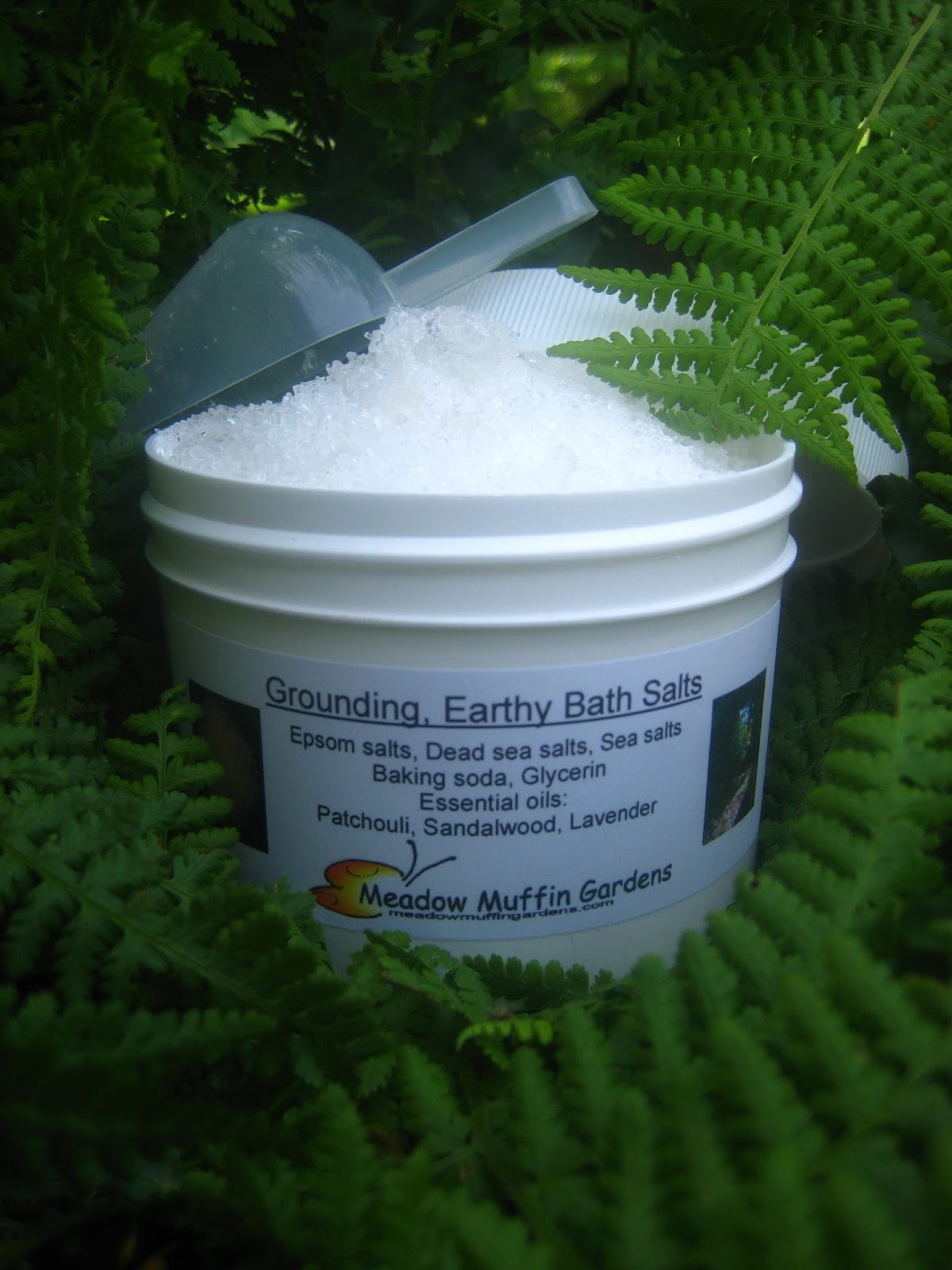
Bath Salts

Body Powder

Gift Basket

www.meadowmuffingardens.com
www.meadowmuffingardens.etsy.com


Tuesday, June 6, 2017

A Man's World of Body Care

Men and women often feel they need their own personal, body care products and the paths of those products shall not cross. Actually that is a marketing ploy and clutters up your cabinets. Many personal and hygiene items can easily be shared by both men and women and you don't need a separate type item for every little purpose.

The attempts to get away from the hype of slick advertisements trying to have you believe you need this and this and this can be a challenge. In today's day and age men are taking better care of themselves and more conscious of what they put onto and into their bodies. Awareness is the first step to educating ourselves on just what is in our hygiene and body care products. Read labels, do your research on just what are those ingredients you cannot pronounce,  be aware of potential harm from synthetics and chemical ingredients, be aware of the use of animal testing, and finally, understand just what that term "natural" is saying or isn't saying.

It may be very surprising to learn just how vague the labeling laws are in the perfume and cosmetics industry. Unlike the food industry, there are no legal standards for organic or natural personal care products sold in the United States.

Ignorance is not bliss when it comes to you and your family's health. The skin is our body's largest organ, and anything we apply to ourselves enters through the layers of skin into the bloodstream. Yes, the old saying about "anything in moderation" is true with most things, but...The cosmetic industry claims the amount of these ingredients are not high enough to pose a threat, but the problem lies in the fact that we use these products day in and day out.  Our kidneys and liver do their best to eliminate toxins but what about those that over time have been stored within the fatty tissues of the skin. The long term effects are a concern. The body reacts by way of allergic and inflammatory reactions, the havoc played on the the endocrine system is not always fully understood and the source of the problems are often hard to pinpoint.

There are several items within the Meadow Muffin Gardens shop that are geared for men, but there are also many items such as these below that can easily be swapped for more than one method of use and by both men, women and even the kids.

A body wash certainly isn't limited to the shower. Containing Dr. Bronner's Castile Soap, Aloe Vera Gel, Jojoba oil and various essential oils, this blend can easily be used as a face wash, a shampoo and even a shaving gel. Put into a foaming pump bottle, application is less wasteful without losing some between your fingers and down the drain.
Body Wash, Shaving Cream

A conditioning hair oil isn't just for women! Men can have dry, brittle hair as well, whether they wear their hair long or short. This Jojoba oil blend does make an excellent dry hair treatment, but it's use certainly doesn't have to stop there. Hair isn't limited to our heads alone!
Bearded men need to take care of their facial hair and the delicate skin beneath. Jojoba oil is unique in that it is very similar to the sebum of our own skin, therefore it makes a great hair and skin conditioner.
Hair Oil, Beard Oil
Men may or may not use an after shave balm to moisturize the skin and help with razor irritation. This Shea butter and Coconut oil blend is listed as a body butter, but it can be used for so much more. Whipped to a fluff consistency, this moisturizer can be used anywhere you need it, be on the face, hair or even on that balding head. Some use such a blend as a shaving cream, but if you do so, realize that you are washing fats down the drain. I don't know how good doing that on a regular basis is for the drain pipes.

Face, Body Moisturizer, After Shave Balm

Concerns over the safety of sun screens has people looking into alternatives. The choice we have is between "chemical" sunscreens which contain questionable, potentially hormone disrupting ingredients, and "mineral" sunscreens which contain zinc oxide and/or titanium dioxide. This lotion is listed as a sun block, not a sun screen. It hasn't been evaluated by the FDA, therefore there hasn't been testing done to establish an actual SPF factor. However, the ingredients used all contain their own natural properties to help block the harmful rays of the sun.


Balding men or those who choose to shave their heads need to protect their scalps from sun damage. The purpose of our hair is to protect the scalp and without hair, the skin can easily burn. This sunblock is good for anywhere on the body but using a bit on the scalp before heading out without a baseball cap is a wise idea.

Sunblock Lotion, Bald Head Care

Personal care items make great gift ideas for Father's Day, Holidays and Birthdays. You can easily custom create your own gift basket or make substitutions for one or more items already part of a listing such as those shown below.

Basket idea for those who love the outdoors, gardening, sports, hunting, fishing

Basket idea for the needs of men


Come visit!
Meadow Muffin Gardens
Website
Etsy shop