Meadow Muffin Gardens logo
Showing posts with label aromatherapy. Show all posts

Monday, January 20, 2020

Back To Basics Skin Care Routine...Starting Over


The case many a time when people do seek out products not easily found on the commercial market is a result of wanting to eliminate synthetics and chemicals in their lives or a frustration with the condition of their skin. Often it is a matter of going back to basics and starting over.
A mistake people often make with cleansing their face is that the products used are too harsh and strip the skin of their natural oils, leaving the skin pH out of whack resulting in too dry skin lacking the balanced oils that normally protect the barrier. In trying to get back to normal there can be an overproduction of sebum which we then try to scrub off by washing even more and the cycle continues.
A good routine to follow includes: a cleanse, an occasional steam and/or mask, then a toner and last a moisturizer if needed

I have two types of FACIAL CLEANSE, one is like a serum and the other is a honey/glycerin/castile soap blend:
First we have the oil cleanse method.
Remember years ago when women used cold creams? That method was basically using cleansing oils that removed makeup and dirt from the skin. It was a gentle approach to cleansing both dry and oily skin. I got this recipe from an old herbal book. 
Aloe Rose Facial Cleanse

Some people like this to cleanse and additionally use a moisturizer, others think this is enough for both cleansing and moisturizing. It consists of olive oil (this could be replaced with a "drier" oil such as grapeseed for oily skin), rosewater and aloe vera gel. You would apply this to a cotton round and simply wipe over your face to cleanse and moisturize and the same time. Second option is to use it like you would any other facial wash and rinse off with water.

Cleaning your face with oil may sound unappealing but contrary to popular belief, oil does not contribute to oily skin or breakouts. The sebum that the skin creates is there to protect the skin. When we use commercial cleansers to remove this natural oil, the body reacts by producing more oil. Dry skin is often the result of stripping away this natural barrier and things get out of balance. It is the same as how our hair adjusts to constant shampooing.
In washing our faces we want to remove the dirt and bacterial which builds up in our pores but we have to think about the chemistry behind it. Oil dissolves oil, like dissolves like. Water and oil do not mix; commercial cleansers contain ingredients to break up the oils but in doing so may strip away the natural protective layer. By using a nourishing oil like olive oil, the dirty oils are being replaced with beneficial ones.

Some people like to use the above serum type cleanse on some days and then the more traditional wash with water on other days, just to mix things up and get the benefits from both types.
There are three versions of the honey/glycerin/castile soap washes, mainly its personal preference. The first one uses essential oils orange or lemon which you may like for oily skin since they are more astringent. The next one is made with the honey infused with rose petals and the third the honey is infused with lavender.

Citrus Honey Facial Wash

Rose Honey Facial Wash

Lavender Honey Facial Wash

Wildflower and clover honey already have the beneficial attributes of various herbs and flowers within the honey itself. Honey is a natural humectant which means it retains moisture and plumps up skin cells. It helps to rebuild the moisture level in the skin without making it oily. The high sugar, low protein content create an acidic environment with limited availability of water therefore bacteria cannot thrive.
Glucose oxidase is an enzyme that when combined with water produces hydrogen peroxide, a mild antiseptic. Honey also contains antioxidants and flavonoids that may function as antibacterial agents. It calms down troubled skin without irritation.
Vegetable glycerin is what is known as a humectant which means it draws moisture from the air and holds it in. As part of a cleanse it bonds to dirt and oil and washes away.


To open up the pores, you can follow the cleanse with a 20 minute facial steam in which you fill a bowl with steaming water (add an herbal tea bag for extra benefits), make a tent by covering your head with a towel, and lean over the bowl.


Follow the steam with a RAW HONEY MASK or an exfoliating SUGAR SCRUB for wonderful benefits.
Masks and scrubs are great for periodic use for deeper cleansing to draw out impurities or for exfoliation to remove dead skin cell build-up. These aren't meant to use every day, once or twice a week is sufficient. Add variety by mixing it up a little, and there is no need to use both the mask and the scrub at the same time.

Unpasteurized honey contains all the live enzymes and life of the hive without being destroyed by the heat of pasteurization. Typical store bought honey is pasteurized to make it nice and pourable and remove bits of wax and stuff from the hive. Having a high anti-oxidant level and being the natural enzymes have not been destroyed by heat, raw honey is a much healthier product.
Facial masks are wonderful for deep cleaning in that they penetrate below the surface and draw out impurities. Honey masks are nourishing, moisturizing and gentle enough to not strip the skin of its natural protective oils.
When you wash the honey off your skin, a small amount remains in the pores. As a result, the sugars in the honey attract water from the air, which keeps your skin hydrated.

The first mask has tea tree and chamomile and is good for blemishes. The second one is good for blemishes too but in using lavender is more gentle. The third one is great for oily skin as it contains peppermint and lemongrass which are astringent and antiseptic.
Blemish Honey Mask
Lavender Honey Mask
Oily Tired Skin Honey Mask

Scrubs are optional as they may be too harsh for already irritated skin.
The choice between sugar or salt for scrubs depends on how it is to be used. For the delicate skin of the face sugar scrubs are gentler. People often make the mistake that if they scrub they'll scrape those blemishes right off when actually they are irritating the skin further causing more inflammation.
One uses vegetable glycerin instead of an oil and the other two use coconut oil. The glycerin scrub is "goopier" and good if you like a looser scrub. The coconut oil ones tend to be more compact since coconut oil solidifies under 75 degrees. But as soon as you touch it it melts and gets soft again.

Vanilla Sugar Scrub
Vegetable Glycerin Lavender Sugar Scrub
Coconut Sugar Scrub Lemongrass


Finish up with a gentle TONER:
The herbal vinegars are great for getting and keeping the skin pH back in balance. It's personal preference as any of them are tonics for the skin.
The first one uses herbs for their anti-inflammatory benefits and the second is an old-fashioned blend of roses and elderflowers which were used for their high vitamin C content.
Calendula Nettles Chamomile Toner

Rose Elderflower Toner

Herbal Blemish Spot Treatment

This third one is stronger than the other toners because it doesn't have the dilution of distilled water. It's more of a spot treatment for blemishes. It does make a great everyday toner too if it's diluted a bit which is an option when purchased.

The natural pH of the skin is what keeps bacteria levels in check Disruption of the skin's pH can be detrimental to your skin, because bacteria thrives in an environment only a little more alkaline than your skin's natural acidity. Once bacteria thrives it can lead to inflammation and generating more clogged pores.
Good quality raw vinegars restore the natural acid balance of the skin, leaving it soft and smooth.
By promoting circulation in the small capillaries that irrigate the skin, vinegar becomes a tonic for the complexion. Raw vinegars don't go through the processing and distilling of the typical clear vinegars, therefore raw vinegar still contains the living nutrients and beneficial bacteria of the "mother".
Vinegar acts as an antiseptic, meaning it prevents proliferation of bacteria, viruses and yeast that could trigger infection. As a facial toner, it removes oily residue as it dissolves fatty deposits at the surface of the skin.


Third step on a daily basis is to MOISTURIZE
There are several facial cream choices and one lighter lotion. They vary in ingredients just to offer options for personal preference or allergies but they all are very good for different skin types. The oil to water ratio is almost 50/50 whereas most lotions in pump bottles are 20/80. The key is how often and how much to use at a time. People with dry skin find these creams nourishing and great relief for parched feeling skin and those who don't need a heavier cream may find they only need a tiny bit or perhaps only need it as a night cream.

Herb Floral Facial Cream
Elderflower Rose Facial Cream

Rose Facial Cream
Serenity Facial Cream
Scent Free Facial Cream
Wrinkle Wrath Facial Cream

Touch of Bliss Facial Cream
Vanilla Wrinkle Wrath Facial Cream
This lotion has a higher liquid portion and doesn't have a solid oil such as shea butter or coconut oil. This lotion was originally the request from a woman who had skin troubles and was allergic to coconut oil. But since some people just want a lighter lotion rather than a cream I left the listing as it is. The essential oils chamomile and tea tree are the usual ones in the lotion only because it originally was wanted for and to prevent future blemishes. But if you don't need that, you can leave it unscented or add something else.
Sensitive Skin Lotion


Everyone has different needs and preferences, therefore there is no one product or routine that fits all. Getting to know what works best for you may be trial and error, but hopefully with options like these products you can be reassured the "first do no harm" philosophy is a priority.

meadowmuffingardens.com

meadowmuffingardens.etsy.com


Friday, June 30, 2017

Passion for Patchouli

Patchouli

A first introduction to Patchouli (Pogostemon Cablin or Pogostemon Patchouli) is often met with a description of it having a definite earthy scent to it. So just what does that mean, that it smells like dirt? No, it smells like nature and that is a wonderful thing. Some describe it as musty and too strong and others think of it as exotic and perfect in that it's lingering scent reaches deep into the emotions.

Patchouli has been used in incense and fragrance oils for centuries. It brings a sense of the sacredness of life and the need to care for our earth and everything in it. It helps us realize that to just "be" and do nothing at times is a good thing, that contemplating has a purpose and helps one get focused for action.

It is simply not true that the main reason the "hippies" of the 1960's and 1970's loved patchouli was that it covered up the scent of marijuana. Patchouli symbolized the love of nature and the escape from what was called the "establishment". The younger generation developed different ideas and ideals which were often met with labeling and indifference from the older age groups.

The essential oil of Patchouli is extracted by steam distillation of the leaves. All the benefits and uses for this plant are amazing. It is an antiseptic, aphrodisiac, astringent, deodorant, fungicide, insecticide, sedative, antidepressant, diuretic and boosts healing and the metabolism by stimulating the generation of new cells.

INSECT REPELLANT PROPERTIES
Patchouli has long been used to protect clothes and fabrics from insect damage.

ANTISEPTIC
The essential oil protects wounds from developing infection.

FUNGICIDE
By inhibiting fungal growth, patchouli can help with problems such as Athlete's Foot.

ANTIPHLOGISTIC
Containing patchoulene, patchouli soothes inflammation, therefore can help externally with skin conditions as well as internally with the pain from arthritis.

ANTIDEPRESSANT
By stimulating the release of pleasure hormones such as serotonin and dopamine, patchouli helps with feelings of sadness, anxiety and simply feeling better.

APHRODISIAC
By stimulating hormones, estrogen and testosterone, patchouli can boost indifference and lack of interest in the sex drive.

ASTRINGENT
By contracting blood vessels, patchouli stimulates contractions in muscles, nerves and skin. This helps with the symptoms of aging we see in the skin. Wonderful for use in face and body creams and lotions.

DEODORANT
The strong, musky aroma of patchouli helps eliminate or mask body odor and it's lingering scent helps the protection last.

SEDATIVE
By soothing inflammation and calming to the nerves, patchouli helps relax the body in order to get a good night's sleep.

For more information on any of the below items, just click on the listing underneath the picture.


Body Spray

Body Butter

Body Lotion

Solid Perfume

Bath Oil
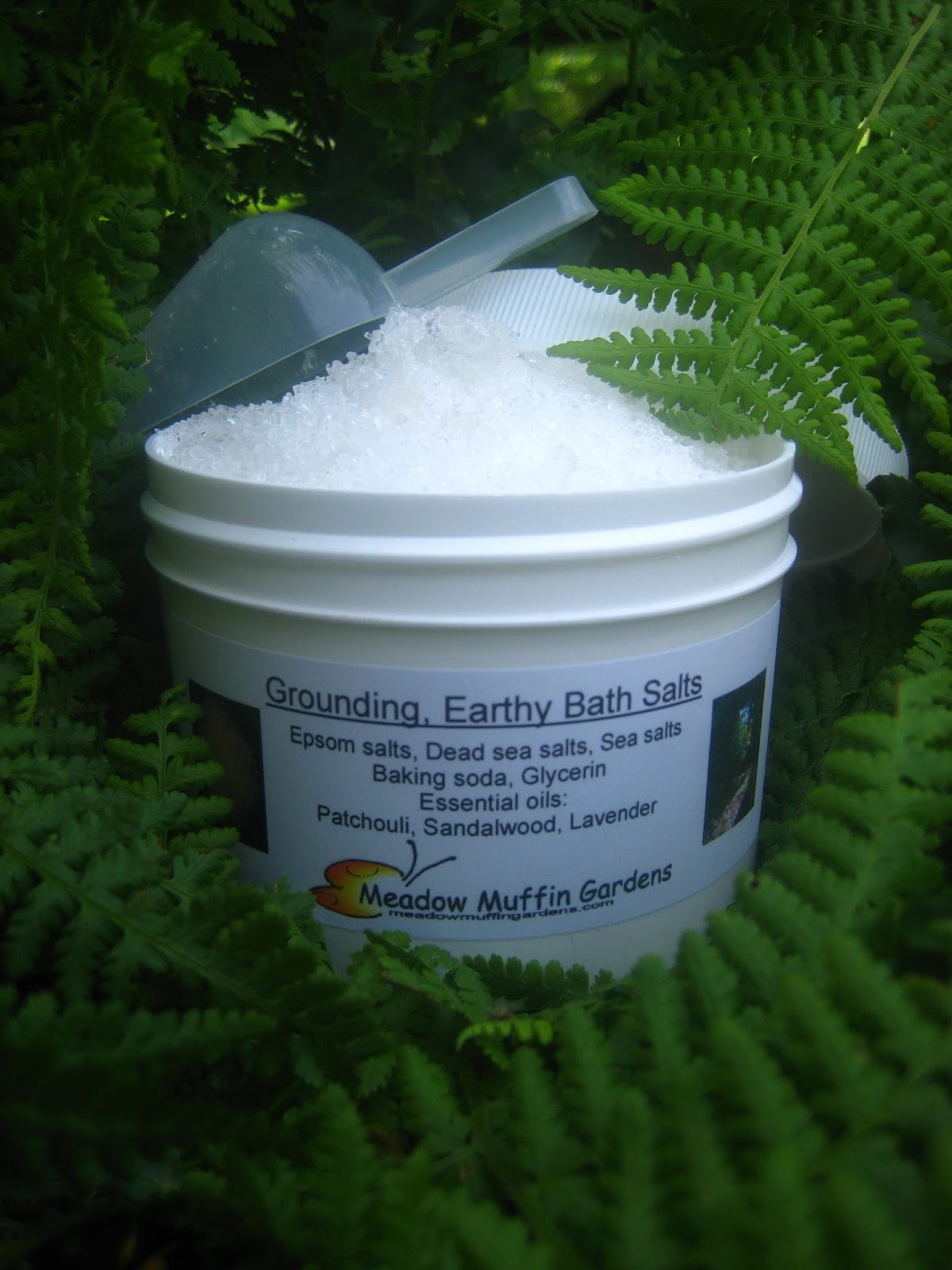
Bath Salts

Body Powder

Gift Basket

www.meadowmuffingardens.com
www.meadowmuffingardens.etsy.com


Tuesday, July 14, 2015

Lavender Wands, Nostalgic Gift, Centerpiece Idea


Weddings, bridal showers, baby showers are always more meaningful when personal touches are added to the decor. Color schemes and themes add a unique and individualized touch to such intimate celebrations. 

Between Internet sites such as Blogs and Pinterest to give you ideas and instructions, and the availability of supplies from craft stores, it is easy to become excited and look forward to getting involved in party preparations. Don't be so quick to say you aren't crafty. Rediscover the imagination you had as a child and have fun with trial and error. Anything takes practice and what better fun for a craft day than to learn together as a group.

Once you get the knack of how to do these, Lavender Wands are really rewarding to make. Besides being a conversation starter of a centerpiece, having a vase full of lavender wands can benefit anyone near them with their heavenly scent and ability to relax and soothe frazzled nerves.
Not only are they pretty and smell good, they have a very practical use once the event is over. You can keep them as is bundled in a vase to scent the room and add to your home decor. Or you can give them out to your guests as appreciated party favors. Lavender wands can be put into linen or clothing drawers to add a delicate scent as well as help keep out moths. Sachets were very popular in times past as a way to prevent moth damage in stored clothing and blankets. Here is a blog post of the harmful effects of using moth balls and how to utilize herbs as an alternative.

Here is what you'll need to make your Lavender Wands:
Long stemmed Lavender such as the Grosso type rather than the Munstead type used for potpourri and arrangements. 
 An excellent source for bundles of this type of fresh cut lavender is Local Harvest out of Washington state
You want the fresh cut lavender, not the dried. The stems have to still be flexible.
Spools of ribbon in the colors of your choice. Widths of no more than 1/4 inch work best. I found that one roll of 3/16 inch x 6 yards makes about four to five wands if you want a tail of ribbon to drape below the length of the stem. I'd estimate my stems were 8 - 10 inches long. The pictured vase has 24 wands and I used about six spools of ribbon, two each of three different colors.

Below is a tutorial on how to make these adorable lavender wands:


Lavender (Lavandula spp) has been called the 'mother of all essences', and is one of the most well known scents amidst the world of herbs and essential oils. It has often been called the safe "go to" remedy for babies, children and adults alike. Frazzled nerves, sleep troubles, headaches, muscle aches, skin flair-ups, bug bites, first-aid care, the list goes on. 
One of the most versatile herbs, lavender has been used since the ancient Greek and Roman times. It gets its name from the Latin 'lavare', meaning to wash. Its soothing, antiseptic qualities make it beneficial for cleansing and caring for various skin ailments.

Below is a link for the perfect gift for that special someone who enjoys and understands the benefits of this wonderful herb. This gift arrangement includes seven personal care products utilizing the soothing, healing properties of the lovely lavender plant. For the face we have four items: lavender infused honey as part of a honey/glycerin gentle facial cleanse, a raw honey facial mask to perk up tired skin and keep it blemish free, an exfoliating face and body sugar scrub, and a rich moisturizing cream containing lavender and sandalwood essential oils. For the hair, we have a lavender infused apple cider vinegar rinse to add shine, remove build-up and balance scalp pH. Bath time includes relaxing bath salts to soothe away the day's tension followed by a lovely body powder to help one feel dry and fresh. 


Love of Lavender Gift Assortment

Tuesday, July 7, 2015

Vanilla, Nector Of The Gods


When you think of Vanilla, what first comes to mind? Mom's kitchen? Home Sweet Home? Holiday baking? Candles? Chocolate and romance? Usually it is the taste and smell factors that are most familiar to us.

Being taste and smell are important components when it comes to love and romance, it is no wonder the sweet, alluring aroma of vanilla is so captivating. We're in love with the idea of love, something we all seek and treasure. Vanilla's sweet, welcoming odor just seems to draw people to it.

According to Valerie Ann Worwood in "The Fragrant Heavens", aroma evokes emotions, as well as memory, and often the two are connected. Emotions run deep, to the very core of our being. Time means nothing to aroma, therefore deep seated emotions are reached immediately when we smell something that triggers a certain memory.

Fragrance molecules are the essential oils from plants, from which we are interdependent and without them life would stop. Worwood states, "plants are the interface between cosmic energies and the earth, upon which we depend." We can capture the aura with photography but have yet to fully understand just what is that energy. Essential oils contain this mystery we call life and their powerful inexplicable energies cannot be fully explained.

Science can study the chemical make-up of plants and record which ones have anti-bacterial, anti-viral, anti-fungal, anti-inflammatory, antiseptic and analgesic properties. But understanding their spiritual relationship to us has always been a cause for debate.

The perfume industry thrives on our desires, need for love, captivation for lust and vanilla plays an important role in all of which that entails. Something about the vanilla scent combines sexy, erotic, sweet and innocence all at the same time. You can have a floral bouquet type perfume, or an oriental exotic type perfume, or a relaxing blend, and even a modern, take on the world type scent. Vanilla fits into any of those blends.

Indigenous people are believed to have been the first to have grown vanilla. The Totonaca people of the Gulf coast were probably the first people. The Mexican Revolution nearly destroyed the natural vanilla production in Mexico which led to the beginning of the production of synthetic vanilla. Coumarin was used to disguise the artificial taste which tasted exactly like vanilla. Coumarin is extracted from the Tonka bean. The problem was that Dicumarol, a derivative of Coumarin, is used as a blood thinner, therefore with such safety considerations, it was eventually banned by the FDA.

Today, real vanilla extract is made by cutting the vanilla beans into small pieces and soaking them in hot 65-70% alcohol. There are extracts which are cheaper, called imitation vanilla. It is chemically produced to mimic vanilla with added sugars for better flavor.
Believe it or not, some vanilla labeled as natural actually comes from the castor sacs of beavers. I suppose that is natural enough, but certainly not true vanilla.

Real vanilla is described as "Nector Of The Gods". True vanilla is very expensive and the reason being is that of all the agricultural crops grown, vanilla is the most labor-intensive. The vanilla plant (Vanilla planifolia) will thrive only in tropical areas around the equator.
It is a perennial herbaceous vine to a height of fifteen feet. Being a vine, it needs the support of trees of poles and takes up to three years to flower.
The large white flowers have a deep narrow trumpet that over a three month period develop into long green pods. 
These pods remain on the vine for another nine months before they can be harvested.
Then they need to go through a drying process of curing that turns them into the fragrant brown pods we're familiar with.

In addition to its high demand in the food industry, vanilla has a lot of health benefits to offer. It acts on the central nervous system and is known to help with sexual desire and function. The sweet fragrance in vanilla is from what is called Heliotropin, and this is largely responsible for soothing emotional tension and anxiety. Such a release when anxious will definitely help with one's confidence and sex drive.

Having a euphoric effect on the brain, vanilla invigorates and uplifts the spirit while having a calming effect of the entire nervous system. 

Vanilla can even help with weight loss by reducing a person's sweet tooth.

Vanilla is rich in both anti-bacterial properties and antioxidants. Using a vanilla infused oil or lotion topically on the skin can be very useful to help deal with pimples and combat skin aging from free radical damage. 

Below you'll find ways to incorporate the enticing vanilla bean as part of your personal care products. Vanilla beans are infused into either 100 proof vodka or a carrier oil such as jojoba or almond oil. The result is incredible smelling vanilla oil or vanilla tincture to become body massage oil, bath oil, face or body sugar scrubs, body lotion, lip balms, even a hair conditioner. Just click on the caption underneath the picture to take you into the shop for more information or to purchase:


Vanilla Massage, Body or Bath oil

Vanilla Jojoba Hair Conditioning Oil
Vanilla Sage Deodorant Spray
Vanilla Face or Body Sugar Scrub
Vanilla Jojoba oil Solid Lotion Body Butter Bars
Vanilla Lavender Hand or Body Moisturizer

Vanilla Lip Balm


Saturday, July 4, 2015

Mint and its Multitude of Uses


Peppermint is just one of many types of mint in the Mentha family. Though very common in the world of herbs mint is certainly not a lowly plant.
Known as the herb of hospitality, mint has long been used everywhere from the kitchen to the sickroom. Peppermint and spearmint are the most common types of mint, but there are several varieties that can be found at your local nursery in the herb section. A good way to identify whether a plant is in the mint family is to feel the stem. If it is squared rather than round it is in the mint family. Mints are low to no maintenance perennial plants. They are so hardy, they'll be happy to take over your entire garden. The roots spread by way of runners, so If you don't want it to continue to creep along, it is best to plant it in buried containers.

Peppermint has a powerful, menthol aroma that refreshes, energizes and improves mental clarity just by inhaling the steam from a cup of hot tea. Have a supply of mint tea on hand as well as a bottle of the essential oil. So many ailments can be eased with this one plant. Nausea can be relieved, cramping belly aches can be settled, pounding headaches can fade away, congestion can open up, aching, tired feet can perk up, heat flashes can be cooled, overexerted, sore muscles can relax, even kill germs in the air.

You probably already have minty products in your home cabinets, such as toothpaste, candles, mint candy, air sprays, soap, cough medicines, even cigarettes. However, it is unlikely that those scents are the real thing, most likely they were manufactured in a lab and what you are smelling is the synthetic version. Unless the scent is from the pure, therapeutic plant essential oils, don't expect to get the health benefits you wanted.

Just a few notes so you understand the difference between peppermint in herb form versus the essential oil. Essential oils are very concentrated and should always be diluted before applying to the skin, used with caution while pregnant, and should not be used with very young children.
Herbal peppermint in tea form is wonderful for pregnant women to help with nausea, but the essential oil may be too strong for the baby. It is okay to apply a few drops onto a tissue and breathe it in but don't apply the spray directly onto your skin.
Peppermint herbal tea is great for children's belly aches, nausea or headaches but in essential oil form it may be too strong for children under the age of eight. Please check with physician
People with high blood pressure, please check with your physician before using this product.

The use of aromatherapy can be wonderful when used safely. Adding just a few drops to a simmer pot releases the plant essences into the air which kill germs and help little ones breathe and sleep better. An old favorite I've used often when my children were small is the combination of:
3 drops lavender, 3 drops eucalyptus and 2 drops peppermint. There is no need to add more than a 10 drop total when using a diffuser, atomizer or simmer pot. The rule with essential oils is less is more. 

Below are wonderful products utilizing either the herbal infusion in olive oil or peppermint essential oil:

 This versatile spray can be used for a multitude of purposes. Liberally spray yourself from head to toe as a way of cooling off should the discomfort be coming from the temperature outside, overexertion from a workout, or in getting through another heat flash.
Spray your counter tops or windowsills to deter the pathways of ants entering your home.
Spray areas you suspect mice are scurrying at night. Rodents detest the strong odor of mint.
Spray a tissue and inhale when feeling a pang of nausea in a moving vehicle.
Spray your fingertips and rub your temples to help relieve a throbbing headache.
Spray a tissue and inhale to open congested sinus passages.

Salt baths are so common that we often forget the fact that "the simpler the better". A soak in warm salt water has long been used for achy joints, muscles, and tired feet, as well as a periodic detoxification. The addition of essential oils add their own therapeutic value as well as the pleasure of the aroma.
The addition of peppermint turns a warm bath into a helpful remedy for relieving clogged sinuses, sore muscles, throbbing headaches, as well as mental and physical fatigue. After a day's work in the heat or hours on your feet, a peppermint bath or foot soak will help bring a bounce back in your step. Realize,however, that being peppermint is stimulating, it will perk you up rather than help you relax for a night's sleep.


We demand a lot from our tired feet, therefore proper care and pampering should not be overlooked. This foot soak salt blend is wonderful to rejuvenate not only your feet but also your mood after a long day. Great to use as a preventative to fungal problems or as a natural treatment if you already are bothered by itchy feet.

Congestion, seasonal allergies, cold and flu symptoms, sinus headaches all contribute to breathing discomfort. Home herbal remedies can make breathing a little easier.
If you look at commercial vapor balms,you'll notice they probably contain ingredients such as thymol, menthol, and eucalyptol. These are components of the essential oils: thyme, mint, and eucalyptus. This vapor balm can be applied onto the chest, back or feet. Should you want to increase its warming action lay a warm piece of flannel over the area.
An option to help open clogged sinuses is to apply just a bit under the nose.


Children's Hurting Tummy Oil is a combination of peppermint-infused olive oil and an essential oil blend of chamomile, lemongrass and fennel. These herbs have a wonderful reputation for the relief of cramping and nausea. Belly massages are wonderful to relax and calm down colicky babies. Painful tightening of the stomach and intestinal muscles, gas and nausea can result from various sources: improper eating habits, emotional stress, or a moving vehicle.


If you have access to fresh mint, try cutting and making your own herbal tea, wonderful cold or hot. Cut enough stems to fill a large soup pot. Be sure the plants you are cutting were not sprayed with pesticides or herbicides. Mint shouldn't need either one but just know for sure before using the plants. Cover the pot and bring to a boil, cock the lid so it doesn't overflow. Let the tea simmer about 5 to 10 minutes, depending how strong you like your tea. You don't want to simmer it too long or you'll lose the important essential oils in the steam. Strain out the plant material and add sugar to taste. For sweet tea, 1 cup sugar to a gallon of tea is tasty. Enjoy a cup of hot tea right away and let the rest cool and store in the refrigerator for ice tea. This is wonderfully refreshing on a hot day.

Enjoy!