Meadow Muffin Gardens logo
Showing posts with label winter. Show all posts

Tuesday, June 19, 2018

The Song of the Elder Fairy


THE SONG OF THE ELDER FAIRY
When the days have grown in length,
When the sun has greater power,
Shining in his noonday strength;
When the Elder Tree's in flower;
When each shady kind of place
By the stream and up the lane,
Shows its mass of creamy lace
Summer's really come again
"The Complete Book of the Flower Fairies"


One of nature's medicines is the wild elder (Sambucus species). A shrubby, unruly bush found among hedgerows, this small tree is lanky and not much to look at when not in bloom. Attempts to rid unkept landscapes of this shrub are often in vain as it easily resprouts even after a hard pruning.


However, every June this versatile herb is beautiful as it is covered with large, saucer-shaped off-white flowers. 


These flowers can be gathered and used as a food source such as flower fritters, a wash or toner to maintain clear skin, soothing skin care salves, a medicinal tea to clear congestion in the respiratory tract, relieve hay fever or aid in reducing fevers. Poultices for minor burns, wounds and swollen joints are made with mashed flowers wrapped in layers of cheesecloth. Elder flower water was once considered a valuable beauty aid among women to keep the face blemish and freckle free, as well as a great aid for sunburn.


The following vinegar spritz combines elderflowers and rose petals with raw apple cider vinegar to create a soothing sunburn relief body spray.
A variation in the recipe for the sunburn soothing spray and we have a wonderful ph balancing facial toner. Raw apple cider vinegar helps bring balance to troubled skin and helps with blemishes.

Elderflower & Rose Facial Toner


Sunburn Spritz

The use of elderflowers for a balm or salve is a win win from the delicate skin of baby bottoms to the fragile skin of the elderly. The flowers are rich in anti-oxidants and contain anti-microbial and anti-fungal properties that help keep the skin healthy. Below is a very soothing salve which combines elderflowers, calendula flowers and lavender buds, all safe and soothing for any age.


Baby Bottom Balm
In the late summer, the flowers have turned to dark blue berries often sought after for jam, wine and syrups. If you wait too long the bushes are soon stripped clean by the birds. Don't eat these right off the bush. The fresh berries can upset your stomach. Dry or cook the berries before eating them. If you do collect your own elderberries, make sure they are the dark blue or black ones and not the red berries. The red berries belong to S. racemosa which is toxic.


Elderberry Syrup

More information on Elderberry Syrup


Sunday, November 19, 2017

Holiday Quick Breads, Entertaining, Gifts


Home baked goods are always welcome on any party table or in a gift basket. Recipients of such thoughtful offerings just know a little touch of love is sprinkled into every batch.

Pumpkins, apples, dates, nuts and cranberries are tradition in holiday festivities and what better and easier way to use them than for quick breads. Below are the recipes for an apple bread, a pumpkin cranberry bread, a date/nut bread and a cranberry orange bread. Quick breads freeze well so you can get some holiday baking done early.

APPLE BREAD

3 cups chopped apples
2 cups sugar
1 cup vegetable oil
2 eggs
3 cups flour
1 1/2 tsp baking soda
1 tsp salt
1 cup chopped nuts or 1 cup rolled oats
2 tsp vanilla

You'll need two bowls
Peel and chop the apples
Combine the apples and sugar
Let sit for 30 minutes
Add the oil and eggs
Beat well
Combine the flour, baking soda and salt
Add the dry ingredients to the wet ingredients
Stir in the nuts (or oats) and vanilla
Dip into 2 greased loaf pans
Bake at 350 degrees for 60 minutes
Cool before removing from pans

PUMPKIN CRANBERRY BREAD

3 cups sugar
1/2 tsp baking powder
2 tsp baking soda
4 cups flour
1 cup vegetable oil
1 cup cold water
1 tsp cinnamon
1 tsp cloves
1 tsp nutmeg
2 cups pumpkin
4 eggs
2 cups dried cranberries

You'll need a large bowl
Combine the dry ingredients and sift well to blend
Add the oil, water, pumpkin and eggs and mix thoroughly
Fold in the dried cranberries
Pour into 2 greased loaf pans
Bake at 325 degrees for 60 - 70 minutes
Cool before removing from pans

DATE NUT BREAD

2 cups chopped dates
2 cups boiling water
2 tsp baking soda
2 eggs
2 cups sugar
1 cup vegetable oil
2 tsp vanilla
3 1/2 cups flour
2 tsp baking powder
1 1/2 cups chopped nuts

You'll need three bowls
Pour boiling water over dates and baking soda
Set aside
Beat eggs and sugar
Blend in the oil and vanilla
Combine the flour and baking powder
Add dry ingredients alternately with the date mixture to the batter
Fold in the nuts
Pour into 2 greased loaf pans
Bake at 350 degrees for 60 minutes
Cool before removing from pans

CRANBERRY ORANGE BREAD

2 cups sugar
4 cups flour
1 tsp salt
1 tbsp baking soda
2 tbsp grated orange rind
2 beaten eggs
4 tbsp melted butter
1 cup orange juice
4 tbsp hot water
1 1/2 cup chopped nuts or raisins
2 cups cut up cranberries

You'll need one large bowl
Combine the dry ingredients
Make a hole in the center and add the eggs and wet ingredients
Blend well
Fold in the nuts (or raisins) and the cranberries
Pour into two greased loaf pans
Bake at 350 degrees for 60 minutes
Cool before removing from pans


Sunday, February 12, 2017

Bugs and Butterflies...Where Do They Go For The Winter


There is a cute saying we quote to children, "snug as a bug in a rug". That is very true when it comes to the survival of our backyard bugs and butterflies during the harsh, cold winter months.
Most of us are aware of the long migration south of the Monarch butterlies, but butterflies and other insects do not migrate. They cleverly hidden in the landscape.

Butterflies and other insects slow down their metabolisms in a process called diapause. They rid most of the water from their bodies to avoid freezing and there are certain chemicals in their bodies that act as antifreeze.

Different types of butterflies are in various stages of their life cycles during the winter months. Some will overwinter as an egg or ovum, some as a larva or caterpillar, some as a pupa or chrysalis and some as adults.

In order to accomplish any of this, butterflies need the proper conditions. There is a reason nature seems to be so untidy by late autumn when everything dies back for the winter. Without places of shelter in leaf litter, tree bark, plant stalks, seed heads and brush piles, these insects wouldn't survive.
This is why it is so important to hold off on your garden clean up until spring. Raking, bagging and disposing of all those fall leaves is actually destroying countless insects. If you want your yard and garden to come alive again in the spring, you simply cannot interfere with too much cleaning up and cutting back.

Below are a few examples of where our flying flower beauties go for the winter:

The Viceroys, who look so much like the Monarchs,are in the caterpillar stage. The chew a leaf into a certain shape, roll up inside it to form a tent form and then fasten to a plant stalk.
Viceroy


The Swallowtails are at their chrysalis stage 
Eastern Tiger Swallowtail

Black-tail Swallowtail


Hairstreaks overwinter as eggs
Coral Hairstreak
Fritillaries, Crescents and Skippers hatch from their eggs in the fall and sleep through the winter as caterpillars.
Fritillary
Crescent
Skipper


Cloaks, Question Marks and Commas tuck themselves away as adults in fallen leaves or behind loose bark.

Mourning Cloak
Question Mark


Comma
Here is a more complete list

Pipevine Swallowtail (Battus philenor) - Chrysalis
Zebra Swallowtail (Eurytides marcellus) - Chrysalis
Black Swallowtail (Papilio polyxenes) - Chrysalis
Canadian Tiger Swallowtail (Papilio canadensis) - Chrysalis
Eastern Tiger Swallowtail (Papilio glaucus) - Chrysalis
Spicebush Swallowtail (Papilio troilus) - Chrysalis
Giant Swallowtail (Papilio cresphontes) - Chrysalis

Mustard White (Pieris napi) - Chrysalis
Clouded Sulphur (Colias philodice) - Chrysalis
Orange Sulphur (Colias eurytheme) - Chrysalis

Coral Hairstreak (Satyrium titus) - Egg
Edwards’ Hairstreak (Satyrium edwardsii) - Egg
Eastern Tailed-Blue (Everes comyntas) - Caterpillar
Karner Blue (Lycaeides melissa samuelis) (rare, endangered) - Egg
Spring Azure (Celastrina ladon) - Chrysalis

Monarch (Danaus plexippus) - Migrant

Variegated Fritillary (Euptoieta claudia) - Migrant
Great Spangled Fritillary (Speyeria cybele) - Caterpillar
Aphrodite Fritillary (Speyeria aphrodite) - Caterpillar
Atlantis Fritillary (Speyeria atlantis) - Caterpillar
Silver-bordered Fritillary (Boloria selene) - Caterpillar
Meadow Fritillary (Boloria bellona) - Caterpillar

Silvery Checkerspot (Chlosyne nycteis) - Caterpillar
Harris' Checkerspot (Chlosyne harrisii) - Caterpillar
Northern Crescent (Phyciodes cocyta) - Caterpillar
Baltimore (Euphydryas phaeton) - Caterpillar
Gray Comma (Polygonia progne) - Adult Hibernation
Compton Tortoiseshell (Nymphalis vaualbum) - Adult Hibernation
Mourning Cloak (Nymphalis antiopa) - Adult Hibernation
Milbert's Tortoiseshell (Nymphalis milberti) - Adult Hibernation
American Lady (Vanessa virginiensis) - Migrant
Painted Lady (Vanessa cardui) - Migrant

Red Admiral (Vanessa atalanta) - Migrant
Common Buckeye (Junonia coenia) - Migrant
Red-spotted Purple (Limenitis arthemis astyanax) - Caterpillar
White Admiral (Limenitis arthemis arthemis) - Caterpillar
Viceroy (Limenitis archippus) - Caterpillar

Northern Pearly Eye (Enodia anthedon) - Caterpillar
Little Wood Satyr (Megisto cymela) - Caterpillar
Common Wood-Nymph (Cercyonis pegala) - Caterpillar

Tawny-edged Skipper (Polites themistocles) - Chrysalis
Peck’s Skipper (Polites peckius) - Caterpillar


Tuesday, January 24, 2017

SPF Protection....Any Time


Just because it is the middle of winter doesn't mean you don't need sun protection on days you know you'll be outside for an extended period of time. Creams made with added protection against the sun's glare off the snow also offer protection from wind-whipped skin.

Any of our facial creams can be made with added zinc oxide which acts as a physical block and deflects the sun's rays like a mirror. The micronized particles of this mineral sit on the outermost layer of the skin, scattering and absorbing UVA and UVB rays. These creams have not been tested by the FDA, therefore cannot be called sunscreens, but they can be called sunblocks. The amount of zinc oxide added is said to be enough to offer about a 15-20 SPF rating.

The SPF creams are a bit richer than their original versions. They can be used every day if desired, or they can be used occasionally when there is a need for more protection, depending on the weather and what activity you plan on doing. Certainly ideal this time of year for snow boarding and skiing.


What gives these creams that extra touch against the harsh elements is that they consist of a number of rich oils and butters which not only hydrate but help retain and hold in that moisture. These ingredients are also special in that they have their own natural, though low, SPF factors.

Coconut oil is a 4
Shea butter is a 6
Avocado oil is an 8
Wheat germ oil is a whopping 20
These are in all the creams.

All the creams are a little different to add variety, so these oils are in some but not all:
Hazelnut oil is a 10
Almond oil is a 5

Then all of them have Aloe, Beeswax, Vitamin E and Carrot essential oil.
Aloe Vera gel which is very cooling offers anti-inflammatory relief should the skin be out a little too long.

So what is so wrong with the typical store bought sunscreen?
The average sunscreens are what is called "chemical" sunscreens. They contain ingredients that may be absorbed and have the potential to disrupt the body's hormone systems.
The Environmental Working Group (EWG) and the FDA are in disagreement as to the safety with the use of retinyl palmitate (Vitamin A) and oxybenzone. So while the debate continues, perhaps it is best to use what are called "mineral" sunblocks, those with added zinc oxide or titanium dioxide.

A very good article to better understand the terminology behind SPF, UVA and UVB was written by Marie Be

Body Lotion Sunblock


Visit any of these sites:
Etsy Shop

Website

Sunday, November 27, 2016

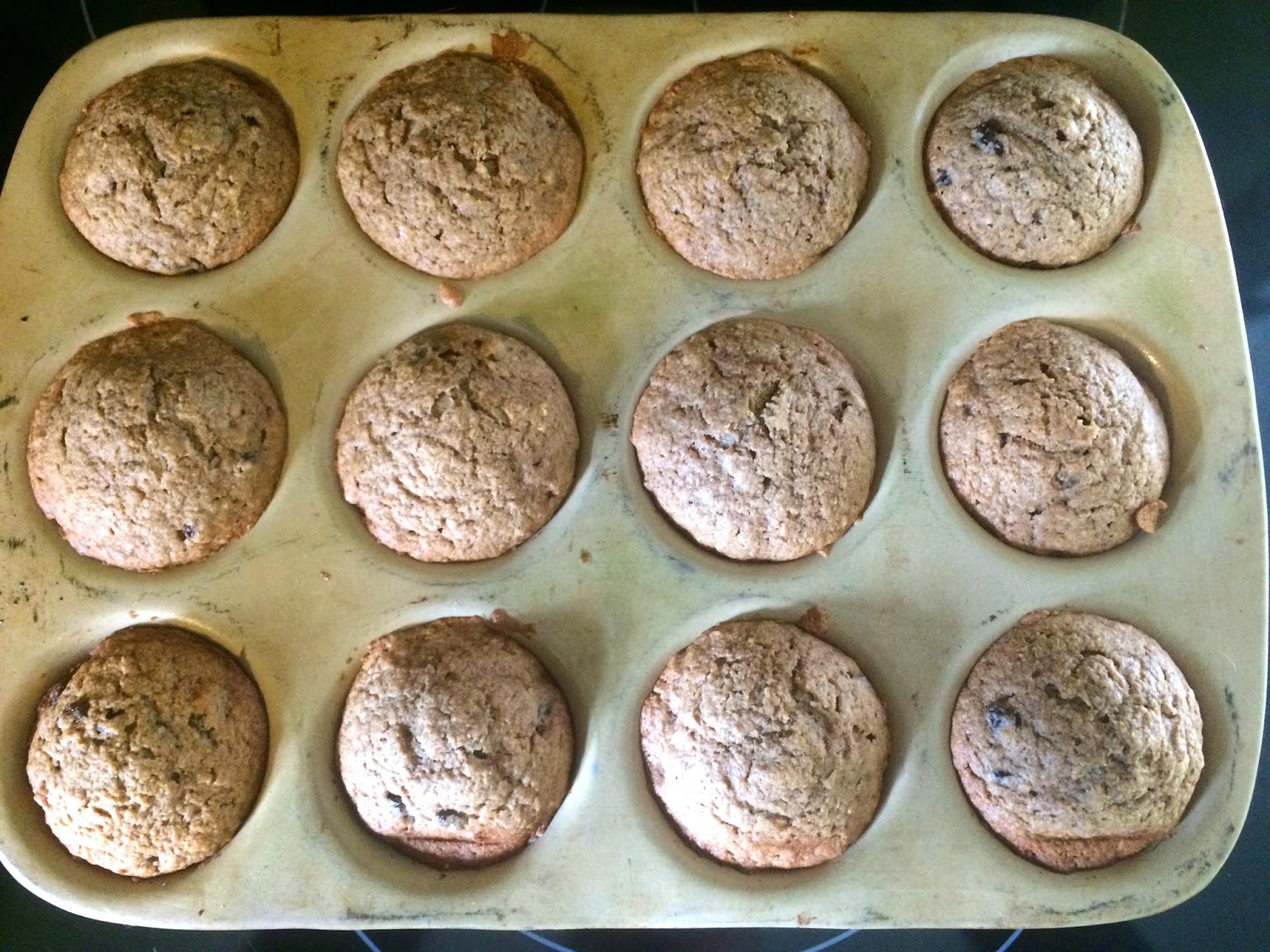
Applesauce Raisin Muffins, Cold Weather Goodness


 Cold weather weekend mornings are perfect for homemade goodness at breakfast or mid-day snacking. Better yet if these muffins started with homemade applesauce!


This recipe was probably cut from a Taste of Home magazine but who knows from what issue.


MOTHER'S APPLESAUCE MUFFINS

4 cups flour (you can use 1/2 all-purpose and 1/2 oat or wheat)
1 tbsp ground cinnamon
1 tbs ground allspice
2 tsp baking soda

Combine and sift to blend these four dry ingredients in a large bowl.

1 cup butter (soften in microwave if right out of refrigerator)
2 cups sugar

Cream the butter and the sugar in a mixing bowl
Then beat in:

2 eggs
2 cups applesauce
2 tbsp vanilla extract

Fold the butter/sugar mixture into the dry mixture and stir just until moistened. 

Add 1 cup raisins
Don't over mix or muffins can be tough.

Grease muffin pans
Pour the batter into 24 muffin cups about 3/4 full each

Bake at 350 degrees F
20 - 25 minutes or until a toothpick tests done

Cool in pan 10 minutes before removing or muffins may stick.
Cool on a wire rack

Yield 2 dozen
Freeze for later if desired


Enjoy this old-fashioned, healthy recipe!
Ideal for a quick, nutritious breakfast, lunch or anytime snack.
Perfect to make ahead and save for holiday gift giving and party contributions.

Tuesday, March 15, 2016

Forcing Spring Twigs for a bit of Color


In a hurry for spring to arrive? Try cutting branches from flowering shrubs and force them to bloom a little early in the warmth of your home. Enjoy yellows, whites, pinks and purples!

This is a fun project to spark an interest in children to the wonder and beauty of our natural world.

During the months of February and March cut one to two foot long branches from such shrubs as:
pussy willow, dogwood, forsythia, redbud, plum, cherry, wild crab apple, apple, lilac and wisteria.
You can try tree types but shrubs tend to bloom much easier.
If you wait till March and the buds are starting to swell you'll get faster results.
Cut the branches on the diagonal.
Using a hammer, bruise the ends to allow the branches to soak up the water faster.
Put the branches in a vase and add water. Change the water every few days.

Below is a chart from the Farmer's Almanac as to the length of time you can hope to enjoy the blooms.


Buckeye5 weeks
Cherry4 weeks
Cornelian dogwood2 weeks
Crab apple4 weeks
Deutzia3 weeks
Flowering almond3 weeks
Flowering dogwood5 weeks
Flowering quince4 weeks
Forsythia1 week
Honeysuckle3 weeks
Horse chestnut5 weeks
Lilac4 weeks
Magnolia3 weeks
Pussy willow2 weeks
Red maple2 weeks
Redbud2 weeks
Red-twig dogwood5 weeks
Spicebush2 weeks
Spirea4 weeks
Wisteria3 weeks

Lilac

Red Bud
Forsythia
Crabapple
Dogwood
Pussy Willow

Sunday, January 24, 2016

CRANBERRY OAT COOKIES...Take a Break From the Cold


Shoveling out from under a snowstorm is what you make of it. It can be nothing but a cursing with every shovelful or it can be a steady, take your time, meditative type of chore. Whatever it may be, there is little else more motivating than to know that when you're done you can leisurely sit and enjoy a plate of homemade cookies.

This recipe comes from Taste of Home magazine, sent in by Heather Breen
With the addition of oats and dried cranberries, it is a tasty, a bit healthy cookie, crunchy on the outside, chewy on the inside.


CRANBERRY OAT COOKIES

Mix these three ingredients together in a large bowl:
1 1/4 cup packed brown sugar
1/2 cup sugar
2/3 cup oil of choice, the recipe called for canola

Beat in:
2 eggs
2 tbsp milk
1 1/2 tsp vanilla

Combine and sift together in another medium size bowl:
2 1/2 cups quick-cooking oats
1 3/4 cup all-purpose flour or you can divide that up with wheat or oat flour

1 tsp baking soda
1 tsp salt

Gradually add the flour mixture to the sugar mixture.
Stir in:
1 cup dried cranberries

Drop by teaspoonfuls onto a greased baking sheet.
Bake at 375 degrees F for 10 minutes.
Only let cool about 3 minutes and then remove to a wire rack. If cookies remain on pan too long they will stick.

This batch makes about 4 dozen


Thursday, December 17, 2015

Gingerbread Cookies, Frugal Holiday Treasure

I stumbled upon what may be the perfect holiday cookie with more perks going for it than dietary downfalls.

Busy days have always deterred me from doing cut-out cookies for Christmas since rolling out dough usually became a frustrating experience. Drop cookies were so much less of a mess and took half the time, so I thought till now.

Gingerbread cookies have to be the one holiday treat that is guaranteed to lighten the mood and produce a smile.  No matter what a person's age, he or she cannot eat one without murmuring an "ahhhh, I remember when..." moment from childhood.

Most cut-out cookie recipes are made up of the ingredients we are usually trying to avoid: white flour, white sugar and solid shortening. This recipe I discovered is a gem. It is probably from the lean years of the Great Depression or the rations of war time because it doesn't contain any white sugar or eggs. Years ago such simplicity was out of necessity or availability, but today it can be seen in a more positive light:

A nutritional boost of iron
No white sugar
No eggs or milk
Very easy handling dough
Perfect for those who want a not-so-sweet cookie.
Ideal for dipping in milk, tea or coffee.
They are a crisp cookie so hold up well for packing into tins as gift ideas or shipping.


GREAT-GREAT GRANDMA'S OLD-FASHIONED GINGERSNAPS
By Helen E. Goodwin 
"Yankee Church Supper Cookbook"

1 Cup baking Molasses (Blackstrap if want the nutritional boost and not as sweet)
1/2 Cup Butter
1 Tbsp ground Ginger spice
1 rounded Tsp Baking Soda
3 Cups Flour

Boil together the molasses and butter.
Let cool.
In a large bowl, sift together the ginger, baking soda and flour.
Add the molasses, butter mixture and blend well.
Roll dough thin (about 1/8 inch thick) on a floured board or surface.
Cut out with cookie cutters.
Space out on greased cookie sheet so fit from 9 to 12 cookies, depending on their size.
Add desired decorations, such as raisins for eyes or cinnamon hearts for belly buttons.
Bake at 350 degrees F for 8 - 10 minutes
Makes 2 - 3 dozen gingerbread men or 4 - 6 dozen smaller cookie cutter shapes.


Yankee Church Supper Cookbook


HAPPY HOLIDAYS!

Saturday, December 5, 2015

Holiday Wreaths, Reused, Resurfaced Memories


Craft stores and holiday bazaars abound with beautiful home decor to beautifully decorate your home for the holiday season. But you can create your own work of art even if you don't believe yourself to be all that crafty. We all have an imagination, it just seems to get buried over the years with the load of everyday responsibilities leaving little time to revisit that part of us.

If you have a love for thrift shops, yard sales and bargain bins, try to get in the habit of collecting stuff for the "possibilities" of what can be done with it. You can often find wreaths you may not like as is, but they can be taken apart to reuse the base wreath.

This wreath started with one of those wire wreath frames. Wrapped around that frame is burlap that you can get on a roll. Wrap the burlap around the metal frame, overlapping the edges as you go and do it tightly enough to eliminate any bulges. Use a safety pin to secure the end or glue it down with a hot glue gun. What you do from there is up to your own creativity, but for this one I had one of those artificial berry garlands that are used to drape mantels and doorways. This one was about four foot long. I tucked the wire on one end under the gaps from wrapping the burlap and then wound the garland around and around the wreath and tucked the other end under the burlap as well. Add a loop of fabric or ribbon around one of the vines for hanging.

Plastic canvas is a fun needlework project that requires time and patience but once done, these craft projects are very rewarding to know you made it yourself. Digging them out at the holidays can bring back memories on what was happening in your life at the time you were working on them.
If you don't have time or interest in making your own, these little sewing creations can be found at craft shows and thrift shops. Someone put a lot of time and loving energy into creating these types of sewing kits and it is a shame to see them end up at a thrift shop. So if you can bring a new life back into someone's work that would be great.
The chickadee seen above on this burlap wreath had been a gift to my mother-in-law and holds a special place in our hearts now that it has been returned to us so many years later.

This wreath was another thrift shop recycle project. I bought the green wreath as it was and took off the trimmings it already had. I wrapped the whole thing with a 50 bulb string of the tiny white lights. Use the string with a bulb on one end and a positive plug on the other. If you use one of the end-to-end types of lights you'll have to hide the negative plug so it doesn't show.

Next, use whatever trimmings you have to decorate your wreath. A hot glue gun works great for lightweight balls, ornaments and ribbons. The Rudolph plastic canvas was done when my children were small and to now have it pulled out again and added to this wreath means it'll  bring back fond memories every year when the kids come home for Christmas.

So have fun and let your imagination soar as you decorate your home with a little piece of who you really are!