Meadow Muffin Gardens logo
Showing posts with label earth day. Show all posts

Monday, June 12, 2017

Summer Nights and No Fireflies...What's Happening to Them?


Summer is a time for picnics and outdoor parties that often extend into the evening hours. Watching the children running around having a ball with glow sticks got me sadly contemplating on what was missing in this picture. Years ago there were no glow sticks to entertain children after dark. Kids were enchanted with the stars and the magical mystery of fireflies. Some people call them june bugs, others simply call them lightning bugs. What is happening to them?


Just as with the bees, the answer lies with habitat loss, and pesticide use, but there is another factor and it is called light pollution.

These insects aren't flies, they are actually beetles, and that glow comes from a chemical reaction. 
Both male and female fireflies use their flashing lights to communicate. Their language of light is used to attract mates, ward off predators and defend their territory. Too much light caused by streetlights, car lights and suburbia in general, interrupts the sync of firefly flash patterns. Difficulty for fireflies to signal each other results in fewer larvae being born with every passing season.

Open fields and forests, waterways and bogs, are all disappearing as development makes its slow crawl across what was once uninterrupted habitats. Most species of fireflies thrive as larvae in rotting wood and forest litter at the margins of ponds and streams. As they go through their life cycle, most stay around where they were born. The environment of choice is warm with areas of wet spots.

The female lays about 500 eggs in sheltered areas that contain damp soil. After about a month the tiny larva hatch and begin feeding as they get ready for the next stage when they become pupae. The larval period can last from one to three years. During this stage the fireflies look like small worms and crawl along the ground. They are carnivorous and eat worms, snails and slugs by injecting a digestive enzyme and then sucking out the liquid. When big enough, the larvae digs into the ground and goes through the pupae stage. It forms a hard exterior shell that is what we are familiar with when we see them. This stage of metamorphosis takes them to the adult firefly which emerges in early summer. Once adults, the fireflies only live another few weeks. They may or not even eat during this short span. The purpose is to find mates and reproduce. So if light pollution creates enough of a problem to interfere with this process, these adults won't have the time to mate and lay their eggs before their life span ends.

This little video shows the life cycle of the firefly:


There are ways we can make a difference for these little guys. Make your own difference where you live. Avoid the use of herbicides and pesticides. Don't feel every part of your landscape has to be under control. Let spots naturalize to provide the habitats needed for all the stages of life. Learn what invasive species are a problem in your area and remove them to encourage the natives to thrive. Unless you have good reason for outdoor lighting to shine throughout the night, turn it off.

Children don't miss what they've never seen. Fireflies bring a sense of magic to our world and it would be a real loss to lose them.


Thursday, April 13, 2017

Annual Flowers for Container Gardening


By the time spring rolls around, many of us are more than ready to jump full swing into the planting season. Just don't be overly anxious and not pay attention to the end frost dates for your zone. Though we have some beautifully warm days, it is the nighttime temperatures you have to worry about. Plants that get nipped by frost may be killed outright or be stunted. If you do want to get a jump start on your plants, at least pay attention to frost warnings and cover your plants at night with a sheet to protect them.

Here in zone 6 the general rule for gardening is to wait till April 15th and for those tender annuals to wait till around Mother's Day.

Yard sales, flea markets and estate sales start up again with warmer weather and offer the perfect opportunities to take advantage of searching out inexpensive "finds" for your planting containers.
You can get creative with the arrangement utilizing various containers for your plants. Keep an eye out at farm sales or flea markets for old galvanized pots and wash tubs. I save those flexible black nursery pots that young trees come in to use inside the larger tubs. You can just fill the tub itself with potting soil and plant directly in them but realize how heavy those tubs will be to move around. Also, come the end of the season it is so much easier to just lift the smaller pots out then to try to empty the tub to store for the winter. To leave the dirt in the tub encourages the bottom to rust and eventually break through. As the plants grow and fill in the plastic pots will be hidden from view.


Though tempting to just go to the nursery and buy a little of everything, it is best to have a plan. Below are photos and a little info about several great annuals for container gardening. When you research your container or window box plantings, keep in mind three things: thrillers, fillers, and spillers.

First shown here is the African Daisy, a tough plant that can tolerate drought and poor soil. It has a profusion of brightly colored flowers all season.  Pinching early in the season encourages a bushy plant and deadheading as the season progresses encourages new growth. Full sun to partial shade. Grows to about 1 foot.
     Osteospermum or African Daisy

Ageratum or Floss Flower does well in sun to partial shade. They don't like to dry out so water regularly. Very pretty in mass plantings, these bushy flowers get anywhere from 6 to 24 inches tall, depending on their type. Pinching them back will encourage branching out and remove the spent flowers to keep them producing new flowers.

            Ageratum or Floss Flower

Lantana can tolerate neglect. If put right into the ground this butterfly, bird and hummingbird attraction will grow into shrub like proportions. In a pot you'll have to pinch and prune to keep it shapely. Preferring slightly acidic soil, pine needles added to the pot will help.

                          Lantana

Heliotrope not only smells wonderful, but is loved by hummingbirds and beneficial insects. Deer leave it alone. Prefers sun to partial shade. Will follow the sun like does the sunflower. Heat brings out the fragrance so put where it'll get the hot afternoon sun. Pinch in the spring and deadhead as the season goes along. Gets 1 - 2 ft high and wide. Heliotropes can be brought indoors over the winter.

              Heliotrope or Cherry Pie plant

Nicotiana, or Tobacco flower, are wonderful night bloomers to attract Sphinx moths. Shown here is the smaller type not known for its scent. If you want the type with the large white tubal flowers that emit a wonderful sweet fragrance in the evening, plant N. sylvestris directly in the soil, as these are much bigger plants. Tubular flowers attract hummingbirds. Prefers sun to shade and well drained soil. If ingested the plant is toxic. Reseeds easily.

           Nicotiana or Tobacco flower

Salvia blooms it spiky flowers all season, attracts butterflies and pollinators, and the deer leave it alone. Grows 1 - 2 feet tall and likes sun to partial shade. If plant looks tired by midsummer prune it back by a third.

            Salvia or Sage for some types

Nemesia prefers a cooler climate, so once the heat of summer kicks in, blooming will decrease. Chop them back by one-third and they will bounce back. Available in a wide array of colors, they are one of the fillers. Keep it well watered and cut back to keep the blooms coming.

                              Nemesia

Actually a tender perennial, Lobelia looks beautiful for a while then will peter out by midsummer. You can cut it back by half and it will rebound, or you can just let the neighboring plants fill in the gaps as they grow. Lobelia prefers more shade if grown in very hot and sunny climates such as the South. Color shades range from blue to purple to pink and white. Pictured here it is blue.

                             Lobelia

New Guinea Impatiens have beautiful foilage and flowers. They love the sun, unlike the impatiens we select for shady areas. Low maintenance flowers that reach about a foot tall and wide. Great for containers.

               New Guinea Impatiens

Calibrachea, trailing 1 inch petunias that bloom profusely until they slowly peter out by late summer. They come in a choice of colors ranging from yellow, peach, pink and purple. Keep them well watered. Like the ever popular annual petunias of which we are so familiar, these beautiful flowers prefer full sun and offer a fabulous array of color.

                        Calibrachoa

Bidens is a trailing yellow flowered plant that is both heat and drought resistant. Looks great with many container plantings. Loves the sun. Deadheading will encourage continuous bloom. In mild climates Bidens easily reseeds itself.
                               Bidens

Diamond Frost Euphorbia is a light airy plant with little white flowers great to use to fill in the gaps. Tiny, delicate leaves and flowers adorn this 12 to 18 in. plant which looks a bit like Baby's Breath.

Euphorbia

Trailing Verbena, a trailing perennial often planted as an annual can grow to 12 inches tall and 2 feet wide. The leaves are medium to dark green, ovate in shape with coarse toothed margins and grow to one inch long and half as wide. Beautiful plant as it spills over the edges of its pot, basket or over rocks. Colors options are in the red, pink and purple range.

Trailing Verbena

Bacopa is one of the spillers. It is low growing, reaching no more than 6 - 12 inches. Great for trailing over baskets or rock walls and filling in gaps under larger plants. Likes sun to partial shade.

                           Bacopa

Sweet Potato Vine is grown for its trailing green or magenta foilage, both of which blend beautifully with other plants for container planting. Does well in sun or some shade. These ornamental types will not produce actual sweet potatoes.

                         Sweet Potato Vine

Thumbergia or Black-Eyed Susan Vine is such a colorful and well-behaved trailing vine. The yellow to orange flowers with their dark brown tubular centers are interesting to look at. This plant is great when a vine is desired but not one that is overly aggressive. Does best in full sun.

Thumbergia or Black - Eyed Susan Vine

Last we have the accent plants, such as Fountain Grass, Bloodgrass or Dracaena Spikes. Planting either of these in the center of a pot can really add the height and focal point to the arrangement.
Utilizing height, filling in the gaps, and the spilling effect brings it all together.

                               Bloodgrass


                           Dracaena Spike


Thumbergia
Bacopa
Calibrachoa
Ageratum
Osteospermum
Nemesia
Heliotrope
Sweet Potato Vine
Fountain Grass
Blodgrass
Dracaena spikes
New Guinea Impatiens
Verbena
Salvia
Petunias
Euphorbia
Bidens
Lantana
Lobelia
Nicotiana


Wednesday, August 10, 2016

Autumn Olive Shrub, Should it Stay or Should it Go


Autumn Olive, Elaeagnus umbellata, is a deciduous shrub that is one of those plants intentionally introduced into North America from Asia for a very practical purpose. It was first brought here in 1830 but was widely planted in the 1960's along highways to revegetate road banks and prevent erosion. For areas where the soil was poor, such as land devastated from mining practices, the Autumn Olive plants improved soil quality due to its nitrogen-fixing root system.

The problem with that, as found out, was that this adversely affects the nitrogen cycle of the native plant communities that depend on infertile soils. It wouldn't be a problem if the shrubs wouldn't propagate so easily and pop up in naturalized areas, meadows and farm fields. The seeds find their way so far and wide from the droppings of birds. This is the catch. We want to provide food for wildlife and that this shrub certainly does since one bush can produce several gallons of berries a season.

Opinions differ on the attitude about the Autumn Olive shrub. Those interested in a permaculture lifestyle love this plant because it is so prolific, inexpensive to purchase or simply find in the wild to propagate. As such, it serves as a valuable food source for both people and wildlife.
Permaculture is the development of agriculture in sync with the ecosystem that is sustainable and self-sufficient. It combines the best of natural landscaping and edible landscaping.

Here is a good video on the benefits of food bearing plants.


Those seeking to create hedgerows have various reasons for doing so. Some want a low maintenance privacy hedge, others want to create a wildlife haven that will provide safety, nesting sites and food for both birds and animals. The Autumn Olive perfectly fits the bill for that purpose. It is drought resistant, winter hardy, can be pruned but doesn't have to be, and quickly fills in with its intertwining branches.

People who plant these shrubs for hedgerow privacy purposes have to be aware of the growing habits of this plant. It needs lots of space to spread out. The branches don't just grow up towards the sun like most shrubs and trees, they grow in any direction and intertwine. So if there is no intention of keeping a shape by pruning, expect them to reach a height of 20 - 30 feet high and depending on if the branches reach sideways at ground level, the shrub could be 15 - 20 feet wide.

These plants are very tough but do have the dying back of branches as the inner parts get shaded out. Working around the shrubs definitely requires thick work gloves. While there aren't actual thorns on the limbs, they are very spiny to handle.

Those who want to eradicate the plant have good reason as well since they do pose a threat to our native plants and are now on the invasive species list. 

Autumn Olive shrubs are easy to identify once you are familiar with them. The leaves form alternately on the stems and have wavy margins to their oblong shaped leaves. Flip them over and there is the tell-tale silver sheen to the undersides of the leaves. The berries are small and form clusters along the stems.


May is a wonderful time to enjoy the scent of these shrubs. The flowers are not very conspicuous, only about a half inch long, and a pale yellow to white bell shape. But they give off a sweet, exotic fragrance that can be very noticeable, but interesting is that if you just stick your nose into the bush and sniff you may not smell anything. Unless you know the source of the aroma you may not know where it is coming from.

The berries form in early August but are too sour to eat. They sweeten up as the temperatures drop and are best by October when the red berries have a speckled appearance. They can be eaten right off the bush but if you wait too long the birds will get to them first. Some people don't like them because they can be seedy, but as far as eating for nutritional purposes, they are at the top of the list of fruits high in antioxidants.

Here are two previously written blog posts on the Autumn Olive.
To Plant or Not to Plant..Learning about Invasives

The Marvels of May


Wednesday, June 8, 2016

Exfoliate Without Doing Harm, Ban the Microbeads


On December 28, 2015, President Obama signed into effect the "Microbead Free Waters Act", which prohibits the sale of products that include microbeads in their formula and will ban microbeads in the U.S. as of July 2017.

This is wonderful since microbeads have become an environmental disaster. The polymer technology to manufacture polymer beads was invented by the late Norwegian Professor John Ugelstad and these perfect little monosized spheres went into production in 2002 with the Norwegian company, Microbeads AS. They were used in a wide range of industries, not just with cosmetics and personal care. Uses included paints, plastics, ceramics and adhesives. Being cheap to manufacture, they seemed like a dream until it was realized how destructive they were to marine life.

Microbeads are made of non-biodegradable plastic. When they get washed down the drain they end up in local rivers and lakes. Being so tiny, they slip right through most water treatment systems. 
About the same size as fish eggs, to any organism that lives in the water, they look like food. Once in the food web, such toxins are passed right along to humans and other wildlife.

Microbeads are in so many personal care products, body scrubs, facial cleanses, toothpastes, all things most everyone uses on a daily basis. So many beads are believed to be polluting the Great Lakes that our world's largest source of fresh water is being poisoned.

Until the ban is completely in effect, what you can do is read labels. If polyethylene or polypropylene are listed as an ingredient, there is most likely microbeads in that product.

Another option is to use other sources for exfoliation. 
The definition of exfoliation is the cosmetic practice of removing dead skin cells from the top layer of the skin, called the epidermis. Amazing fact is that our skin can naturally shed 30,000 to 40,000 dead cells per minute.

If you feel your face or body has a dull appearance it could mean an accumulation of those dead surface cells. Remove them by means of dry brushing, a loofah sponge, a hemp scrubby pad or by using a salt or sugar scrub. 
Complaints people often have with moisturizers is that they seem to leave an oily residue. Of course a reason could be the lotion itself, but it could also be because the person is applying a moisturizer to old, dead skin cells and it is not penetrating the upper layer of the skin.

Sugar scrubs are a great way to slough off that old layer, unclog blocked pores, and reveal radiant freshness to perk up that tired look.

Cane sugar contains a naturally occurring acid known as glycolic acid which belongs to the family of alpha hydroxy acids (AHA). These acids stimulate and loosen the dry, flaky layer created by accumulating dead skin cells. 
White sugar is the result of sulfur dioxide being introduced to the cane sugar before evaporation which bleaches the sugar to be white as are most familiar. 
These scrubs below use raw, unprocessed sugars such as demerara and cane juice sugar.

Though exfoliation is important for an effective skin care routine, you can't overdo it and you must be very gentle. The skin of your face is fragile and can be easily damaged. It should be treated with care, no scrubbing, or you may irritate or even create tiny tears which leave the skin vulnerable to bacteria.

Salt scrubs are great too, but if used on the face you must remember that salt can be more abrasive than sugar. Using salt for a body scrub is a great way to cleanse and detoxify by drawing out impurities. Sea salt is a much better choice than table salt. Table salt is bleached and refined, therefore it lacks many of the minerals of the ocean.

The salt scrubs below are called salt polishes because they not only contain a moisturizing oil but also a touch of castile soap. Therefore, you get the effect of a good clean as well as the expected exfoliation.  


Coconut Oil Face and Body Sugar Scrub

Vegetable Glycerin Face and Body Sugar Scrub

Glowing Skin Salt Body Polish

Lemon Zest Glowing Skin Salt Body Polish

Sunday, May 15, 2016

Old Tires, Concrete blocks, Pallets...Reuse, Reinvent for the Garden


With a little imagination and the wonderful ideas found on Pinterest, one can discover all kinds of ways to garden with limited funds and available space. Being able to reuse something for a purpose other than what it originally intended is very gratifying. No one feels great about adding to landfills so every little bit that can be reused for something else is a good thing.

Old pallets can have a new life in the garden as a tidy place to grow lettuces, greens and even strawberries.


Carefully add soil between the slats and let it settle down as it may. In this photo one pallet has leaf lettuces and the other is a blend of various greens. Just sprinkle the seeds lightly and lightly pat down. Such small seeds don't need to actually be buried in the soil, they need light to germinate. Once the lettuce fills in, take a scissors to thin it out. Snip to create about four inches between the plants. Don't pull them out or you may disturb the roots of the lettuces you want to keep. Use the cuttings for your salads. Pallets keep the plants nicely off the ground, therefore the need to rinse off dirt is greatly reduced.


Concrete blocks can be used to grow strawberries The plants are kept off the ground so dealing with weeds is just about eliminated. Since each plant has limited soil around it, you will have to water frequently. This is the first time I'm trying this idea so I'l find out soon enough how well the strawberries produce. Come autumn, lay straw up and around the blocks to proved insulation from cold temperatures. Remove in the spring. Strawberry plants should be replaced every three to five years.


The way you arrange your blocks is up to you. You can surround an existing bedding box or as here, the blocks were set around a pallet.

The terms concrete blocks, cement blocks, and cinder blocks are often used to mean the same thing. Cinder blocks are the term used in the manufacture of blocks using smelters. Back in the 1930's there were makers of cinder blocks in the eastern U.S. who used fly ash, from coal burning, also called clinker, to produce blocks. Agregate was sometimes slag or other industrial waste. These blocks are softer and not like today's concrete blocks. Dust from those blocks burns the eyes and lungs so is very toxic. Here in PA the terms cinder blocks and cement blocks are used for the same idea but they're not the same thing. Blocks used for construction as we know today are concrete and not at all toxic.


Unless you use a garage to take care of tire removal for your car when you replace your tires, you may have to pay to get rid of them. Here is a creative way to put those eyesores in your garage to use.

Optional is to first spray paint the tires different colors to get away from the ordinary black. To save space and add further eye appeal these are stacked, but they can be arranged however you want. The tires that are off the ground needed a piece of tarp or plastic to line their bottoms so the soil doesn't just fall through. Poke holes in the tarp for drainage. Add enough soil to fill the holes and plant what you wish. Here we used herbs but last season I had planted impatiens. These herbs were just planted in the month of May so how they do as they grow has yet to be seen. The picture below was taken in August so the plants had nicely filled in by then.
.


Tuesday, March 15, 2016

Forcing Spring Twigs for a bit of Color


In a hurry for spring to arrive? Try cutting branches from flowering shrubs and force them to bloom a little early in the warmth of your home. Enjoy yellows, whites, pinks and purples!

This is a fun project to spark an interest in children to the wonder and beauty of our natural world.

During the months of February and March cut one to two foot long branches from such shrubs as:
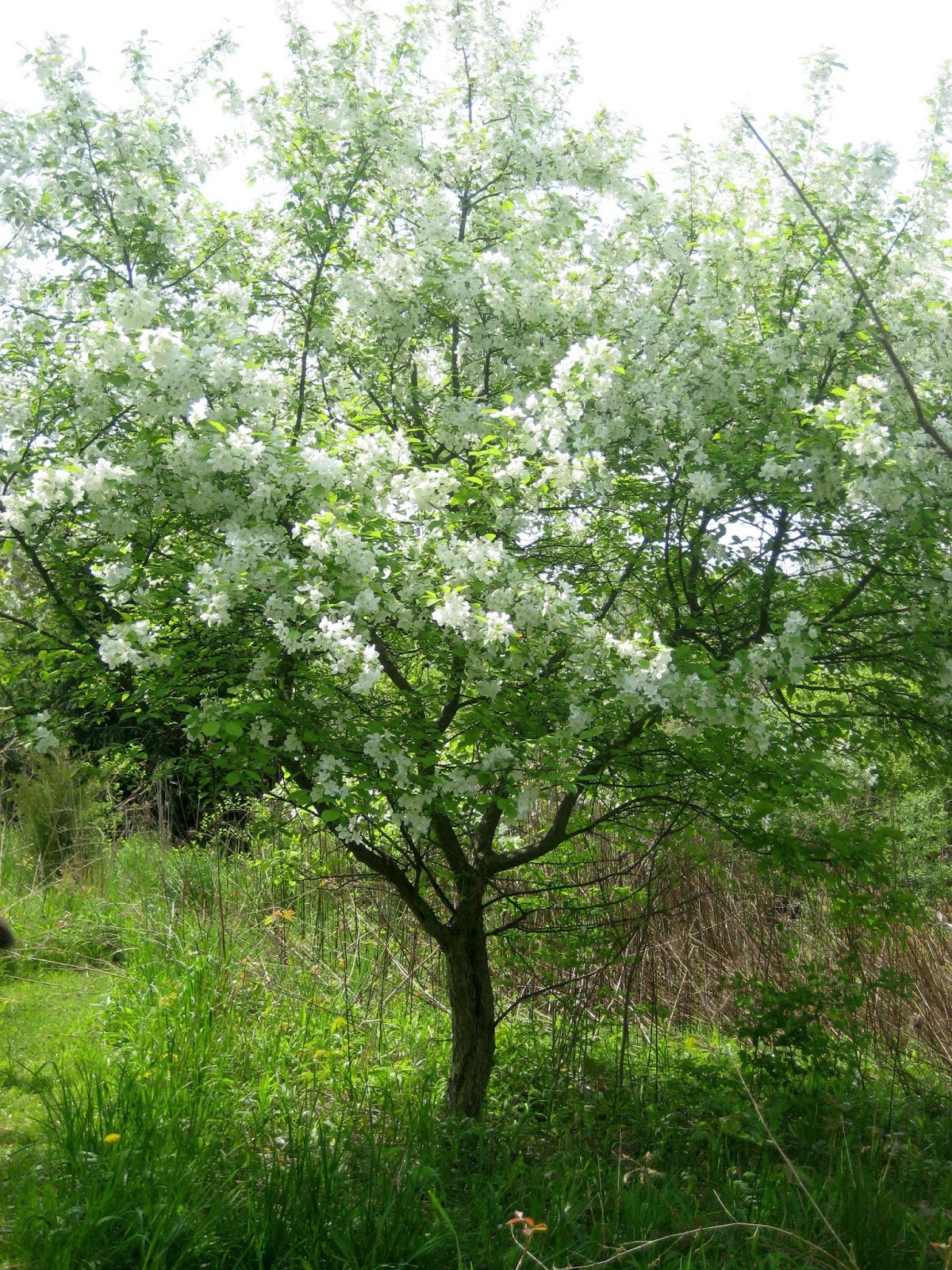
pussy willow, dogwood, forsythia, redbud, plum, cherry, wild crab apple, apple, lilac and wisteria.
You can try tree types but shrubs tend to bloom much easier.
If you wait till March and the buds are starting to swell you'll get faster results.
Cut the branches on the diagonal.
Using a hammer, bruise the ends to allow the branches to soak up the water faster.
Put the branches in a vase and add water. Change the water every few days.

Below is a chart from the Farmer's Almanac as to the length of time you can hope to enjoy the blooms.


Buckeye5 weeks
Cherry4 weeks
Cornelian dogwood2 weeks
Crab apple4 weeks
Deutzia3 weeks
Flowering almond3 weeks
Flowering dogwood5 weeks
Flowering quince4 weeks
Forsythia1 week
Honeysuckle3 weeks
Horse chestnut5 weeks
Lilac4 weeks
Magnolia3 weeks
Pussy willow2 weeks
Red maple2 weeks
Redbud2 weeks
Red-twig dogwood5 weeks
Spicebush2 weeks
Spirea4 weeks
Wisteria3 weeks

Lilac

Red Bud
Forsythia
Crabapple
Dogwood
Pussy Willow

Thursday, March 19, 2015

Shop Till You Drop and still Be Kind to our Earth


Everything man does seems to effect the earth, yet nature has an amazing knack for healing and adapting to the challenge of survival.  


Earth Day brings renewed awareness of how we can make change and a difference. There will the be usual planting of trees and community activities but how about we look closely at our own lives and see where we can make a difference every day of the year.


 We live in a society of consumerism where if you have the means to purchase something you are free to do just that. We love to shop. It's a day out, it's fun, and we all like the thrill of a bargain and bringing home something new. But that is the word we're going to focus on with this post. What is the meaning of "new"? Does it have to be newly made from raw materials? Or can it just be new to you?


Thank goodness the times have changed with the attitude towards second hand or thrift shopping. My grandparents' generation pulled themselves out of the depression era with a proud determination in capitalism. If a man or woman worked hard and was blessed to be financially comfortable than to buy new was a perk without having to settle for used. There used to be a sense of embarrassment if seen by someone you know while shopping in a thrift shop. To do so meant you were struggling financially or were considered low class.


Factory production and a market that demanded the items meant jobs, therefore to buy new was supporting the continued need for employment.  That philosophy was wonderful until companies sought out the cheapest ways to meet the demand. Companies may seek to move overseas in order to employ cheaper labor and acquire cheaper materials. What has resulted is modern day slavery and a major strain on our environment.


The fashion industry rolls out the latest trends at an unbelievable rate to keep up with seasonal sales. They can do that by finding the cheapest labor markets to put out in bulk and keep prices low. Neither concern for the worker nor the source of the materials is often a main priority for those at the top of the corporate ladder. 


Poor, unsafe working conditions, low wages, and few benefits keep these working people in unhealthy, high risk situations with little hope to better the future for their families.


We usually don't question just how fabric ends up with the brightest array of colors and the whitest whites. These are the result of bleaches, acid washes and chemical dyes which contain heavy metals known to be carcinogenic. Because being environmentally responsible isn't always required and being it costs money, textile industries may skirt around proper clean-up and disposal. Waste may be just dumped into local waterways or buried under the ground. Water becomes polluted from not only the waterways but chemical seepage over time should these buried barrels leak into the ground water.


Since clothing is often cheaply made, it's life span is not nearly as long as the clothes we remember as hand-me-downs. The clothing industry doesn't want you to save your clothes for the future, they want families to buy new. Combine that with the mentality that people get bored with what they have, and we have a major concern with the amount of added trash to the landfills. People too often have the attitude that if they are going to pay for trash pick-up then they are going to get their money's worth and fill those cans. Please take the time to support services and businesses dependent on donations.


Most of our clothing is made from cotton. Since the 1960's the world has doubled its production of cotton. Synthetics are huge too, but cotton is still the main demand. To fill that demand we now have Monsanto providing farmers all over the world with genetically modified seeds. We know GMO crops affect the soil, the water, the air, yet feel powerless to stop it. The amount of pesticides needed to keep these crops free of pests is a real danger to not only the environment but to every living organism. People working the fields without protection are put at real risk for illness.


Buying organic cotton clothes may seem like the answer. It is a better choice, but though organic cotton reduces pesticide use, the processing and dyeing require more water and energy than conventional cotton. We're hearing a lot about bamboo since it is easily renewable. But again, after harvest the process to create a soft fiber requires it be spun with harsh chemicals.


So we may not be able to change things overnight but we can decide how we as individuals do our shopping. At least when you buy used, already purchased clothes (and anything else for your household), you aren't contributing to the initial source of the problem.

Thank goodness our children are now in a society supporting sustainability and the three R's: reuse, recycle, renew! To shop second hand is a way of boycotting the fashion industry with its wasteful packaging, sweat shop labor, and ridiculous price tags. Yard sales, on-line barter sites, flea markets, community swap days and thrift shops can be a gold mine for those seeking to save money, find great deals, discover unique treasures and antiques. Great for those who love to shop because they get bored with what they already have. They can rotate their clothes by donating them back into circulation for someone else, come home with new finds, and not feel guilty since they never spent full price on the originals.


Now to how we care for all these great finds. Be conscious with how much you use your washing machine. They say the average household washes 400 loads of laundry a year. That is a lot of water. Before wearing an item only once and tossing it into the hamper, consider if it is "dirty" enough to need a washing yet. Depending on what our daily activities are we may not have to wash so often. Be sure the loads are full before using the energy it takes to complete a cycle. Try to reserve hot water only for whites and either make your own laundry soap or buy phosphate-free detergent.

Clothes made from synthetic materials such as polyester contribute to the pollution of our oceans. Every time a piece of polyester clothing is washed it releases microfibers. Considering the vast amount of laundry in the world, that is a lot of plastic pollution entering our waterways. Cutting down on the frequency in which we wash our clothes can help.

Finally, if you are allowed and have the space, hang your clothes outside to air dry. This is another area where I am so glad times are changing. There are those with the attitude that to see someone's delicates flapping in the wind labels them as low classed. Though some housing units have rules against clothes lines, if it is permitted, give it a try and enjoy the wonderful fresh scent of clothes dried in the sun.  

Think reuse, recycle, upcycle, renew, whatever it takes to sort out the treasures from the trash! 


 The source for this post


An alternative to buying used is to buy new but shop at your local retailers. You'll not only be supporting small business owners but you can find out from where the items originate. 

The beauty of shopping online is the availability of finding sources for clothing made from natural fibers


Tuesday, March 4, 2014

An Orange Belly, a Flash of Blue, Spring is Not Far Behind


There are many who believe it is only a hobby when we feed the birds. That it is nature's way for them to survive without the need for our interference. Very true if the natural habitat of our wild animals hadn't been so tampered with by the effects of suburban sprawl and the destruction of their sources of food, water and shelter.

The cost of bird seed is definitely a worthwhile expense worked into the budget of many people. Never knowing if there really is enough available food and water, it is very satisfying to know that perhaps the birds in one's own backyard are surviving because of a little help.

Bird stations attract the many seed eating birds at the feeders and clinging type birds at the suet feeders. But what about when we notice the early return of the insect eating birds such as the robins and bluebirds?

During the warm season when there is an abundance of all kinds of food, the adult bird's diet is usually about 60% plant (mostly fruit) and 40% animal (mostly worms and insects). But during cold weather, robins must switch to eating almost nothing but fruit. Birds keep warm by shivering, and the sugar from berries give them the energy to shiver. A source of fruit trees, shrubs and vines also helps fuel them for the remainder of their migrations.

During the winter the cold weather keeps hanging fruit fresh, but eventually the old fruit starts to ferment, which means the sugars turn to alcohol. If robins eat too many fermented berries, they get clumsy and are at risk for accidents and predators. As soon as the weather warms up and insects emerge, robins ignore the old berries and concentrate on worms and the early bugs.

A berry favored by the bluebird is that of the Flowering Dogwood (Cornus Flordia). Dogwood berries are higher in fat content than many other berries. However, these trees are usually stripped bare by mid-winter. Bluebirds can also feed on Pokeweed berries, Virginia creeper, Sumac, Rose hips, Mistletoe, Hackberry, Cedar, and Holly.
The female Holly provides an abundance of berries for late winter and early spring.

Winter weary bird lovers are thrilled when we get our first glimpse of a robin or the flash of a bluebird. Spring cannot be far behind once we see the return of these creatures.

Once we see the swallows, we can rest assured that the bleak, cold weather is behind us.


To make life easier for these flying friends of ours we can offer the mealworms and raisins, but better yet, if you have the space, we can plan ahead and add berry supplying trees, shrubs and vines to our lawns and naturalized landscaping.

A list of good berry sources include:
Ash,  Chokecherry, Chokeberry, Dogwood, Hackberry, Hawthorne, Holly, Magnolia, Mulberry, Serviceberry, Viburnums, Autumn Olive (this one is now considered an invasive but the birds do love the berries), American plum, Wild cherry, Wild crabapple, Barberry (also considered an invasive).

These three bushes pictured below usually have berries still on them by March.

Viburnum

Winterberry Holly

Barberry bush

Most of these berry bushes are very manageable for smaller landscapes. They are beautiful in the spring with either white or pink blossoms, therefore add interest to your yard throughout all the four seasons.
Check your garden supply centers as a source for native trees and shrubs for your area. However, be aware that many sold at the typical nursery are for ornamental purposes and may not be what you want if your goal is for late season berries. An example is the Bradford Pear. Though beautiful in the spring with its white flowers, the resulting berry is too large and hard and not really a desired food source.
Check the Extension Office for your county to learn where you can find native trees and shrubs for your zone.

Welcome Spring!
Flowering Dogwood

Washington Hawthorne

Wild Crabapple