Meadow Muffin Gardens logo
Showing posts with label pet care. Show all posts

Friday, August 21, 2015

The Battle of the Flea is Not just what's On your Pet


Fleas are tenacious critters and their ability to persevere regardless of all of our ways to get rid of them is amazing. We cannot solely blame our pets for the presence of fleas in our homes. Being attracted to warm blooded animals they will make your pet their temporary home for a food source, but there is also a very real possibility they are hitching a ride into your home by way of your shoes or clothing.

The key to flea control is quick action. If you see signs and ignore them, even for a few days, the situation could become a nightmare. Telltale signs of the presence of fleas go beyond actually seeing the buggers. Observe your pet. If he starts with the twitching and sudden jerks to lick, especially areas like the belly, groin area, under the neck and behind the tail along the backbone, it is time to pay attention. 
If you see black specks laying on the areas where your pet spends its time sleeping, that is a good sign that your pet has fleas even if they don't appear to be bothering him. Those specks are "flea dirt" which is actually dried pre-digested blood. 
If you see little, rice shaped worms on your pets back end or on their bedding, that means they have tapeworms (Dipylidium caninum).  Fleas are notorious for transmitting  tapeworms to your pets. When your pet itches, they lick and when they lick they ingest the flea, and once the flea is ingested the tapeworm can complete it's life cycle. Adult tapeworms can be several inches in length living in your pet's intestinal tract. What you see are the sections that break off.

It is important to understand the life cycle of the flea. There are four stages: egg, larva, pupa, and adult. The typical life cycle will take anywhere from a couple weeks to months. It depends on the temperature in their environment and humidity levels. Fleas like conditions between 70 to 85 degrees Fahrenheit and 70% humidity.

So let's start with the females that hitch a ride into your home. Those adult females lay eggs following a blood meal from the host animal. Without blood the flea is unable to reproduce and being that is their goal in life they can very quickly make your pet miserable. The eggs are slightly smaller than a grain of sand and white in color. They are laid in the fur in bunches of about 20. One adult female flea can lay about 40 eggs every day. As your pet moves around those eggs fall off which is how the problem can suddenly appear all over the house. Eggs represent 50% of the entire flea population in a home.

With optimal conditions the eggs can hatch in only two days. If the temperatures are cold and dry it'll take a bit longer, perhaps up to two weeks. If the temperatures are warm with high humidity, the eggs will hatch in a few days.

The larvae that emerge from those eggs need to avoid light, so will nestle in carpets, dark corners, clothing lying around and upholstery. What they live on is the flea dirt that is found amidst other organic debris in their environment. The larvae make up about 35% of the population. This is why it is ultra important to wash all bedding your pet uses and to have a good vacuum cleaner. Strongly recommended is a vacuum with a microfiber bag or the type of vacuum using water such as a Rainbow. With a bagless vacuum there is good chance that when you empty the canister into your trash, you will just release those fleas and eggs back into your home. Microfiber bags are made to trap allergens, dust and fleas debris with no escaping. Water canisters need to be emptied each time but the fleas are dead from drowning.
If left to their own devices, those larvae will spin cocoons in 5 to 20 days from the time of hatching from their eggs.

The cocoon or pupae stage is the last developmental stage before the adult emerges that we usually see. The purpose of the cocoon stage is to protect the pupae for as long as it takes for conditions to be ideal for the adults to emerge. This can take from just a few days to years. The cocoons have a sticky coating that allows them to attach to carpet fibers so having a powerful vacuum cleaner is paramount.

What triggers the adult flea to emerge once developed is a rise in nearby body heat, higher levels of carbon dioxide and vibrations. All these are associated with the nearby presence of a warm-blooded body nearby, be that a pet or a person. Once fleas emerge they need to eat within a few hours. After feeding they'll begin to breed, lay eggs and the cycle starts all over again. Adult fleas account for only about 5% of the entire population in the house, but while on your pet they'll continue to feed, breed and lay eggs.

Before dousing your home with toxic flea bombs and chemicals there are other safer weapons of destruction against them: Borax, Diatomaceous Earth and Vinegar and the all important Vacuum Cleaner!


Use borax, Not boric acid!
What you want is Disodium Tetraborate or Sodium Tetraborate which is Borax. Borax is mined from the earth as a complex form of boron bound with other minerals. Boric acid does not occur naturally in nature, but is made from borax by adding hydrochloric acid and water. This increases the toxicity level so it is not a good thing to have around your pets or children.

Borax looks like salt, has no smell and doesn't get absorbed by the skin when touched. It kills fleas by dehydrating them as it makes small cuts in their exoskeleton. This works on the larvae but won't help you get rid of the eggs. Vacuum, vacuum, vacuum to get rid of the eggs.

Borax is also good for killing ants, bed bugs and roaches.
Borax is safe to have in your home and is much less toxic than insecticides.
If you are pregnant, avoid using any Borate substance which includes borax.
You don't want small children crawling around on the floor if there is borax still in the carpet.
Keep your cats away from the borax powder. Breathing in the fumes could cause health problems.
Don't put borax directly onto your pets. You don't want prolonged skin contact.
Keep borax away from your plants.

How to use:
Sprinkle borax liberally all around your carpeted areas.
Use a stiff brush or broom to work the borax down into the carpet fibers.
Wait at least six hours before vacuuming up the borax.

An alternative to borax is Diatomaceous Earth. 


Borax may give quicker results, but diatomaceous earth (DE) is completely natural and much safer for the family and pets. It is a simple mineral-silica. The steps for application are the same as for the borax. It kills similar to the borax by cutting into the exoskeleton and sucks the fluids out of the fleas' bodies. The action is physical rather than chemical. Hundreds of microscopic DE get all over the insect's body, and as the bug moves the DE scratches off their waxy coating and they dehydrate.  
Diatomaceous earth comes in two forms, pool grade and food grade. The type you want is food grade! 

Diatomaceous earth is formed from algae with siliceous shells. When extracted, they are already dead, but the shells remain. Though these shells are sharp they are too small to have any effect on humans. A totally safe, non-toxic method to kill not only fleas but bed bugs and chiggers.

If you don't have carpets, diatomaceous earth can also be used on hardwood floors. Don't forget to apply to the corners and along baseboard edges. 

Don't use in areas with fans blowing. A high draft will send the fine granules all over into the air and may be irritating to breathe it in.

When purchasing diatomaceous earth, read the label and besides making sure it is food grade and not pool grade, also check to make sure the concentration is around 99%. Any other formulation may not be as pure and safe for your family and pets. The other blends may kill fleas faster, but may contain insecticides.

Once the fleas come into contact with the powder, they usually die about 4 hours later. If possible, leave the powder on the floor overnight to ensure the fleas are dead before vacuuming.

Since flea eggs hatch after about a week after the eggs had been laid, it is best to repeat the process once a week for a month. You need to get to all four stages of the flea's life cycle.

Don't be concerned if you feel you did breathe in some of the DE powder. Unless you are dusting a garden and expect to be exposed to the dust for a period of time (in which case you should wear a mask) you should be fine. However, those with asthma may want to wear a face mask.
Diatomaceous earth is also used internally to treat for parasites, so don't be concerned as long as you are using food grade DE.

DE can be used as a way of flea treating your dog, but in moderation. If applied to your pet on a daily basis it can cause dry skin. Also, don't use on kittens, puppies, rabbits, guinea pigs or hamsters. Their small body mass could be a problem. 
To use on a pet for fleas:
Once a week application.
Put a towel over the head so the powder doesn't get into their eyes irritate their lungs.
Rub about 1 Tbsp into the fur of a dog over 35 pounds.
For dogs less than 35 pounds or for cats use about 1 Tsp.

To use on a pet for worms:
Add to food once a day till see no more signs of worms (stool, vomit, coughing, on bedding)
Add 1 Tbsp to the food for dogs.
Add 1 Tsp to the food for cats.

Diatomaceous earth can also be used in chicken bedding boxes to help with mites and lice.
Just sprinkle around the bedding inside the boxes.


Don't let the DE get wet. Moisture will reduce the effectiveness.

Good sites to visit for more information about DE are:


Last we have yet another use for vinegar!
Vinegar has been used for centuries to clean and deodorize. It has been used to get rid of ants and fruit flies in the kitchen. It has its use in the garden to prevent aphids from destroying plants. Weeds can be controlled with vinegar. 
Our beloved pets can smell fresher with a vinegar rinse and then towel dried. Kill two birds with one stone and send fleas packing as well.

To use as a flea bath:
Use Dawn Dishsoap to lather up your pet. Pour vinegar over your pet and massage it in. Let this mix stay on the pet for at least 10 minutes while you massage it throughout the fur down to the skin. Then rinse it all out.

To repel fleas:
Add a bit of vinegar to your dog's drinking water. This makes the pet's blood and skin more acidic and unfavorable to a flea's taste. 
Vinegar added to a cat's water may be too acidic for a cat's system. 
Another option is to spray vinegar (dilute if too strong) on the fur and massage to distribute it all over your pet.
This is a good method for both dogs and cats.
Spray vinegar onto pet bedding to deter fleas.
It doesn't matter whether you choose to use white or apple cider vinegar for spraying onto the pet or it's bedding. 
But for adding to the drinking water, use apple cider vinegar.

Good prevention also must include a good flea comb. Long-haired dogs and those with thick undercoats can be a challenge to flea comb but for short-haired dogs and cats it is a wonderful, very practical tool. Get in the habit of going over your pet on a regular basis and make it part of your pet's grooming. Flea combing is the best method for cats. Since cats' systems are so touchy with toxins, just running a flea comb over them is ideal. The cat loves the attention, it gets its grooming and you can nip any problems in the bud. Have a bowl of water next to you with a dash of dish soap and drop the fleas into the water as you find them.

Here we have a pet safe flea powder consisting of Diatomaceous earth, Yarrow flower and leaf powder, Neem powder, and Geranium essential oil. The link below the picture takes you into the shop with all the details about this item.

Natural Dog and Cat Safe Flea Powder

Pictured below are two herbal vinegar blends useful for people and their pets to help deter not only fleas but pesty bugs as well. Click on the link below the pictures for more information on them.

Herbal Vinegar Insect Repellent, Plantain, Comfrey, Yarrow

Herbal Vinegar Insect Repellent, Lavender and Plantain

Your dog will enjoy these flea repellent, homemade dog treats! 
Click on this link to take you to the blog post with the recipe.


Thanks to Jennifer Kvamme, DVM for her informative article on flea control
Thanks to Natasha Anderson for her informative article on Diatomaceous Earth and Borax
Thanks to the article from FleaBites on the use of vinegar and as a great source for information and supplies.


Monday, July 6, 2015

Calendula, a Plant with a Sunny Disposition


Cheery Calendula is a definite favorite, not only because it is so useful, but because it was one of my first introductions to the world of herbal plants.

Calendula gazes up at the sun in such a warm-hearted manner. For centuries, this plant appeared in every rural garden as the go to remedy for the family and animals alike.
The many names given to Calendula reveal its history and purpose. "Rampant Flower" is evident with the how easy the plant can reseed and spread. Calendula blooms constantly from June to frost. Her name derives from the Latin calendae, meaning "the first day of the month" because she grows in so many months, hence the word calendis.
Calendula was also used at burial grounds as a symbol for salvation after death. It was said that her inexhaustible botanical energy is a sign of eternal life.

Several plants in the Compositae family are called "bride of the sun", including Daisy, Chamomile, Dandelion, Chicory, and our Calendula. This is because they each turn towards and follow the light of the sun, opening and closing their flowers as the day progresses. Old folk belief is that if the flower heads close up after 7 a.m. it is going to rain the next day. The sun was a sacred symbol of life and deliverance, therefore certain days of the year were celebrated as solar holidays. Flowers that bloomed at these times and resembled the sun's shape were considered sacred. The Daisy during the vernal equinox, St. John's Wort at the summer solstice, and Chicory and Calendula at the autumnal equinox. A plant of women and a plant of love, the English name "Marigold" represents the Christian Mary or the Germanic Freya. A plant that puts forth continual blossoms represents the undying love in one person for another, a love that never dies.

The two most thought of herbs for wound care in the Daisy family are Calendula and Arnica (Arnica montana). They look similar but are different in that Calendula has an orderly fashion to its petals, whereas Arnica looks disheveled. Calendula's scent is faint, while Arnica is aromatic. Calendula is only grown in cultivated gardens, while Arnica is a wildflower.

Calendula is a remedy for all wounds, especially for those that are inflamed and healing poorly. It is an anti-inflammatory and helps prevent the formation of scar tissue. Stimulating to the body's lymphatic system, Calendula can also be applied to swollen lymph nodes.
Calendula oil is  renowned old wives' remedy against breast cancer.
According to herbalist, Maria Treben, varicose veins can be treated with the application of a salve made from Calendula. Such treatments need to be consistent and patience is needed but over time such blood vessel problems may be helped with daily applications.
Calendula is a wonderful ally in treating your pet for not only wounds but to help clear up problems with eczema and hot spots. The challenge with using any salve on an animal is keeping it there long enough to do its job before being licked clean. This herbal balm contains nothing that would harm your pet if ingested.

Calendula is very easy to grow. It is an annual plant and if starting for the first time, plant seeds about 1/2 inch deep, six inches apart after the danger of frost when temperatures average 60 degrees. Here in zone six planting time is in April. After that first year, if you let some of the flowers go to seed you won't have to plant again. The seeds drop, work their way into the ground and easily germinate in the spring. If you do want to save the seed, just pull the seed heads from the plant, spread on a plate for a few days so any moisture evaporates, then store in a ziploc bag or jar; just so they're kept in a dry, dark place.


Throughout the growing season, the flowers are picked regularly in order that the plant's energy keeps them blooming and not go to seed as quickly.

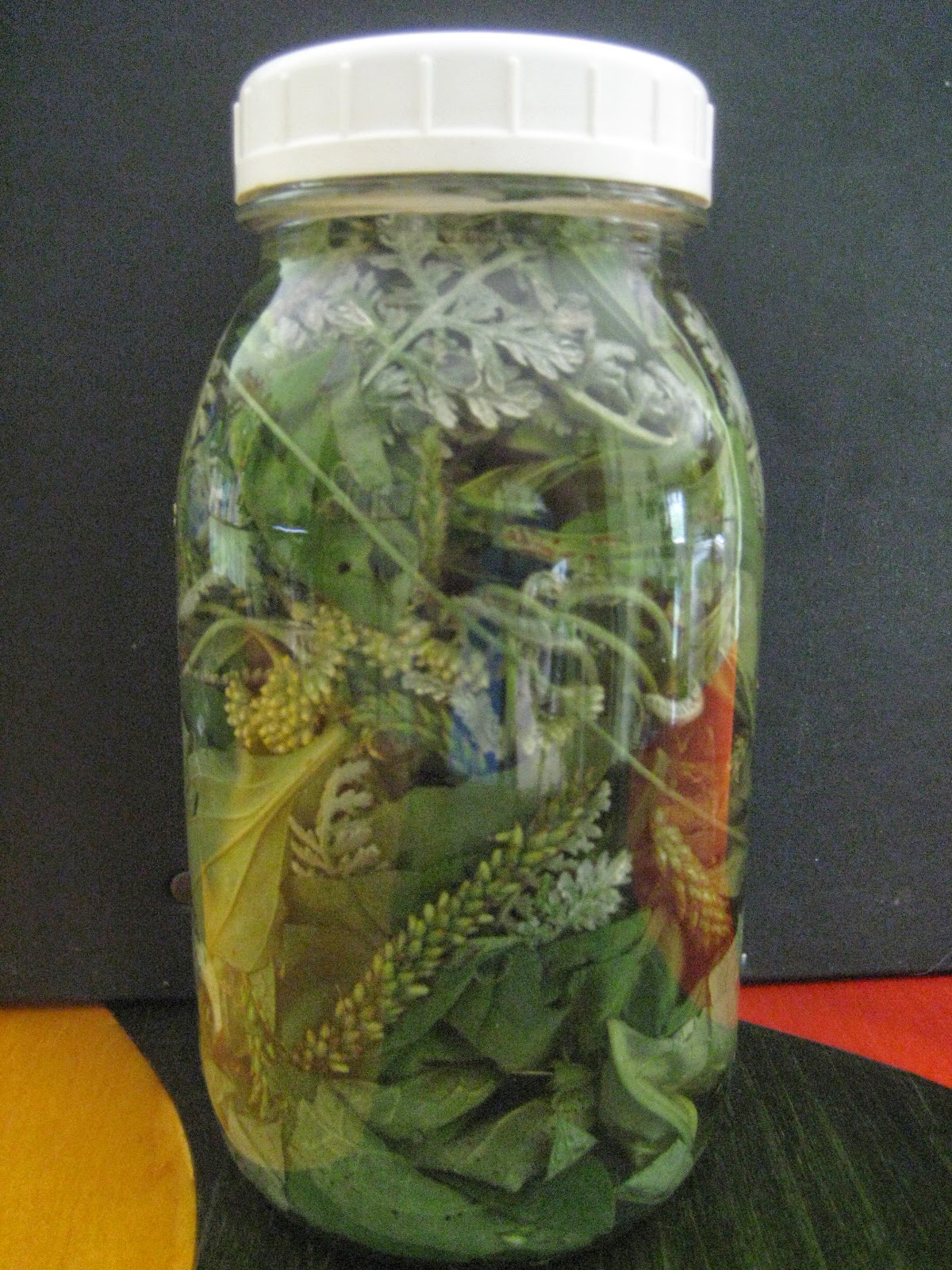
Some of the flowers are infused in organic virgin cold pressed olive oil. After being given about 6 weeks to sit in a warm, sunny location, the flowers are strained, and the oil is put in mason jars and kept in the refrigerator until ready to be used for salves. Pictured here are Plantain, Calendula and St. Johnswort, all wonderful healing oils.

Flowers are also put up in jars containing apple cider vinegar. 
Herbal vinegars make wonderful hair rinses and facial toners.

Extra flowers are dried for later use. They can be air dried by spreading out on a tray until dry or they can be dried using a dehydrator. Once dry, they are stored in gallon size ziploc bags and kept in a dark, dry place till needed.


This sunny, appealing child and pet safe flower appears in many personal care and medicinal products. Below are wonderful ways to utilize this friendly plant. 
Click on the caption under each picture to go into my shop for more information or to purchase:

Sore nipple balm, Radiation balm, Wound care

Pregnant Belly Balm, stretch marks, itchy skin

Calendula, Chamomile, Nettle Hair Rinse for light hair, conditions, lightens

Calendula, Chamomile, Nettles Face Toner, Raw Apple Cider Vinegar, balances skin pH

Wednesday, April 1, 2015

Plantain, The Mother of Herbs


Romeo: Your plantain-leaf is excellent for that.
Benvolio: For what, I pray thee/
Romeo: For your broken (cut) shin

Plantain has a long history, even mentioned by Chaucer and Shakespeare.


Everyone has an opinion on what makes a plant worth its existence or nothing more than a weed. This is what can separate a gardener from an herbalist. Granted, plantain certainly isn't the most attractive plant and doesn't have scented, showy flowers.  To many it is nothing more than a space hog in the lawn with its basal rosette form, later to shoot forth the long flower head tassels that inevitably just bend from the mower blades and pop right back up again. My mother still refers to it as the tassel weed, never bothering to remember the correct name. But to someone interested in medicinal or culinary plants, the return of the perennial plantain in early spring is met with a warm greeting.

Plantain is one of the most medicinally powerful plants, nuisance or not. They grow in lawns, meadows, waste places and even cement walk nooks and crannies. Part of their thriving success comes from the fibrous root system that can dind the smallest traces of moisture and nutrients in the poorest of soils. They are so common most people just step on them without a second thought.

Ribwort


Common Plantain


Though there are over two hundred species of plantain throughout the world, the two most common types in the U.S. are P. major L. or common plantain (broad-leaved) and Plantago lanceolata L or ribwort (narrow-leaved). The generic name comes from the word planta, which is Latin for "sole." The introduction of plantain to North America goes back to the 1700's with the arrival of the first European settlers. The Indians, first seeing it near European settlements, called it "white man's footprint."

The Plantago species are not related to the banana family plantains or the water plantains (Alisma species) which have similar leaves but are inedible. Plantain is one of the early spring edible greens. Each leaf has a long, fibrous leafstalk, so is best eaten raw when the leaves are young and small. English plantain is seen first in early spring and common plantain comes up a little later. Either one gets tough by mid-spring and by then it is best eaten as part of soup stock.

Internally, plantain provides beta carotene, calcium and a carbohydrate fiber called mucilage.
This fiber helps prevent heart disease in that it reduces both the L.D.L (low-density lipoprotein) cholesterol and triglycerides.
As an aid for healthy digestion, plantain can help with digestive problems related to antibiotics and food allergies. The plant is very soothing and reduces inflammation in the gut lining. The seeds act similar to psyllium husks by absorbing toxins, firming stools and as a gentle laxative to clean out the digestive tract.
This soothing action also makes the plant useful for respiratory problems. Since it is rich in the mineral silica, plantain makes an excellent expectorant. This means it eliminates mucus and soothes inflamed, sore membranes such as with a sore throat, congestion and nagging coughs.


Known as the "mother of herbs", there seems to be very few health conditions that plantain can't be of an aide. According to the American Materia Medica, most blood diseases, many glandular diseases, digestive issues, female disorders, skin problems and even arthritis can be helped with the healing properties of this undervalued plant.

Externally, being an astringent with antimicrobial properties, plantain is excellent for wounds, bug bites, bee stings and rashes. Should you be stung by a bee, bothered by other biting bugs, or gotten into poison ivy, look around and you'll probably find plantain growing somewhere nearby. Make a poultice by picking a few leaves and chewing them into a mash and then placing the wad on the wound. If necessary you can then cover it with a band-aid or strip of cloth to hold it in place. Very impressive is how quickly the pain from the sting is neutralized and diminishes.
A plantain poultice can also be used for drawing out splinters or thorns.

By infusing the leaves, flower stems and seeds in a good carrier oil such as olive oil, it can become a very useful salve for use as a wound healer, skin soother and in general, an excellent balm to keep on hand. The balm below has multiple uses for all age groups. Bug bites, rashes, sore baby bottoms, elderly skin care, wound care, chapped hands and lips, the list goes on for a very versatile healing salve.


Plantain Healing Balm/Salve
Plantain Violet Lip Balm


By infusing the leaves, flower stems and seeds in a good quality apple cider vinegar, it can become a safe, deet-free insect repellent safe for all ages and even your pets.


Plantain and Lavender Vinegar Deet free Bug deterrent
Plantain, Comfrey, Yarrow Herbal Vinegar Deet Free Bug Spray
Vinegar Infusion of bug repelling herbs

Plantain Violet Balm/Salve

Thursday, April 24, 2014

Beat The Bugs Before They Bite


 Protecting yourself or your children against annoying insects doesn't have to mean using a product with a warning label.

DEET, also known as diethyl-meta-toluamide, is very common in commercial bug repellent sprays, but research tells us that its use can have detrimental effects on brain cells and can interact with some medications. Anything put onto our skin is absorbed into the body, not something you want for yourself or your loved ones. Try a natural mosquito and fly repellent instead. Just keep in mind that plant based repellents do wear off faster than the commercial chemical based sprays, so you will have to reapply as needed.

Many of our "weeds" can be our friends. We have to remember that the definition of a weed is a plant that seemingly serves no purpose. In the carpets we like to call our lawns, yes they may be unsightly, but when it comes to medicinal value, these plants definitely have a value.

The vinegar based sprays are ideal for people who are seeking an organic, herbal product but would rather avoid the concentration of essential oils. We're relying solely on the strength of the herbs themselves. Vinegar as a base is good for three reasons; bugs don't care for it, it makes for great herbal infusions, and it evaporates, therefore there is no need to worry about smelling like vinegar.

We have two choices for apple cider vinegar herbal infusion bug sprays. Plantain, Yarrow and Comfrey in the first and Plantain and Lavender in the second. They are both very good and given choices, people like to compare to see which herbs work better for them. Also, being Yarrow and Comfrey should be avoided during pregnancy, the Plantain and Lavender spray is a safer choice while pregnant.(Lavender essential oil is optional). Without the potency of added essential oils, if used on young children it is better to choose either of these sprays rather than the Yarrow Tincture spray or the Herbal Body Oil. Those are more potent due to the essential oils and are best for older children and adults.

Plantain, Yarrow, Comfrey Vinegar
Plantain, Lavender Vinegar


Apple cider vinegar can also be used as a safe alternative to help repel fleas on your pets.
Fleas don't like the way vinegar tastes and smells. As some of the chemicals used for topical flea treatments can be just as dangerous as the pests themselves, knowing other ways to keep them off your pets are always good to know. Depending on the type of dog or cat, you may find it best to dilute it first with water. Being dogs have such a keen sense of smell, straight vinegar may be too unappealing for some. Also, depending on the thickness of your dog's fur, the amount that actually touches the skin will vary, and direct contact for some dogs may be drying for the skin. The bottles hold 4 oz. so add another 4 oz of distilled water and put into a larger spray bottle. Avoid getting the spray into your pet's eyes. For use with pets, especially cats, only use the herbal based deterrents without the essential oils. (Lavender essential oil can be used at a low dilution) Cat's don't have the enzymes to break down some essential oils and over time they can become toxic to the liver and kidneys.


Plantain (Plantago major), also known as the “Mother of Herbs,” it is one of the top backyard medicinal plants. A commonly seen "weed", one of those plants we step on without a thought, but should you suffer a bee or bug bite quickly chew a leaf to get the juices flowing and apply to the bite. You'll be amazed at how quickly it neutralizes the sting. It has astringent, soothing, antimicrobial properties that make it a very beneficial herb to use for our all natural bug deterrent spray.

Gardeners who utilize companion planting are probably aware that Yarrow (Achillea millefolium) is used for warding off detrimental insects.The wild white Yarrow is more medicinal than the garden varieties, so that is what is used for the infusions.
Yarrow is usually associated with the story of Achilles' using it to stop the bleeding wounds of his soldiers in battle. Its astringent, antiseptic and analgesic properties add up to it being a first aid kit in one plant.

Another wonderful healer is Comfrey (Symphytum officinale)  a large fuzzy garden herb. Rich in chlorophyll, minerals and mucilage the leaves are an ally for cooling and soothing irritated skin. Comfrey is a great aid in easing irritation from bug bites already there.

Lavender (Lavandula) has been used as a bug repellent for centuries. It was used in the past to protect clothes and linens from the infestation of moths and other insects. The strong scent of lavender is disliked by numerous types of bugs, flies and mosquitoes are just what usually comes to mind as the problem pests. Lavender also prevents the spread of infection caused by existing bug bites and controls the itching and inflammation often associated with them.


Yarrow Tincture Herbal Spray
The Yarrow Tincture spray relies on three effective essential oils: Catnip, Citronella and Lavender.
This spray should not be used on pregnant women or very young children. It is too potent with the concentration of the added essential oils. It can be used on dogs if diluted, not at all on cats.

Catnip (Nepeta cataria) has many other uses besides entertaining our feline companions. Studies have found that nepetalactone, a compound found in catnip was more effective than DEET at repelling mosquitoes. DEET can cause rashes and eye irritation so if there is an alternative why not try it?
A pricey essential oil but it works.
Citronella (Cymbopogon, various species) is a strong, potent lemon scented plant  in which most of us are familiar with in patio type candles.


Herbal Body Oil
  For those who worry about the tincture or vinegar based sprays being too drying for their skin, there is the choice of an herbal infused body oil. So you would get a moisturizer and bug repellent at the same time. Beat It Bug Oil is also very soothing as an after-bite remedy by reducing itch, swelling and inflammation. For spot treatments it may be easier to apply to a cotton ball first. Use your own discretion as to how often you will have to reapply.

A variety of bitter garden herbs are first infused in an olive oil base for an extended period of time. Rue, tansy, sage, feverfew and southernwood are a few of the choices one has for repelling mosquitoes, no see ums, knats, and black flies.

Strong acting essential oils such as citronella, lavender, geranium, peppermint, eucalyptus and lemongrass are excellent examples of strong aromas pesty flying insects do not like. Various combinations of these oils are used for their antiseptic and insect repelling qualities.


So get out there and enjoy the great outdoors.


Thursday, May 30, 2013

Baby Chicks are Growing Up!

It was a big day for our baby Rhode Island Red chicks. At six weeks old they are fully feathered and no longer need the heat light. They are now outside from morning to evening in their little coop. For the past two weeks they were only out on nice days and brought back inside under the heat light till morning. But now that it is almost June and the weather has finally settled down to nighttime temperatures in the 50's, it is no longer necessary to bring them back inside under the heat.

Below are pictures of their weekly development. It is amazing how fast they grow.

2 day old arrival of chicks, April 19th

They were housed in a dog crate that I had enclosed in chicken wire using cable ties. At this age they would've slipped right through the bars. We also have cats so this kept naughty paws from reaching in and hurting any of the chicks. The floor of the cage is lined with paper towels on top of newspaper. The paper towels keep their little legs from slipping. At this age I only changed the paper once a day. I did make sure there was always food and clean water available for them.

chicks at 1 week

By two weeks the paper towels are no longer necessary. I put a small storage tub in the crate to give them something to perch on and play a bit as they learn to jump and flap their little wings.

chicks at 2 weeks

At three weeks things are getting a bit messy. The paper definitely gets changed morning and evening. Even if the water bottle has water it needs to be dumped and fresh added.

chicks at 3 weeks
By four weeks, the chicks are ready to spread out and get out of the crate a few hours on nice days. We have a smaller coop inside of the larger coop (our original structure which I now use as a nursery). The first day they were scared of all the new sights and sounds around them, so stayed inside the large cat carrier I used to transport them back and forth from the house to the barn.

chicks at 4 weeks
Five weeks and we and the chicks are very ready to get them out of the basement. The cage is crowded and a mess within an hour of freshening up. The chicks make a mess with their scratching and most of the food is kicked around rather than staying inside the dish. But to be in the crate just for sleeping overnight, they settle down quickly.

chicks at 5 weeks
Six weeks and out they go! The crate is moved out into the barn (our inside coop is a stable).  At their present size now, it is time to split them up into two crates. To avoid overcrowding there are only six in each crate. My second crate was once used for a guinea pig, so we utilize what is already around. Inside their outdoor coop I have an old dog box which comes in very handy on rainy days, as well as for shade.
So during the day they are transported from my dog crate(s) to the outdoor pen (which is inside the main outdoor chicken pen), and at night they come inside the barn back into the dog crates. It is much easier to catch chickens if you wait till it is dark. They cannot see very well in the dark and it puts a lot less stress on them to be handled.

It is fun to watch how the chicks enjoy the freedom of being outside and how the older chickens nosey around their pen. Very cute is their fluttering around and the instinctual scratching and cleaning themselves in a dirt bath.

chicks at 6 weeks
From the picture of our outside fenced area, you can see that the older chickens are right there with the babies, but cannot have actual contact yet. By the time the chicks are around eight to ten weeks, everyone is used to each other, and I open the nursery coop door and let the young ones access to the larger pen. I want the babies to learn to come into the barn with the older chickens at night, which will put an end to the hassle of my getting them in every night.

Be available to observe this first interaction between the adult chickens and the young ones. There will be a scuffling as they meet and greet and establish the new pecking order. Be sure to have somewhere safe for the young ones to retreat to if they want. If you have any doubts as to the young ones' safety with aggressive older birds, then wait till they are older and of more equal size before mixing them. Some people say that the ideal way to blend the birds is to wait till dark and place the young chickens on the roost with the older birds. Then in the morning they will see each other in the light and being all is calm as usual,  the older chickens will just assume they belong.  A good post about adding new chickens to a flock is from The BackYard Chickens

By summer's end those cute little fuzzball chicks will be around 5 pounds and fully grown. By September they will be 18 weeks and we should begin to see the start of their laying eggs. It begins with little pullet eggs but soon they will be laying the beautiful large brown eggs expected with Rhode Island Reds. With the end of the season and its cooling temperatures and shorter daylight hours, the real egg laying won't start until the following spring. By then, these birds are mature, strong and offering their full potential. Between egg laying and manure for the garden, having your own chickens is worth all the initial work. For a much more detailed post about raising your own chickens, click here

Enclosed chicken pen, Chick nursery coop is on the left

Thursday, May 24, 2012

Deal With Pet Anxiety Over Fireworks, Thunderstorms

With the accessibility of  fireworks available for home use, the booming might be a little too close. The unexpected explosion of noise may send your pets scurrying with fear for the nearest place to disappear from perceived danger.

Don't overdo it with the fussing in trying to console your pet. That just sends the message that he/she has good reason to be so anxious. And never show anger or raise your voice in your own frustration over thinking you have a wimpy dog.

The best thing to do is use the power of distraction. Offer a favorite toy or perhaps one of those toys you can fill with small snacks or peanut butter; something that will take a while to eat.  Have soft music playing or just the sound of the normal atmosphere of family conversation.

Linen sprays are great to keep on hand for those times when we want our pets to calm down from fearful anxiety, whether real or imagined. Or perhaps just to settle down a high energy pet.


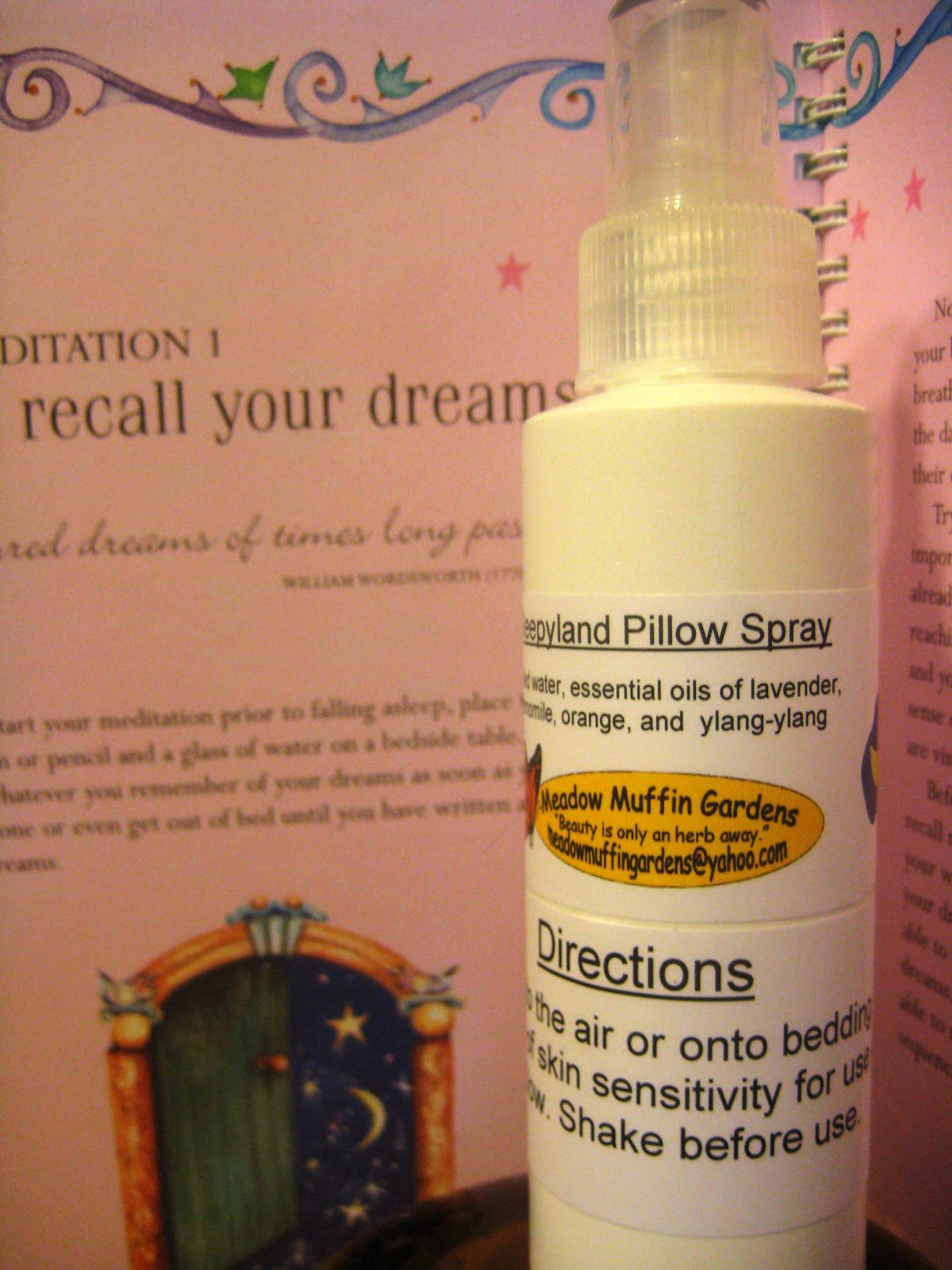
The Anxiety Relief, Sleep Aid Mist and Linen Spray consists of a combination of essential oils therapeutically known for their value in relaxing nervous excitability and emotional conflict.

Lavender, chamomile, sweet orange, and ylang ylang are an excellent combination for anxiety, trouble sleeping, settling down overstimulated children, and calming the fears in your dogs from such things as thunderstorms, fireworks, gunshots, and even separation anxiety.

Spray the linens of your sleeping area or pet bedding but do so sparingly at first in case you find the aromatics too strong. The spray can always be diluted by adding distilled water. Spritz a bit onto your dog's paws and massage it in to help him/her relax. Essential oils are easily absorbed by way of the feet, be it people or pets. Spritz a bit right onto the fur and give your pet a rub down. The power of touch has amazing therapeutic value.


Rescued pets have no way to actually tell us the origins of their fears and anxieties. We try to help these emotionally based behavioral disorders by offering secure, safe havens free of stress. But past traumas are buried deep and all it takes is the loud bang of gunfire, fireworks or even door slamming, to send a shaking pet under the bed. Or perhaps with your companion it is dealing with separation anxiety, and our dog exhibits inappropriate chewing, either of his own tail or paws or your home furnishings. Before relying on anti-anxiety medication, try the power of herbal remedies. Lavender and chamomile are safe for pets and are great for calming fears.


A remedy great to have on hand, though you hope never to have to use it for an emergency, is Bach Flower Rescue Remedy. It is a remedy to give in situations of shock and fear, such as in the case of an accident, or to calm down pets who getting to the veterinarian is usually a stress-filled ordeal, or for those with extreme anxiety over things like fireworks or gunfire.  It is made up of five flower essences known for their calming properties: Impatiens, Clematis, Rock Rose, Cherry Plum and Star of Bethlehem. Found at a health food store, this remedy developed by Dr. Edward Bach, should be in every first aid kit and every car glove compartment. Preventing shock at the time of an emergency can save lives. Give two to four drops on the tongue or gums every 10 - 15 minutes en route to the veterinarian.

Being prepared is the key to nip a problem situation in the bud before it escalates to the next level of stress for everyone.