Meadow Muffin Gardens logo
Showing posts with label self-sustaining. Show all posts

Monday, January 20, 2020

Back To Basics Skin Care Routine...Starting Over


The case many a time when people do seek out products not easily found on the commercial market is a result of wanting to eliminate synthetics and chemicals in their lives or a frustration with the condition of their skin. Often it is a matter of going back to basics and starting over.
A mistake people often make with cleansing their face is that the products used are too harsh and strip the skin of their natural oils, leaving the skin pH out of whack resulting in too dry skin lacking the balanced oils that normally protect the barrier. In trying to get back to normal there can be an overproduction of sebum which we then try to scrub off by washing even more and the cycle continues.
A good routine to follow includes: a cleanse, an occasional steam and/or mask, then a toner and last a moisturizer if needed

I have two types of FACIAL CLEANSE, one is like a serum and the other is a honey/glycerin/castile soap blend:
First we have the oil cleanse method.
Remember years ago when women used cold creams? That method was basically using cleansing oils that removed makeup and dirt from the skin. It was a gentle approach to cleansing both dry and oily skin. I got this recipe from an old herbal book. 
Aloe Rose Facial Cleanse

Some people like this to cleanse and additionally use a moisturizer, others think this is enough for both cleansing and moisturizing. It consists of olive oil (this could be replaced with a "drier" oil such as grapeseed for oily skin), rosewater and aloe vera gel. You would apply this to a cotton round and simply wipe over your face to cleanse and moisturize and the same time. Second option is to use it like you would any other facial wash and rinse off with water.

Cleaning your face with oil may sound unappealing but contrary to popular belief, oil does not contribute to oily skin or breakouts. The sebum that the skin creates is there to protect the skin. When we use commercial cleansers to remove this natural oil, the body reacts by producing more oil. Dry skin is often the result of stripping away this natural barrier and things get out of balance. It is the same as how our hair adjusts to constant shampooing.
In washing our faces we want to remove the dirt and bacterial which builds up in our pores but we have to think about the chemistry behind it. Oil dissolves oil, like dissolves like. Water and oil do not mix; commercial cleansers contain ingredients to break up the oils but in doing so may strip away the natural protective layer. By using a nourishing oil like olive oil, the dirty oils are being replaced with beneficial ones.

Some people like to use the above serum type cleanse on some days and then the more traditional wash with water on other days, just to mix things up and get the benefits from both types.
There are three versions of the honey/glycerin/castile soap washes, mainly its personal preference. The first one uses essential oils orange or lemon which you may like for oily skin since they are more astringent. The next one is made with the honey infused with rose petals and the third the honey is infused with lavender.

Citrus Honey Facial Wash

Rose Honey Facial Wash

Lavender Honey Facial Wash

Wildflower and clover honey already have the beneficial attributes of various herbs and flowers within the honey itself. Honey is a natural humectant which means it retains moisture and plumps up skin cells. It helps to rebuild the moisture level in the skin without making it oily. The high sugar, low protein content create an acidic environment with limited availability of water therefore bacteria cannot thrive.
Glucose oxidase is an enzyme that when combined with water produces hydrogen peroxide, a mild antiseptic. Honey also contains antioxidants and flavonoids that may function as antibacterial agents. It calms down troubled skin without irritation.
Vegetable glycerin is what is known as a humectant which means it draws moisture from the air and holds it in. As part of a cleanse it bonds to dirt and oil and washes away.


To open up the pores, you can follow the cleanse with a 20 minute facial steam in which you fill a bowl with steaming water (add an herbal tea bag for extra benefits), make a tent by covering your head with a towel, and lean over the bowl.


Follow the steam with a RAW HONEY MASK or an exfoliating SUGAR SCRUB for wonderful benefits.
Masks and scrubs are great for periodic use for deeper cleansing to draw out impurities or for exfoliation to remove dead skin cell build-up. These aren't meant to use every day, once or twice a week is sufficient. Add variety by mixing it up a little, and there is no need to use both the mask and the scrub at the same time.

Unpasteurized honey contains all the live enzymes and life of the hive without being destroyed by the heat of pasteurization. Typical store bought honey is pasteurized to make it nice and pourable and remove bits of wax and stuff from the hive. Having a high anti-oxidant level and being the natural enzymes have not been destroyed by heat, raw honey is a much healthier product.
Facial masks are wonderful for deep cleaning in that they penetrate below the surface and draw out impurities. Honey masks are nourishing, moisturizing and gentle enough to not strip the skin of its natural protective oils.
When you wash the honey off your skin, a small amount remains in the pores. As a result, the sugars in the honey attract water from the air, which keeps your skin hydrated.

The first mask has tea tree and chamomile and is good for blemishes. The second one is good for blemishes too but in using lavender is more gentle. The third one is great for oily skin as it contains peppermint and lemongrass which are astringent and antiseptic.
Blemish Honey Mask
Lavender Honey Mask
Oily Tired Skin Honey Mask

Scrubs are optional as they may be too harsh for already irritated skin.
The choice between sugar or salt for scrubs depends on how it is to be used. For the delicate skin of the face sugar scrubs are gentler. People often make the mistake that if they scrub they'll scrape those blemishes right off when actually they are irritating the skin further causing more inflammation.
One uses vegetable glycerin instead of an oil and the other two use coconut oil. The glycerin scrub is "goopier" and good if you like a looser scrub. The coconut oil ones tend to be more compact since coconut oil solidifies under 75 degrees. But as soon as you touch it it melts and gets soft again.

Vanilla Sugar Scrub
Vegetable Glycerin Lavender Sugar Scrub
Coconut Sugar Scrub Lemongrass


Finish up with a gentle TONER:
The herbal vinegars are great for getting and keeping the skin pH back in balance. It's personal preference as any of them are tonics for the skin.
The first one uses herbs for their anti-inflammatory benefits and the second is an old-fashioned blend of roses and elderflowers which were used for their high vitamin C content.
Calendula Nettles Chamomile Toner

Rose Elderflower Toner

Herbal Blemish Spot Treatment

This third one is stronger than the other toners because it doesn't have the dilution of distilled water. It's more of a spot treatment for blemishes. It does make a great everyday toner too if it's diluted a bit which is an option when purchased.

The natural pH of the skin is what keeps bacteria levels in check Disruption of the skin's pH can be detrimental to your skin, because bacteria thrives in an environment only a little more alkaline than your skin's natural acidity. Once bacteria thrives it can lead to inflammation and generating more clogged pores.
Good quality raw vinegars restore the natural acid balance of the skin, leaving it soft and smooth.
By promoting circulation in the small capillaries that irrigate the skin, vinegar becomes a tonic for the complexion. Raw vinegars don't go through the processing and distilling of the typical clear vinegars, therefore raw vinegar still contains the living nutrients and beneficial bacteria of the "mother".
Vinegar acts as an antiseptic, meaning it prevents proliferation of bacteria, viruses and yeast that could trigger infection. As a facial toner, it removes oily residue as it dissolves fatty deposits at the surface of the skin.


Third step on a daily basis is to MOISTURIZE
There are several facial cream choices and one lighter lotion. They vary in ingredients just to offer options for personal preference or allergies but they all are very good for different skin types. The oil to water ratio is almost 50/50 whereas most lotions in pump bottles are 20/80. The key is how often and how much to use at a time. People with dry skin find these creams nourishing and great relief for parched feeling skin and those who don't need a heavier cream may find they only need a tiny bit or perhaps only need it as a night cream.

Herb Floral Facial Cream
Elderflower Rose Facial Cream

Rose Facial Cream
Serenity Facial Cream
Scent Free Facial Cream
Wrinkle Wrath Facial Cream

Touch of Bliss Facial Cream
Vanilla Wrinkle Wrath Facial Cream
This lotion has a higher liquid portion and doesn't have a solid oil such as shea butter or coconut oil. This lotion was originally the request from a woman who had skin troubles and was allergic to coconut oil. But since some people just want a lighter lotion rather than a cream I left the listing as it is. The essential oils chamomile and tea tree are the usual ones in the lotion only because it originally was wanted for and to prevent future blemishes. But if you don't need that, you can leave it unscented or add something else.
Sensitive Skin Lotion


Everyone has different needs and preferences, therefore there is no one product or routine that fits all. Getting to know what works best for you may be trial and error, but hopefully with options like these products you can be reassured the "first do no harm" philosophy is a priority.

meadowmuffingardens.com

meadowmuffingardens.etsy.com


Tuesday, September 11, 2018

Clean Green, More Ideas Using Household Products

Keeping up with maintaining a clean home is a challenge enough, so when ideas come up to help make tasks easier, safer, cheaper and more rewarding, it is worth noting.

A prior post about green clean covered the more common products to use, such as vinegar, baking soda, borax and lemons. This post will cover a few ideas you may not have heard about but are probably already in your cabinets: cream of tarter and hydrogen peroxide


CREAM OF TARTER

Found in the spice aisle, cream of tartar often is only pulled out to make an angel food cake.
But it can be a great non-toxic source for laundry stains, warding off bugs and cleaning.
A byproduct of the wine making process, cream of tartar is acidic enough to tackle tough cleaning jobs.

1. Ring around the collar
Dampen the shirt collar with a little water and then sprinkle the area with some cream of tartar. Rub the fabric together to work in the powder and then launder as usual.
2. Whiten whites
Pretreat white clothes with a cream of tartar soak. Add a tsp. of powder for each quart of water and soak the clothes before washing.
3. Remove stains on clothes and carpets
Mix some cream of tartar and lemon juice to form a paste. Apply the paste to the stain and let sit for at least an hour. Machine wash clothes as usual or with carpets, blot with a damp cloth. Think of this idea for those ink stains that can ruin a good dress shirt.
4. Cleaning toilet stains and bathtub rings
Mix some cream of tartar and hydrogen peroxide (or white vinegar) to form a paste. Apply the paste to the stains and wait till it dries before rinsing with water.
5. All-purpose kitchen cleaner
Mix some cream of tartar and white vinegar to form a paste. Use on stove burner pans, grout, ovens, kitchen sinks, spigots, stainless steel appliances, coffee pots, even cleans mildew.
6. Clean copper
Mix 2:1 cream of tartar to lemon juice (2 tbsp. cream of tartar and 1 tbsp. lemon juice). Rub onto copper pots and wipe clean with a damp cloth
7. Clean silver
Tarnished silver can be cleaned by dipping a damp magic eraser into some cream of tartar and wipe away the tarnish on old trays and utensils.
8. Sooty fireplace
Wet some cream of tartar with water and apply to the soot. Wipe away soot with a damp cloth.
9. Deter ants
Sprinkle where you suspect the ants are coming into the house.
10. Out of baking powder?
Mix 2:1 cream of tartar and baking soda (2 tsp. cream of tartar and 1 tsp. baking soda) to make 1 tbsp baking powder.

Note:
Be careful with how you clean granite counter tops. Acids such as vinegar and lemon juice can what they call "etch" granite and dull the surface.


HYDROGEN PEROXIDE

We all recognize the typical brown bottle of hydrogen peroxide usually found in the first-aid section next to the rubbing alcohol. You want the 3% H2O2 antibacterial strength, nothing higher.
Hydrogen peroxide is amazing stuff and so cheap, keep a bottle in stock at all times. You'll be amazed how many different ways you'll find to use this safe and natural product.

Hydrogen peroxide is a weak acid, consisting of water (H2O) and an extra oxygen molecule (H202). It could even be called oxygen water and is so safe to use since it quickly breaks down into oxygen and water. Hydrogen peroxide can even be found in rainwater and snow.
All living things contain this oxygen water. Our white blood cells naturally produce it to fight infection and being it is in fruits and vegetables, that is another reason to eat more of these foods.

H2O2 FOR THE KITCHEN
Have two bottles under your sink, one with the cap it comes with and one replace that cap with a sprayer top.
1. Remove dirt and pesticides from fruits and vegetables. Add 1/4 cup H2O2 to a sink of cold water, add your produce, wait a bit and rinse thoroughly with water.
2. Help your dishwasher sanitize your dishes by adding 2 oz. to your regular detergent.
3. Regular dish soap can be improved too by adding 2 tbsp. to the dish soap bottle.
4. Spray counter tops and cutting boards with hydrogen peroxide, let it bubble for a few minutes before wiping clean.
5. Spray the interior of the microwave and refrigerator to clean and disinfect. Spray and wait a few minutes before wiping it away.
6. Clean those kitchen sponges. Mix hydrogen peroxide and water at a ratio of 50:50 and soak sponges for about ten minutes. Rinse the sponges afterwards.
7. Clean crud from the bottoms of ovens, pots and pans. Combine hydrogen peroxide and enough baking soda to form a paste and rub onto the dirty areas, let sit for a while before scrubbing.
8. Clean floors by combining 1/2 cup of hydrogen peroxide to a gallon of hot water. Because this mixture is so mild it is safe for floors as well as pets and children who'll be crawling around on those floors.

H2O2 FOR THE BATHROOM
1. Soak toothbrushes and hairbrushes in hydrogen peroxide to keep them clean and fresh.
2. Make your own mouthwash to kill bacteria and freshen breath. Use at a 50:50 ratio with water.
3. Help whiten teeth by mixing a little salt and baking soda with enough hydrogen peroxide to make a paste. Do not overdo this. Using higher concentrations than 3% H2O2 or using too often can harm tooth enamel.
4. Add natural highlights to hair by making a 50:50 mix of hydrogen peroxide and water, add to spray bottle and spray onto wet hair.
5. Add a bit of hydrogen peroxide to a cotton square and apply directly to pimples.
6. Help kill foot fungus by spraying a 50:50 mix of hydrogen peroxide and water onto feet or make a foot bath with it and soak the feet.
7. Deter bacteria on shower curtains and shower stall by spraying down with H2O2.
8. Wash shower curtains to remove mildew and soap scum. Place curtains in washer with a bath towel and regular detergent. Run through the usual wash cycle but then add a cup of hydrogen peroxide to the rinse cycle.

H2O2 FOR KIDS AND PETS
1. Spray lunch boxes, toys and anything else your child touches.
2. Clean pet bowl with hydrogen peroxide to keep them fresh and slime free (often the case with plastic bowls).
3. De-skunk recipe solution for your pet. Combine 1 quart 3% hydrogen peroxide with 1/4 cup baking soda, 1 tsp Dawn dish soap and 2 quarts warm water. Apply this mix to your pet's fur and wait a bit before rinsing it all off.


Tuesday, June 19, 2018

The Song of the Elder Fairy


THE SONG OF THE ELDER FAIRY
When the days have grown in length,
When the sun has greater power,
Shining in his noonday strength;
When the Elder Tree's in flower;
When each shady kind of place
By the stream and up the lane,
Shows its mass of creamy lace
Summer's really come again
"The Complete Book of the Flower Fairies"


One of nature's medicines is the wild elder (Sambucus species). A shrubby, unruly bush found among hedgerows, this small tree is lanky and not much to look at when not in bloom. Attempts to rid unkept landscapes of this shrub are often in vain as it easily resprouts even after a hard pruning.


However, every June this versatile herb is beautiful as it is covered with large, saucer-shaped off-white flowers. 


These flowers can be gathered and used as a food source such as flower fritters, a wash or toner to maintain clear skin, soothing skin care salves, a medicinal tea to clear congestion in the respiratory tract, relieve hay fever or aid in reducing fevers. Poultices for minor burns, wounds and swollen joints are made with mashed flowers wrapped in layers of cheesecloth. Elder flower water was once considered a valuable beauty aid among women to keep the face blemish and freckle free, as well as a great aid for sunburn.


The following vinegar spritz combines elderflowers and rose petals with raw apple cider vinegar to create a soothing sunburn relief body spray.
A variation in the recipe for the sunburn soothing spray and we have a wonderful ph balancing facial toner. Raw apple cider vinegar helps bring balance to troubled skin and helps with blemishes.

Elderflower & Rose Facial Toner


Sunburn Spritz

The use of elderflowers for a balm or salve is a win win from the delicate skin of baby bottoms to the fragile skin of the elderly. The flowers are rich in anti-oxidants and contain anti-microbial and anti-fungal properties that help keep the skin healthy. Below is a very soothing salve which combines elderflowers, calendula flowers and lavender buds, all safe and soothing for any age.


Baby Bottom Balm
In the late summer, the flowers have turned to dark blue berries often sought after for jam, wine and syrups. If you wait too long the bushes are soon stripped clean by the birds. Don't eat these right off the bush. The fresh berries can upset your stomach. Dry or cook the berries before eating them. If you do collect your own elderberries, make sure they are the dark blue or black ones and not the red berries. The red berries belong to S. racemosa which is toxic.


Elderberry Syrup

More information on Elderberry Syrup


Sunday, November 19, 2017

Holiday Quick Breads, Entertaining, Gifts


Home baked goods are always welcome on any party table or in a gift basket. Recipients of such thoughtful offerings just know a little touch of love is sprinkled into every batch.

Pumpkins, apples, dates, nuts and cranberries are tradition in holiday festivities and what better and easier way to use them than for quick breads. Below are the recipes for an apple bread, a pumpkin cranberry bread, a date/nut bread and a cranberry orange bread. Quick breads freeze well so you can get some holiday baking done early.

APPLE BREAD

3 cups chopped apples
2 cups sugar
1 cup vegetable oil
2 eggs
3 cups flour
1 1/2 tsp baking soda
1 tsp salt
1 cup chopped nuts or 1 cup rolled oats
2 tsp vanilla

You'll need two bowls
Peel and chop the apples
Combine the apples and sugar
Let sit for 30 minutes
Add the oil and eggs
Beat well
Combine the flour, baking soda and salt
Add the dry ingredients to the wet ingredients
Stir in the nuts (or oats) and vanilla
Dip into 2 greased loaf pans
Bake at 350 degrees for 60 minutes
Cool before removing from pans

PUMPKIN CRANBERRY BREAD

3 cups sugar
1/2 tsp baking powder
2 tsp baking soda
4 cups flour
1 cup vegetable oil
1 cup cold water
1 tsp cinnamon
1 tsp cloves
1 tsp nutmeg
2 cups pumpkin
4 eggs
2 cups dried cranberries

You'll need a large bowl
Combine the dry ingredients and sift well to blend
Add the oil, water, pumpkin and eggs and mix thoroughly
Fold in the dried cranberries
Pour into 2 greased loaf pans
Bake at 325 degrees for 60 - 70 minutes
Cool before removing from pans

DATE NUT BREAD

2 cups chopped dates
2 cups boiling water
2 tsp baking soda
2 eggs
2 cups sugar
1 cup vegetable oil
2 tsp vanilla
3 1/2 cups flour
2 tsp baking powder
1 1/2 cups chopped nuts

You'll need three bowls
Pour boiling water over dates and baking soda
Set aside
Beat eggs and sugar
Blend in the oil and vanilla
Combine the flour and baking powder
Add dry ingredients alternately with the date mixture to the batter
Fold in the nuts
Pour into 2 greased loaf pans
Bake at 350 degrees for 60 minutes
Cool before removing from pans

CRANBERRY ORANGE BREAD

2 cups sugar
4 cups flour
1 tsp salt
1 tbsp baking soda
2 tbsp grated orange rind
2 beaten eggs
4 tbsp melted butter
1 cup orange juice
4 tbsp hot water
1 1/2 cup chopped nuts or raisins
2 cups cut up cranberries

You'll need one large bowl
Combine the dry ingredients
Make a hole in the center and add the eggs and wet ingredients
Blend well
Fold in the nuts (or raisins) and the cranberries
Pour into two greased loaf pans
Bake at 350 degrees for 60 minutes
Cool before removing from pans


Monday, February 27, 2017

Tea Garden...It's What the Doctor Ordered


Themed herb gardens can be a lot of fun and many of these plants are not only suitable for a tea garden, but are also right at home in a kitchen theme, cosmetic theme or medicinal theme.

Most of us have only ever had tea from dried plants. Think how good it could be if picked fresh from your own backyard! Below are some ideal plants to get to know as they grow and it'll soon become apparent why people develop such a connection with their gardens. There is a certain pride in the nurturing, harvesting, storing and utilizing your own food, and knowing the conditions and quality of the plants makes it all the more satisfying.


Chamomile
For many, the introduction into the world of herbs all started with the famous children's book, The Tale of Peter Rabbit by Beatrix Potter. Most mother's can relate with how to handle mischievous children who don't listen and then come whimpering to Mom when hurting or upset. Mama rabbit simply put her little bunny to bed with a cup of chamomile tea and let him reflect on his lesson learned after such an adventurous day.

Be it frazzled nerves or an upset tummy, chamomile tea was the best remedy to calm both conditions at the same time. Better yet, chamomile tea lulled little Peter Rabbit into the la la land of sleep.
Much of chamomile's medicinal effects are targeted toward the digestive tract and the nervous system.


Chamomile tea can be a godsend for parents pacing the floor with a colicky baby. The build-up of intestinal gas is very painful. Just a teaspoon of cooled chamomile tea given every ten minutes can relieve a baby's misery amazingly fast. Catnip and lemon balm are two other wonderful herbs safe for babies.

Combine a hot water bottle placed over the lower abdomen and sipping chamomile tea every 15 minutes for a sure relief from those dreaded PMS menstrual cramps. 

Be it a child or an adult, everyone has occasional trouble falling asleep. A cup of chamomile tea with a spoonful of honey can become a nightly ritual to look forward to in readiness for bed. The nerve relaxing properties of this herb are wonderful for settling down overtired children and the cluttered minds of over stressed adults.

Growing your own chamomile is fairly easy. Chamomile is an annual which once it is planted and gets established, it will pop up on its own every year. The flowers are the parts collected and if you harvest on a regular basis during the growing season the flowers will continue before finally going to seed.


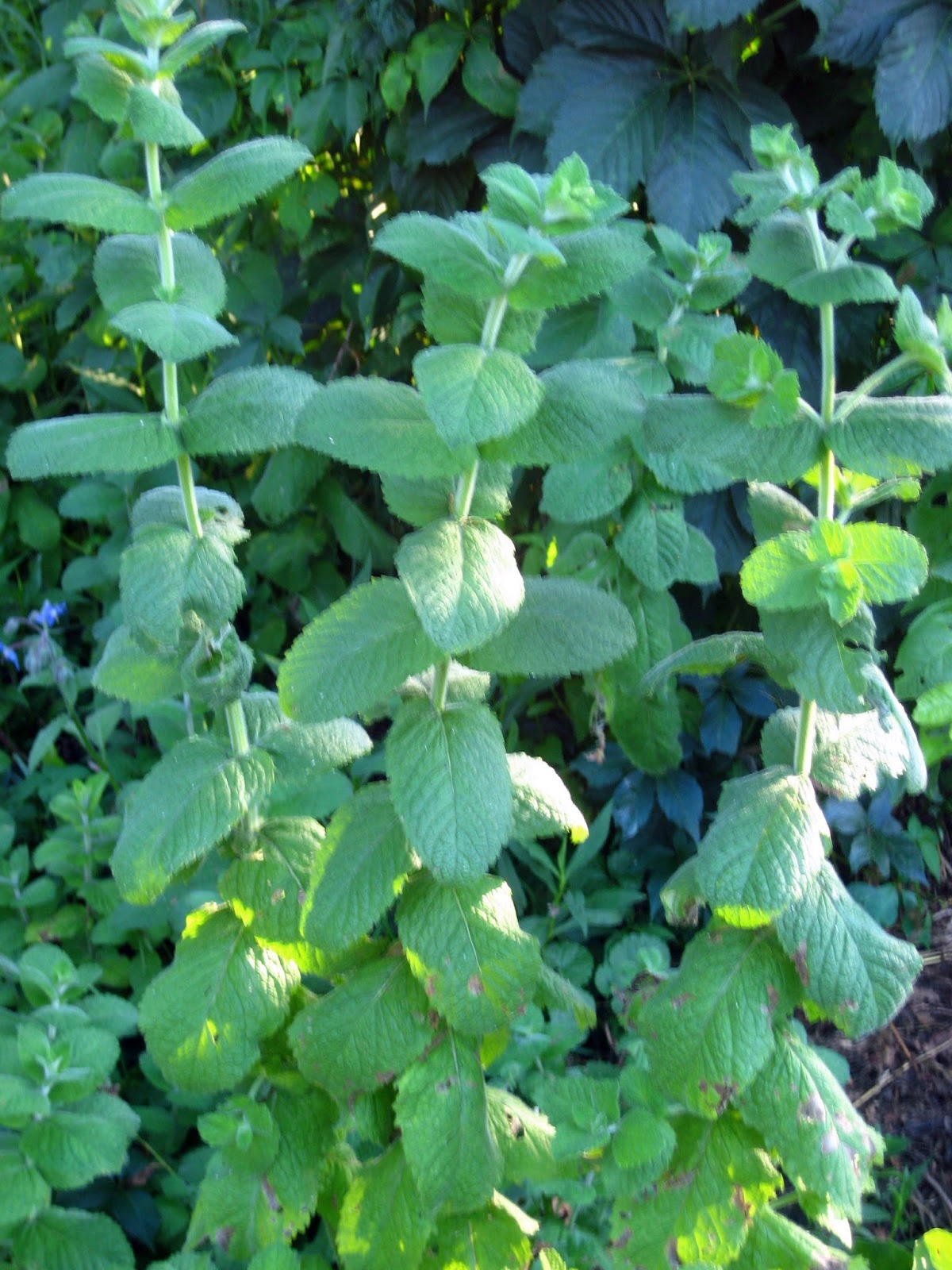
Apple or Woolly Mint
Spearmint and Peppermint

Peppermint and Spearmint are just two of many types of mint in the Lamiacae (Labiatae) family.
Known as the herb of hospitality, mint has long been used everywhere from the kitchen to the sickroom. Peppermint and spearmint are the most common types of mint, but there are several varieties that can be found at your local nursery in the herb section. You can find apple mint, chocolate mint, mimosa mint, mountain mint, pennyroyal, orange mint, catnip, etc A good way to identify whether a plant is in the mint family is to feel the stem. If it is squared rather than round it is in the mint family. Mints are low to no maintenance perennial plants. They are so hardy, they'll be happy to take over your entire garden. The roots spread by way of runners, so if you don't want it to continue to creep along, it is best to plant it in buried containers. These plants like the sun but do tolerate some shade. Another perk with mints is that the bees adore the flowering tops.

Peppermint in particular has a powerful, menthol aroma that refreshes, energizes and improves mental clarity just by inhaling the steam from a cup of hot tea. So many ailments can be eased with this one type of plant. Nausea can be relieved, cramping belly aches can be settles, pounding headaches can fade away, congestion can open up, aching feet can perk up, heat flashes can be cooled, and sore muscles can relax.


Lemon Balm is wonderful for relaxing children or anyone under stress. Called the "happy tea", lemon balm is invaluable for not only snapping a child out of a cranky mood, but can help anyone feeling down in the dumps. With it's hint of lemon, add some honey and you have a delicious tea most people really enjoy. With anti-viral properties, lemon balm is great for colds and fever blisters (cold sores). Also called Sweet Melissa, if you let it flower as in the photo below, you'll be making a lot of bees very happy. This type of mint spreads as any other mint but it is easier to control since it grows in clumps. One thing with lemon balm is that if you do dry it, don't crumble the leaves until ready to use or you'll lose a lot of the lemony scent.

Lemon Balm


Catnip
Catnip is great for colicky babies, upset tummies, jangled nerves and to bring down a fever. And of course you can grow it as a great treat and source of greens for your cat. Catnip spreads on its own but like lemon balm, it grows in clumps so is easier to control than some mints that creep over the ground. Without cutting back, catnip actually becomes almost shrub-like with woody stems.


Monarda
Bee Balm or Monarda is often grown in butterfly, bee and hummingbird gardens. It's red or pink tubular flower petals are beautiful when in bloom. Monarda gets taller than the usual 2 ft. mints. This plant reaches 3 - 4 ft. so makes a great backdrop plant. Also known as Oswego, this plant was used extensively by Native Americans as a medicinal tea. During the American Revolution, Bee Balm was the replacement for black tea after the Boston Tea Party. And you can guess why the word "bee" is in the name. Great beneficial plant.


Anise Hyssop
The last mint we'll mention is Anise Hyssop (Agastache foeniculum) which smells and tastes like anise. Although it is called a hyssop, it isn't the same plant as the Hyssopus officinalis, which is in the mint family, but of European descent. Anise hyssop is a must for anyone who wants a scent garden. Even if you don't like it as a tea, to resist the urge to take a moment to pick a leaf for a sniff is nearly impossible. 

Pineapple Sage
Any of the sages can be used as a tea but Pineapple Sage tastes much better than regular garden sage. This tea is a good remedy for indigestion and heartburn. Sage makes a good gargle for a sore throat, especially if first infused in vinegar. Garden Sage is a perennial but Pineapple Sage is a tender perennial which in colder areas is grown as an annual. This plant grows much larger than garden sage. It actually becomes like a shrub and by September it flowers beautiful red tubular flowers adored by the hummingbirds, a great late season food source.


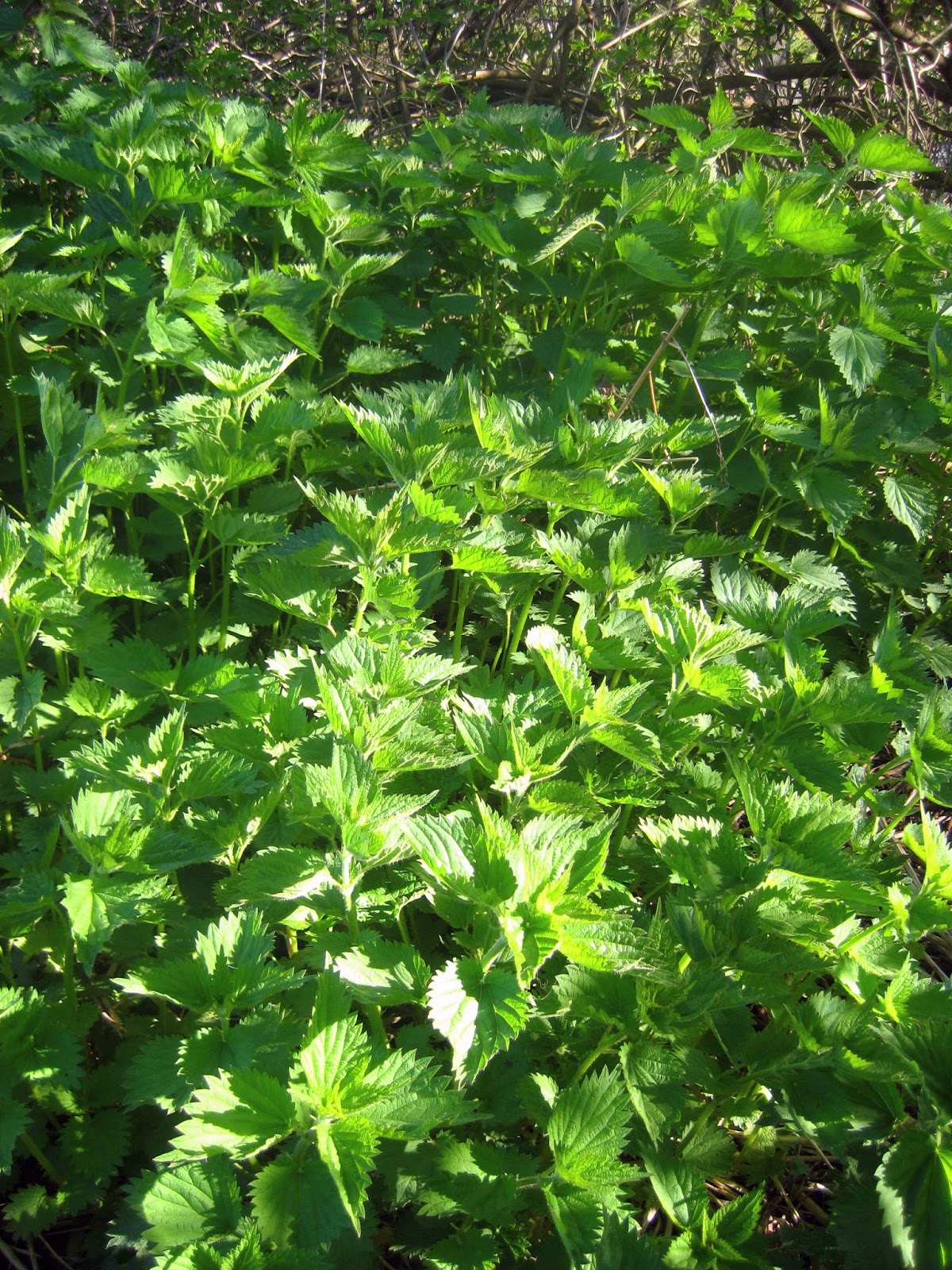
Stinging Nettles

Nettles, (Uritica dioica), are invaluable if you want one of the most nourishing plants around for your health. A word of caution though with stinging nettles, they sting due to the formic acid they contain. Nettles need to be grown somewhere where no one will be wandering around touching all the plants. It is a spreading perennial that will take over if allowed. But having access to the health benefits of nettle plants is wonderful for anyone needing a boost of energy or help with blah skin, hair or nails. Nettles make a great cooked green like spinach but best in the spring when the plants are young and tender. Be sure to wear long sleeves, long pants and gloves when in your nettle patch. Nettles are important as a food source for the larvae stages of many butterfly types, namely the peacocks, red admiral, commas, painted lady and tortoiseshell butterflies.


TIPS ON HOW TO HARVEST YOUR HERBS

Harvest late morning after they've dried off but before the heat of the day.

Most fresh herbs are highest in potency right before they bloom. But using the flowering tops is fine as well.

To dry, you can bundle small bunches by the stems and hang to dry in an airy, cool area out of direct sunlight. When dry, strip off the leaves and store in paper bags.
Don't crumble the leaves until you are ready to use them or you'll lose much of the essential oils.

Or you can spread your herbs out on the trays of a kitchen dehydrator for much quicker drying.

Before the arrival of frost, harvest all the herbs you desire and dry for storage. Herbs like basil are best if the leaves are frozen in ice cubes. Basil doesn't dry well without losing potency.

When ready to use the usual rule is 1 teaspoon dry herb to 1 cup of hot water.
If using fresh, use 3 teaspoons herb to 1 cup hot water.

You don't want to boil tender teas. You pour the hot water over them and let simmer. On average, teas only need about 3 - 5 minutes to simmer. then sweeten with honey and add a wedge of lemon if desired.

A very simple, yet delicious way to enjoy mint is to simply add a few fresh stems to a pitcher of water. The water will have a subtle, refreshing minty taste. Start with fresh plant material with each refill of the pitcher. If the water hasn't been drunk within about 3 days, toss and start again because it'll start to taste funky.

 A memory I have as a child is being sent down to the water's edge of a pond to collect enough fresh mint to fill a large soup pot. If you do collect plants outside of your own yard, be sure the plants you are cutting were not sprayed with pesticides or herbicides. Mint shouldn't need either one but just know for sure before using the plants. Rinse off the stems of any dirt, cut to fit in the pot (stems, leaves and any flowering tops), add enough water to cover the plants, cover the pot and gently bring to the boiling point but don't boil, Cock the lid so it doesn't overflow and let the tea simmer about 5 to 10 minutes, depending how strong you like your tea. You don't want to simmer it too long or you'll lose the important essential oils in the steam. Strain out the plant material and add sugar to taste. For sweet tea, 1 cup sugar to a gallon of tea is tasty. Enjoy a cup of hot tea right away and let the rest cool and store in the refrigerator for ice tea. This is wonderfully refreshing on a hot day.


Find a spot to set up a little table and chairs and enjoy your serenity time with a cup of tea. You'll soon discover that once your tea garden is established it returns every spring with little effort on your part. Annuals such as chamomile, fennel and dill reseed themselves and perennials such as the mints, lavender, sage, nettles and thyme return from the established root ball. If you had rosemary overwintering in the house, it can be brought back outside in the spring.