Meadow Muffin Gardens logo

Friday, April 25, 2014

Lupus, Skin Cancer Awareness and the Ideal Sun Hat


It is that time of year when the itch to get outside gets stronger with every sunny day. 
May is Lupus Awareness Month and other than the endless question being "what is Lupus", there is very little understanding about what the sun has to do with anything.

Photosensitivity or sensitivity to ultraviolet (UV) light, is a common symptom of lupus. It can take different forms. Some people actually become ill after exposure with nausea, fatigue and headaches. Others may suffer a flare-up with arthritis, alopecia, pleurisy or mucosal ulcerations. The most common problem with UV exposure is the lupus rash. The rash may be limited to just those areas of exposure or it may pop up on different parts of the body. For more information on the effects from the sun you may be interested in this past post.

I've always adored the sun and I love the warmth of summer...as long as I have my hat. I keep an extra in my car, the truck and never go on a day trip without it. Just the idea of breaking down and having to walk without my hat is cause for anxiety because I know within five minutes of the blaring sun I'll feel "out of it" and nauseated. I can do most anything I want outside as long as I keep moving (not just sitting around) and I have the protection of a five inch brim, no baseball caps for me. However, I know better than to spend long days either at the beach or on a boat out in the water. Don't be foolish and let yourself be put in situations where you feel trapped and can't get away from the sun's intensity.

Since I'll never be able to enjoy summer activities without smashing down any type of nice hair style, the least I can do is not feel self-conscious about my head gear.
There are hundreds of sun hats out there, and I've become very selective.
First, it is a rare day when there isn't a breeze in the air, and little is more annoying than the feeling that your hat is going to blow off your head. No one wants to walk around all day with one hand holding the thing in place. So my hat of choice must have ties or a drawstring.

Second, those cheap straw hats with the loose weave are worthless for protection. A minimum sun protective rating of UPF 40+ is necessary and worth the extra money from the suppliers who offer such a thing.

Third is the size of the brim. Baseball caps offer shade on the face but won't do much else. Needed is an all around brim of 4 to 5 inches. I've tried the typical 3 inch brim and can feel the difference.

Last is the style of the hat itself. Two things about that:
First, since a hat goes wherever I go, it is nice to have a portable hat that folds. Very annoying is traveling in an airplane with a stiff hat that can't be stowed anywhere. Nice is a hat that is meant to be folded and tucked in a suitcase or totebag.
Second, forget those big floppy things. They may look sexy and flattering in pictures, but are the most annoying things to actually wear. Your peripheral vision is obliterated and you definitely lose self-confidence maneuvering in a crowd when you feel your vision is obstructed. 

So the selection is limited, but I have found sites that do carry attractive, practical sun hats for men, women and children.
The picture hats below are from wonderful companies with sun protection as their objective. The average cost is between $35 and $55 but worth it. Just like a good pair of shoes that will get worn to their bitter end.

Sun protection is certainly not just for those with a condition. Skin cancer is a very real concern for everyone of all skin types. Those little spots that turn up on the face years later probably got their start during childhood bouts with sunburn. Already sporting two little facial scars from removal of such basil cells, common sense with sun exposure is nothing to brush off in our desire for a tan or our vanity. The hat below is a favorite and is from Sunday Afternoons.


Frecklescalifornia Sun Hat

Sun Precautions Sun Hat
Coolibar Sun Hat

Thursday, April 24, 2014

Beat The Bugs Before They Bite


 Protecting yourself or your children against annoying insects doesn't have to mean using a product with a warning label.

DEET, also known as diethyl-meta-toluamide, is very common in commercial bug repellent sprays, but research tells us that its use can have detrimental effects on brain cells and can interact with some medications. Anything put onto our skin is absorbed into the body, not something you want for yourself or your loved ones. Try a natural mosquito and fly repellent instead. Just keep in mind that plant based repellents do wear off faster than the commercial chemical based sprays, so you will have to reapply as needed.

Many of our "weeds" can be our friends. We have to remember that the definition of a weed is a plant that seemingly serves no purpose. In the carpets we like to call our lawns, yes they may be unsightly, but when it comes to medicinal value, these plants definitely have a value.

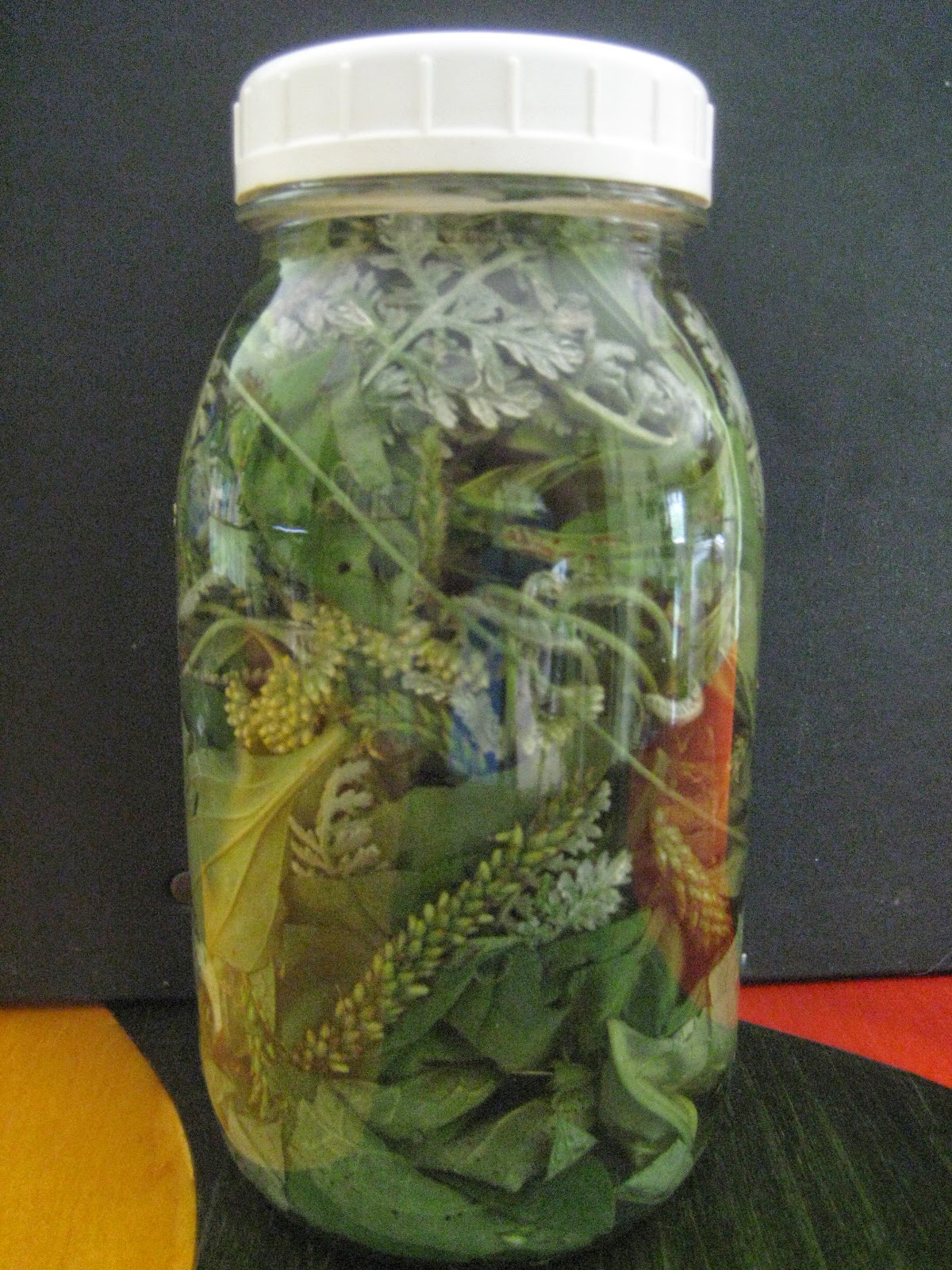
The vinegar based sprays are ideal for people who are seeking an organic, herbal product but would rather avoid the concentration of essential oils. We're relying solely on the strength of the herbs themselves. Vinegar as a base is good for three reasons; bugs don't care for it, it makes for great herbal infusions, and it evaporates, therefore there is no need to worry about smelling like vinegar.

We have two choices for apple cider vinegar herbal infusion bug sprays. Plantain, Yarrow and Comfrey in the first and Plantain and Lavender in the second. They are both very good and given choices, people like to compare to see which herbs work better for them. Also, being Yarrow and Comfrey should be avoided during pregnancy, the Plantain and Lavender spray is a safer choice while pregnant.(Lavender essential oil is optional). Without the potency of added essential oils, if used on young children it is better to choose either of these sprays rather than the Yarrow Tincture spray or the Herbal Body Oil. Those are more potent due to the essential oils and are best for older children and adults.

Plantain, Yarrow, Comfrey Vinegar
Plantain, Lavender Vinegar


Apple cider vinegar can also be used as a safe alternative to help repel fleas on your pets.
Fleas don't like the way vinegar tastes and smells. As some of the chemicals used for topical flea treatments can be just as dangerous as the pests themselves, knowing other ways to keep them off your pets are always good to know. Depending on the type of dog or cat, you may find it best to dilute it first with water. Being dogs have such a keen sense of smell, straight vinegar may be too unappealing for some. Also, depending on the thickness of your dog's fur, the amount that actually touches the skin will vary, and direct contact for some dogs may be drying for the skin. The bottles hold 4 oz. so add another 4 oz of distilled water and put into a larger spray bottle. Avoid getting the spray into your pet's eyes. For use with pets, especially cats, only use the herbal based deterrents without the essential oils. (Lavender essential oil can be used at a low dilution) Cat's don't have the enzymes to break down some essential oils and over time they can become toxic to the liver and kidneys.


Plantain (Plantago major), also known as the “Mother of Herbs,” it is one of the top backyard medicinal plants. A commonly seen "weed", one of those plants we step on without a thought, but should you suffer a bee or bug bite quickly chew a leaf to get the juices flowing and apply to the bite. You'll be amazed at how quickly it neutralizes the sting. It has astringent, soothing, antimicrobial properties that make it a very beneficial herb to use for our all natural bug deterrent spray.

Gardeners who utilize companion planting are probably aware that Yarrow (Achillea millefolium) is used for warding off detrimental insects.The wild white Yarrow is more medicinal than the garden varieties, so that is what is used for the infusions.
Yarrow is usually associated with the story of Achilles' using it to stop the bleeding wounds of his soldiers in battle. Its astringent, antiseptic and analgesic properties add up to it being a first aid kit in one plant.

Another wonderful healer is Comfrey (Symphytum officinale)  a large fuzzy garden herb. Rich in chlorophyll, minerals and mucilage the leaves are an ally for cooling and soothing irritated skin. Comfrey is a great aid in easing irritation from bug bites already there.

Lavender (Lavandula) has been used as a bug repellent for centuries. It was used in the past to protect clothes and linens from the infestation of moths and other insects. The strong scent of lavender is disliked by numerous types of bugs, flies and mosquitoes are just what usually comes to mind as the problem pests. Lavender also prevents the spread of infection caused by existing bug bites and controls the itching and inflammation often associated with them.


Yarrow Tincture Herbal Spray
The Yarrow Tincture spray relies on three effective essential oils: Catnip, Citronella and Lavender.
This spray should not be used on pregnant women or very young children. It is too potent with the concentration of the added essential oils. It can be used on dogs if diluted, not at all on cats.

Catnip (Nepeta cataria) has many other uses besides entertaining our feline companions. Studies have found that nepetalactone, a compound found in catnip was more effective than DEET at repelling mosquitoes. DEET can cause rashes and eye irritation so if there is an alternative why not try it?
A pricey essential oil but it works.
Citronella (Cymbopogon, various species) is a strong, potent lemon scented plant  in which most of us are familiar with in patio type candles.


Herbal Body Oil
  For those who worry about the tincture or vinegar based sprays being too drying for their skin, there is the choice of an herbal infused body oil. So you would get a moisturizer and bug repellent at the same time. Beat It Bug Oil is also very soothing as an after-bite remedy by reducing itch, swelling and inflammation. For spot treatments it may be easier to apply to a cotton ball first. Use your own discretion as to how often you will have to reapply.

A variety of bitter garden herbs are first infused in an olive oil base for an extended period of time. Rue, tansy, sage, feverfew and southernwood are a few of the choices one has for repelling mosquitoes, no see ums, knats, and black flies.

Strong acting essential oils such as citronella, lavender, geranium, peppermint, eucalyptus and lemongrass are excellent examples of strong aromas pesty flying insects do not like. Various combinations of these oils are used for their antiseptic and insect repelling qualities.


So get out there and enjoy the great outdoors.


Monday, April 21, 2014

Traditional Remedies for Sunburn and Minor Burn Care

After a long cold winter season, many people look so forward to spring, that as soon as an opportunity presents itself, they soak up those warm rays by laying out in the sun. As therapeutic as that is for our moods, and most likely we do need the vitamin D, too much of a good thing all at once can easily result in a nasty sunburn.

Or perhaps, a distraction while preparing something on the stove resulted in a burn from the burner, a hot frying pan grease spatter, or even scalding water while draining pasta. Accidents happen and if you know how to handle these mishaps quickly, you can treat a first degree burn at home and help the damaged tissue to repair itself without too much pain or blistering.

Burns affect the skin by setting off immune responses within the body. It depends on the severity of the tissue damage that prompts a particular immune response.
When the immune response is prompted, platelets and inflammatory cells are sent to the affected area and cause the swelling and redness. With serious burns, infection is a threat, therefore the immune system sets off chemical reactions to stop invasion of bacteria.

With a first-degree burn the outer layer of skin, called the epidermis, is damaged. This results in inflammation and reddening. These burn types can be treated at home.

A second-degree burn has damage to not only the epidermis but deeper to the next layer of skin called the dermis. This results in not only the reddening and swelling, but also blistering. Blisters are very painful and infection is a possibility, therefore should be treated with medical attention.

The most serious burns are called third-degree, where multiple dermal layers have been burned away.
Third-degree burns require immediate medical attention. Depending on how much of the body is affected, these injuries are often down to the bone and can result in shock, infection and possibly be life threatening.

The following home remedies use ingredients that are known to help heal the damaged tissue from burns, but if you suspect your burn involves more than that described as first-degree, go to the doctor for advice on treatment.

The Meadow Muffin Gardens shop carries four varieties of sunburn and/or minor burn home remedy choices.

One uses the benefits of herbal oils and coconut, one uses the wonderful aloe plant,  one uses the properties of apple cider vinegar, and the last uses raw honey. They are all beneficial and suited for the different preferences of the consumer. Some people find salves too greasy for their liking, others don't like the smell of vinegar and others may have to be careful with allergies. So here you have choices from which to see what works for you.


The herbal balm/salve is based on the therapeutic properties of St. Johnswort and Comfrey. St. Johnswort flowers contains hypericin, which is beneficial for injuries involving the nerves.
Comfrey contains allantoin, which stimulates and accelerates tissue repair.
Coconut oil is wonderful for its cooling nature and often used for burn remedies. The unique combination of fatty acids in coconut oil help relieve inflammation and provide the needed moisture.


Added are three very beneficial essential oils: lavender, rosemary and carrot seed.
Lavender's reputation for burn treatment originates with the "father of aromatherapy", the french chemist Dr. Rene-Maurice Gattefosse. He burned his hand very severely and quickly immersed it into a vat of lavender oil. He was amazed how quickly his hand healed without scarring.
Rosemary, a cleansing and antiseptic oil, combines with lavender to increase circulation, reduce inflammation and relax the muscles. All of which aid in regenerating new tissue.
Carrot seed oil is added because its beta-carotene levels have been shown to protect against ultra-violet-induced skin cancer.

In using a salve on a burn, you have to remember to first cool down the skin. Don't apply the salve immediately since you don't want to trap in the heat.
First step for burned skin is to cool down the damaged skin with wet, cold compresses. Don't use ice water or ice cubes. Once the burn is cool, it is ok to apply applications of this soothing salve. You don't want to apply it before the skin is completely cooled or you'll be trapping in the heat. The advantage of a salve is that it stays put and provides protective coverage without needing a bandage, therefore the burn has needed exposure to the open air.


Radiation as part of cancer treatment can result in reddening to the treated area of skin. This herbal salve/balm can be very beneficial to help with radiation burns or if used right from the start of treatment, to help prevent the reddening.


The second choice is a very cooling Aloe Vera Spray utilizing the great reputation of Aloe Vera.
If the idea of touching your child's sensitive sunburned skin sends him/her into a panic, then perhaps a spray treatment is more ideal than a salve.

Aloe Vera (Aloe barbadensis) is known for its use in cooling, soothing and healing burns. The sword like leaves of this tropical plant contain a gel and a sticky yellow residue called latex. It's the perfect aid for burn emergencies. Aloe juice reduces inflammation and redness, heals the skin and helps prevent scarring.

As in the salve, this Aloe Vera spray contains the wonderful benefits of lavender and carrot seed essential oils. Aloe Vera gel or this type of spray can be applied as soon as possible. They will do a great job to cool down the heat in the skin and perhaps prevent the inflammation and reddening. Again, this is referring to first degree burns.


Next, we have yet another use for utilizing  popular Apple Cider Vinegar and Witch Hazel.

Rose & Elderflower Vinegar Spray uses the natural anti-inflammatory properties of Apple Cider Vinegar. When applied to sunburn, the skin receives soothing pain relief, and the nutrients naturally in apple cider vinegar help replenish those lost in the skin when damaged.

Vinegar acts as an antiseptic, meaning it prevents proliferation of bacteria, viruses and yeast that could trigger infection.

Roses have long been used in skin care due to their high content of vitamin C and ability to calm down inflammation.

Women have long used Elderflowers for their mildly astringent and stimulating properties. It was used to keep the face smooth, youthful and free from blemishes. Elder flower water alone is very good for sunburn, infusing it in vinegar enhances the therapeutic value even more.

The floral vinegar infusion is diluted with the cooling, astringent, anti-inflammatory benefits of witch hazel. Witch hazel is a standard home remedy in many a household.


Last we have the reemerging respect for using honey as a burn remedy.This picture and listing promote this as a facial mask but it can also be used for burns.

 Honey was a conventional therapy in fighting infection up until the early 20th century, at which time its use slowly vanished with the advent of penicillin. Topical use of honey has a long history. In fact, it is considered one of the oldest known wound dressings.
Now the use of honey in wound care is regaining popularity again, as researchers are determining exactly how honey can help fight serious skin infections.

When considering using honey for the treatment of wounds, it's extremely important to understand that there's a major difference between raw honey and the highly processed "Grade A" type honey you find in most grocery stores. The latter is more akin to high fructose corn syrup, which is more likely to increase infection, and should never be used to treat topical wounds.  High quality RAW honey will help draw fluid away from your wound and suppress the growth of microorganisms. Part of what gives raw honey its antibacterial properties is an enzyme called glucose oxidase, which the worker bees excrete into the nectar. This enzyme releases low levels of hydrogen peroxide when the honey makes contact with your wound. A chemical reaction between the honey and the tissue also makes your wound smell good. Heated honey will destroy this perishable enzyme which is why you want to only use raw honey for this application.
When applied to the skin, honey may serve as a barrier to moisture and keep skin from sticking to dressings.  covered it with a piece of gauze and changed the dressing with new honey every 12 hours.

St. Johnswort

Comfrey
Lavender
Aloe Vera
Rose and Elderflowers


Sunday, March 9, 2014

Go Natural in Bird Housing with Gourds


Returning birds are scoping out the areas for ideal nesting sites.
If you planted birdhouse gourds last year and have them drying somewhere, March (we are in zone 6)
is the time to clean them up and get them hung.


Gourd houses for wild birds are the oldest bird houses used by man. They make excellent bird homes. Native North Americans were the first to craft gourds into bird houses to attract wild birds. - See more at: http://www.the-scoop-on-wild-birds-and-feeders.com/gourdhouses.html#sthash.qF3iepda.dpuf
Gourd houses for birds are the oldest bird houses used by man, and it is said that Native Americans were the first to provide such a craft to attract the wild birds.

Birds that are cavity nesters are the types who are most likely to use gourds for their nesting sites. Swallows, wrens, chickadees, woodpeckers finches and bluebirds are all types who will  take up residents.
Wrens, in particular, like a swaying birdhouse and most likely will check out several of these gourds before choosing one.

Tree Swallows

Purple Martin
Purple Martins prefer gourds over most other nesting materials. Being social creatures, swallows prefer to nest within close proximity to one another of their own species, so it will work to hang the gourds along a line or around a pole system.  Other cavity nesters are often territorial and will chase away other birds of their own kind while being tolerant of a different species nesting nearby.


Gourds have many advantages over a typical box type bird house.
Being this type of gourd us usually 8 to 10 inches across, this provides a very roomy area for the young, avoiding any crowding.
There is more depth from the entrance hole to the bottom, so it is much safer from predators. Sparrows are known to invade the nesting areas of other birds, much to the aggravation of people trying to encourage Bluebirds and Purple Martins to take up residence. Sparrows can be a problem with Bluebird boxes but don't seem to like swinging gourds.
Metal Purple Martin houses are often made of metal. Though lightweight and easier to hoist up on the pole, metal is a poor insulator from heat and cold. Natural materials such as wood and gourds are much better at protecting the young from temperatures that could prove fatal, such as a cold snap in June or unusual heat.
Last, the natural color of gourds seems to be preferred by wild birds than those houses that are brightly decorated.

Gourd houses for wild birds are the oldest bird houses used by man. They make excellent bird homes. Native North Americans were the first to craft gourds into bird houses to attract wild birds. - See more at: http://www.the-scoop-on-wild-birds-and-feeders.com/gourdhouses.html#sthash.qF3iepda.dpuf

wallows, Purple Martins and other social species of birds. These species like to raise their young in close proximity to one another of the same species. To accommodate these types of birds, gourds can be strung up on a line or a pole system with arms that provide a place to hang the gourds. Hanging the gourds in clusters like this will support the setting these social birds thrive on.
Wrens, Chickadees, Woodpeckers, House Sparrows, Bluebirds, and some Finches are all cavity nesters who will use a gourd house. (Don't be surprised if some birds use your gourd for a place to roost and not bother to build a nest in it.
- See more at: http://www.the-scoop-on-wild-birds-and-feeders.com/gourdhouses.html#sthash.qF3iepda.dpuf
By early spring, your gourds have been drying for about 5 - 6 months and if they made it through without rotting they should look like the picture on the left.

They will be very light in weight, the seeds inside will rattle, and the outside appearance will look like dried, flaky mold spots.
Just take a wire brush or sandpaper and brush this off till it is nice and smooth.

With a serrated knife cut out a hole about midway from the bottom with a diameter hole size of about 3/4 - 1 inch. If you want to attract Purple Martins in particular, make the hole about 2 inches and in the shape of a crescent. This shape is easy for the Martins to get in and out, but deters Blackbirds and Starlings. Poke additional little holes or small slits into the bottom of the gourd for drainage.

Using an ice pick poke holes through the top near the stem so that you have two holes, one on each side. Now take a crochet hook and poke through both of these holes. Loop a length of about 12 inches of weatherproof cord rope around the hook and pull back through these holes. Now your cord rope is through the birdhouse and it is ready to hang.

Be sure to hang these bird house gourds at least five feet off of the ground to be out of the reach of nosy predators, such as cats. They can be hung in groups to attract the social types or spaced out around your area to attract those species who are more territorial.

It is difficult to clean these types of birdhouses after the season is over, so I don't even bother. Usually by winter's end, they either have fallen, have woodpecker holes in them, or they become a home to a mouse or a bees nest. I never cared since I try to have a fresh batch of gourds each spring.


Need to know how to grow birdhouse gourds?


Tuesday, March 4, 2014

An Orange Belly, a Flash of Blue, Spring is Not Far Behind


There are many who believe it is only a hobby when we feed the birds. That it is nature's way for them to survive without the need for our interference. Very true if the natural habitat of our wild animals hadn't been so tampered with by the effects of suburban sprawl and the destruction of their sources of food, water and shelter.

The cost of bird seed is definitely a worthwhile expense worked into the budget of many people. Never knowing if there really is enough available food and water, it is very satisfying to know that perhaps the birds in one's own backyard are surviving because of a little help.

Bird stations attract the many seed eating birds at the feeders and clinging type birds at the suet feeders. But what about when we notice the early return of the insect eating birds such as the robins and bluebirds?

During the warm season when there is an abundance of all kinds of food, the adult bird's diet is usually about 60% plant (mostly fruit) and 40% animal (mostly worms and insects). But during cold weather, robins must switch to eating almost nothing but fruit. Birds keep warm by shivering, and the sugar from berries give them the energy to shiver. A source of fruit trees, shrubs and vines also helps fuel them for the remainder of their migrations.

During the winter the cold weather keeps hanging fruit fresh, but eventually the old fruit starts to ferment, which means the sugars turn to alcohol. If robins eat too many fermented berries, they get clumsy and are at risk for accidents and predators. As soon as the weather warms up and insects emerge, robins ignore the old berries and concentrate on worms and the early bugs.

A berry favored by the bluebird is that of the Flowering Dogwood (Cornus Flordia). Dogwood berries are higher in fat content than many other berries. However, these trees are usually stripped bare by mid-winter. Bluebirds can also feed on Pokeweed berries, Virginia creeper, Sumac, Rose hips, Mistletoe, Hackberry, Cedar, and Holly.
The female Holly provides an abundance of berries for late winter and early spring.

Winter weary bird lovers are thrilled when we get our first glimpse of a robin or the flash of a bluebird. Spring cannot be far behind once we see the return of these creatures.

Once we see the swallows, we can rest assured that the bleak, cold weather is behind us.


To make life easier for these flying friends of ours we can offer the mealworms and raisins, but better yet, if you have the space, we can plan ahead and add berry supplying trees, shrubs and vines to our lawns and naturalized landscaping.

A list of good berry sources include:
Ash,  Chokecherry, Chokeberry, Dogwood, Hackberry, Hawthorne, Holly, Magnolia, Mulberry, Serviceberry, Viburnums, Autumn Olive (this one is now considered an invasive but the birds do love the berries), American plum, Wild cherry, Wild crabapple, Barberry (also considered an invasive).

These three bushes pictured below usually have berries still on them by March.

Viburnum

Winterberry Holly

Barberry bush

Most of these berry bushes are very manageable for smaller landscapes. They are beautiful in the spring with either white or pink blossoms, therefore add interest to your yard throughout all the four seasons.
Check your garden supply centers as a source for native trees and shrubs for your area. However, be aware that many sold at the typical nursery are for ornamental purposes and may not be what you want if your goal is for late season berries. An example is the Bradford Pear. Though beautiful in the spring with its white flowers, the resulting berry is too large and hard and not really a desired food source.
Check the Extension Office for your county to learn where you can find native trees and shrubs for your zone.

Welcome Spring!
Flowering Dogwood

Washington Hawthorne

Wild Crabapple


Saturday, February 22, 2014

Can't Control the Weather, So Control the Attitude


Winter has been brutal with one snowstorm after another and temperatures in the teens or lower. It seemed as soon as the roads were decent and paths shoveled, we would get bombarded with the work all over again.
I am sure many people swore they were going to move or at least questioned themselves as to why they live where they do. There are times when we would say to ourselves that we are sick of all the work, that we are just tired of it all.

This Sunday afternoon the temperature climbed to 50 degrees and it was so good to get outside for a spell to clear the head, get some fresh air and enjoy the warmth of the sun. 
I've always enjoyed sitting on the front stoop of our deck, sipping a cup of coffee, and contemplating all the work that needs to be done once the weather breaks. With each passing winter season I stare at this Norway Maple and reflect on how tall it is getting. One of the few trees planted on our property when we moved here 23 years ago, its height makes me wonder what we've been doing all these years. Was it time well spent or should we have gone in another direction.

It just takes a little sun to seep into our bones to rejuvenate our spirits and get the energy flowing. Rather than that "to do" list continuing to drag down my mood, I can feel the old spark returning to "get started".

I suppose that is why people tolerate the cold and inconvenience of the winter months. We can always depend on the four seasons to keep us from getting bored. By the time we are sick of the summer's heat, the nip of fall and all the harvest activities are right around the corner. Once all the trees are bare and the gray of November settles upon us, we have the excitement of a white Christmas to look forward to. By the time our backs are aching from dealing with shoveling, we are counting down the days till spring. And when we are sick that fifth "mud" season, the sun returns in all its glory to heat things up, dry things out, and get us motivated in the planning of our summer vacations.

There is a magic in the arrival of spring. By March, we are so antsy from our need for fresh air, color, sun,  and the connection with growing things, that the draw to nurseries for those first potted flowers is like a balm for the soul.

By now, those who cannot wait to get their hands back in the dirt of their gardens are busy with the planting and care of their seedling trays, and dream of this year's garden plan layout.

Once the temperatures are tolerable, yet still too far away from the last frost date, it is time to get done those other outdoor projects such as early spring pruning and cutting back those now depleted seed heads on the plants left to feed the birds. It is time to check on our lawn and garden equipment and get things in working order before the mowing season begins. 

Perhaps it is that first smell of newly cut grass that helps us relish in the satisfaction of making it through another winter and helping us to really appreciate why we live where we do.

And then when we see the return of the swallows, the first daffodils, that first fluttering butterfly......
Perhaps we need the silence of winter to get us to notice


Sunday, February 2, 2014

Men's Personal Skin Care, Safe Cosmetics


 "The average American man uses six personal care products a day containing more than 80 unique chemicals. Many of these chemicals are absorbed into the skin, inhaled or ingested, and the vast majority of cosmetic chemicals have not been assessed for safety."

This statement was made by The Campaign For Safe Cosmetics. Usually when we think of the cosmetic industry we think of women, but this industry includes the personal care products used by men as well. Shampoos, shaving products, body wash, body sprays, deodorants...all advertised to help our men smell alluring and masculine.
 
Walk into a beauty salon, cosmetic section, or skin care line aisle and it is easy to get enveloped in the wonderful smells and appealing promises of slick packaging and advertising. You may wonder what the big deal is with the ingredients. I mean, you would think if there was something potentially harmful in these products they wouldn't be on the shelves in the first place.

It was very surprising for me to learn how vague the labeling laws are in the perfume and cosmetics industry. Unlike the food industry, there are no legal standards for organic or natural personal care products sold in the United States.

Ignorance is not bliss when it comes to you and your family's health. Don't think there isn't a problem just because the majority hasn't yet balked and made a fuss. Don't let the influence of the glamour and subliminal messaging behind the cosmetic industry cause you to doubt yourself just because you seem to appear the odd one in your circle. Sure, when you look around, people seem just fine. But if you or someone you love develops a condition where you find yourself far too often in some doctor's office, take another look around you. Our society really does have a lot of health issues.

 Our health is our own responsibility, therefore it is up to us to be willing to educate ourselves and search and check the labels on these products. The skin is our body's largest organ, and anything we apply to ourselves enters through the layers of skin into the bloodstream. Yes, the old saying about "anything in moderation" is true with most things, but...The cosmetic industry claims the amount of these ingredients are not high enough to pose a threat, but the problem lies in the fact that we use these products day in and day out.  Our kidneys and liver do their best to eliminate toxins but what about those that over time have been stored within the fatty tissues of the skin. The long term effects are a concern. The body reacts by way of allergic and inflammatory reactions, the havoc played on the the endocrine system is not always fully understood and the source of the problems are often hard to pinpoint.

 It is time to fight back and take control of your health and that of your family. Read labels and educate yourselves. Don't expect the FDA or the government to have your family's best interests in mind as long as our society is so influenced by big business.

Two red flag ingredients that we are hearing a lot about are phthalates and parabens.  
For a more detailed list of what is in your personal care items:

Phthalates are a class of chemicals used to dissolve ingredients so that they blend efficiently. 
Diethyl phthalate (DEP) found in fragrance-containing products such as cologne, aftershave, shaving cream, shampoos and deodorants. You may not see the actual term, phthalates, on the label but you will see them listed as parfum or fragrance. Sounds harmless labeled that way but studies are finding links between DEP and reproductive development in infants and sperm damage in adult men. A study by Harvard University researchers have found that the regular use of colognes can increase the levels of DEP in the body.

Parabens are synthetic preservatives used in foods, pharmaceuticals, cosmetics and personal care products such as deodorants, moisturizers and shampoos. Look for the words: methylparaben, ethylparaben, propylparaben and butylparaben. Parabens allow skin care products to survive for months or even years in your medicine cabinet; however, they also enter your body through your skin when you use these products. According to Mercola.com, the body can absorb as much as five pounds of cosmetic chemicals every year. 

Parabens can mimic hormones in the body and disrupt functions of the endocrine system, which involves the thyroid, adrenals and reproductive system. The endocrine system releases hormones into the bloodstream and is involved in a number of functions related to reproduction, waste elimination, digestion and metabolism.
You won’t, unfortunately, find phthalates listed on a label, but the best way to avoid them is look out for ‘fragrance’ or parfum’.

Colby College's Clean Makeup website reports that parabens can mimic estrogen and disrupt the body's hormone system. Your body does not easily break down synthetic estrogen, and it can accumulate in fat cells, including breast tissue.

Other product ingredients to look for in your personal care supplies:
Lead acetate: found in men's hair and beard colorants.
Coal tar: found in dandruff shampoos
Triclosan: found in antibacterial soaps and deodorants
Formaldeyde: found in some shampoos and body washes

Men today realize the importance of taking care of their appearance and it all starts with skincare. Men often don't experience the same problems as women with dry skin. Being men produce testosterone, their skin tends to be thicker than that of of women, therefore women tend to show signs of aging sooner then men. After the age of about 30, the skin's oil glands reduce their production and the loss contributes to drier skin. Both sexes experience a drop in hormonal levels as they age, but in women the decline is more dramatic. With a decrease in estrogen levels the skin's fat layer begins to thin, resulting in the skin becoming not only drier, but less firm and more fragile. Women usually know to use a moisturizer as part of their skin care routine, but men often don't even think about that until later in adulthood. Men need to moisturize too.

With awareness comes the task of making wise decisions. Rather than worry, educate yourself with the truth behind the hype, and be a wise consumer by going the all natural route.

Shaving Balm, Facial Moisturizer

Private Parts Powder

Fungal Powder


Stick Deodorant

Facial Moisturizer

Aftershave Splash

Dandruff Scalp Oil

Shampoo