Meadow Muffin Gardens logo

Tuesday, July 1, 2014

Third Hand Smoke, Another Risk Factor

 Another post about the dangers of smoking, cancer and COPD may seem like just "preaching to the choir". No one wants the obvious pointed out yet again, and may sum it up as the rants from a bitter and angry person. I'd say it's more of a consuming sadness over the outcome from poor choices made by those we love. It's the frustration in dealing with the "it could have been so different" or the "if only" regrets people have later in life.

Being we now know what we know about the damage done by cigarettes, it is infuriating to think the tobacco industry could be fully aware of the potential addiction and  harm caused by smoking.
The cigarettes themselves are made to almost ensure the smoker will enjoy it enough to want another and another to the point of physical and emotional dependence. 

Most of us are aware that smoking is not only limited to the smoker but the chain of potential harm extends to anyone, pet or human, that breathes the same air. But did you know there is such a thing as Third Hand Smoke?


Third Hand Smoke is the residue that drifts and settles on every object in the vicinity...the walls, ceiling, floor, linens, curtains and every piece of furniture in between. It floats and adheres to our clothes, our pet's fur, our hair, etc. I can recall as a child, how periodically, my mother would attempt to remove the grimy, yellowing film which discolored the kitchen walls.

Anyone in real estate must dread trying to sell a home where the occupants were smokers. Trying to remove that odor embedded into everything is a real challenge. Soap and water just won't cut it. Smoke residues are alkaline, therefore, something acidic like vinegar is necessary. The risk with vinegar is that it may affect the color of fabric and carpets. Carpets are such a challenge, it may be best to just remove them from the home.

Children and pets are dependent and vulnerable. The consequences of the choices made by the adults in the home may not be apparent at the time, and no one can prove anything to place blame should a health condition arise, but it seems ludicrous to even take that chance. Children touch everything and inevitably their fingers end up in their mouths. With pets, their mouths are like a child's hands, and again whatever is touched is ingested.

The main particles left behind after smoking are carcinogens, nicotine, cyanide, radioactive polonium-210, lead, arsenic, butane and aromatic hydrocarbons.
Those particles left behind don't just sit there. There is a phenomenon called an off-gassing process which is where gases are exposed to the air from the particles left over on the surroundings after smoking. Toxins are released into the atmosphere long after the smoking is over.

Just a reminder to those parents who excuse their behavior by saying they don't expose their children or pets because they go outside to smoke. They are still exposing their clothes, hair and skin to those settling smoke residues, which by the way, don't just float harmlessly away. People must realize that whatever is on their lips when they kiss their child, or their fingers when they reach for their child, ends up on that child.

Being we live in a social society where it is nearly impossible to avoid human contact and indoor air, the best we can do is just be aware of our surroundings. If you attend a social gathering where smoking is allowed, be sure to shower and wash your clothes when you get home. Protect your children and pets by not being too meek to voice your rules concerning their welfare. If people think you are being a b***h, so be it. Women are too often raised that it is impolite to speak up or make waves. That "good little girl syndrome" has to be put aside when it is necessary to be a mother bear.

We hear it all the time that knowledge is power and ignorance is bliss. Anyone who jokes that the less they know, the happier they'll be, is a fool. Back in the day when smoking was commonplace and people honestly didn't know how harmful it can be, it was understandable how they could have continued such a habit. But today, with information being so accessible, and the advances in scientific research, there is no excuse for the "I didn't know". The grown children of those who are now paying the price with their health, can see first hand what can happen. The children have no choice but to witness the heartbreak of watching their loved ones suffer through chronic illness and potential early death. They may be put in the position to become caregivers at a time in life when they are trying to raise their own families, and rather than enjoying grandchildren, parents are struggling just to breathe.

Resist the temptation to use cigarattes as a way to relieve tension, calm the nerves, curb the appetite, peer pressure, relieve depression, or whatever other reasoning there is.
Better to choose a friend who will stick by you when the chips are down, not actually stick it to you.


Tuesday, May 20, 2014

Notes From The Heart of a Caregiver


“Believe, when you are most unhappy, that there is something for you to do in the world. So long as you can sweeten another's pain, life is not in vain.” – Helen Keller

1. Caregivers don't plan on this bend in the road of their lives. No one can possibly know what they are going to do in a given situation until it is upon them. There is no job training to prepare one for the demands of a job that often only seems to be going downhill. With medical conditions and the effects of the drugs to manage those conditions, it may seem that there is always something popping up, adding another specialist to the list of diagnosis codes.
This is a journey that takes both the loved one and the caregiver down one of the most vulnerable, emotional, guilt ridden, physically exhausting roads imaginable.

2. Opening up your home to an aging parent may seem the most practical, cost efficient, loving thing to do. But do not do this in haste or through emotion. Go into it with your eyes wide open and realize that once you make the decision, you are all in for the long haul.
Don't naively assume that other family members will be so grateful that the burden was taken off their minds that they will be making a trodden down path to your door offering empathy and help. Don't assume that their knowing their loved one is well taken care of amidst family and not forced to be placed in an Assisted Living facility that it will bring the family closer together. Don't assume the amount of money save will be appreciated in leaps and bounds.
Notice I mentioned the word "assumed" several times.

3. You cannot force anyone to become a caregiver or step up to the plate for a commitment. We all have busy lives, and carving out time for additional responsibilities, may not be welcomed with any kind of enthusiasm. Do not assume that just because the time has come, the children will offer their services. Yes, he or she is their parent too, but you cannot assume they will think the way you do, or for that matter, to even feel obligated. Be very prepared for the fact that you, the caregiver, just may be labeled the martyr, who has no right interrupting their lives or making demands based on principal. Their attitude may be on a subconscious level, it may be their way of handling the reality that they are slowly losing their parent. The outcome is that however things become construed, the caregiver may feel shunned and wonder where it all went so wrong.

4. With or without a family support system, the time may come where outside services are necessary. Physical limitations, chronic or terminal health considerations, and safety issues all take their toll on everyone involved and oftentimes it is best to get an opinion from a third party who can observe the family dynamics from the outside looking in.
When I took matters into my own hands and inquired into a support group and requested the help of a Case Manager, we all received wonderful advice about available services. But it also backfired. I opened up our family's business to an "outsider", to which in their minds I had no right to do. So, yes I got the information I needed and the siblings were educated a bit as to the reality of the situation, but in the end we became more estranged than before.

5. Don't bang your head against the wall trying to make someone happy. How people view things in life became ingrained throughout their lifetimes. Some people have trouble gracefully accepting from others without that feeling of something being owed in return. It is very hard to change such an attitude, since it is usually tied in with a fierce sense of pride and independence. Some people see the "cup as half full", others only see the "cup as half empty" and focus on the negative. If someone is unhappy with themselves, that attitude shows, and it has nothing to do with the other person. It has nothing to do with not being grateful. It's just a black cloud that won't rain itself out, it continues to hang low and heavy, blocking out any sunshine trying to poke through. If you as the caregiver are trying to maintain a home full of positive energy and warmth, be that ray of sunshine and just shine on. Continue to do what you've been doing as far as keeping the person safe, clean, fed and medically cared for. If they choose to wallow in their misery, it is their choice, don't get pulled down too.

6. Separate yourself, step outside the situation, or it will destroy you. Love them and supply their needs but consider it a job, and do it well. You cannot try to drag a mule to water for very long without finding yourself on the losing end of the rope.We all know that unless we take care of ourselves, we are of no use in caring for another. If you don't have family support for respite care so you can get away from the situation, even if it's just a few hours at a time, then seek outside services. There are agencies who have people who will come to your home, and just keep your loved one company at minimal cost to you. Check with your County's Area Agency On Aging for information as to what's available in your area for help in the care of your parent. They can also let you know where support groups are held. It is imperative that you have someone to talk to, vent to, to know there are others in your situation.
Be sure to try to get enough sleep, eat properly and exercise. Neglect of these basic needs will catch up to you and you may find yourself falling into your own state of depression or you may develop a chronic illness due to the prolonged stress.

7. You, the child, has now become the parent.
I don't know how many times I have asked myself the following questions:,
 "What am I dealing with?"
 "What is real and what is learned helplessness?"

When this journey began, satisfying my mother's every need was very rewarding. After a lifetime of hard work, worries and stress, she was simply worn out. Taking care of her was a pleasure if it made her life easier and a time of deserved rest. Our mother admitted she enjoyed being taken care of. But as any parent knows, that stage of being totally depended upon eventually ends. And by then the parent is more than ready for this next stage because it it physically and emotionally exhausting.

When a parent moves into their adult child's home, he or she may always feel a guest. You can do everything in your power to make them feel welcome, help them feel productive, and giving them their own space to make it their own. How the parent adapts to his or her new living situation has a lot to do with personality and medical condition.  Two years later we still do not know if our mother's refusal to learn anything new, such as the kitchen appliances, is simply her lack of accepting change or a realistic health concern with developing Dementia. Regardless, the lack of self-sufficiency is a daily drain on whomever is depended upon for meals, laundry, hygiene, medications, errands, doctor appointments, etc.

Over time, this daily frustration resulted in many an episode of an outburst, followed with bouts of guilt and apologies. Just like a parent nagging a child about what is good for them, the caregiver may be at wit's end trying to get through to the parent about what he or she should be doing to improve their mental and physical health. Too much television, too much laying in bed, unwillingness to exercise, refusal to go outdoors in the fresh air, refusal to leave their room and join the rest of the family, refusal to get involved in activities that would be wonderful mental stimulation with people, the list goes on and on. This nagging ends up being just like the type of parenting called "policing" where the child simply tunes out the tone of voice of the parent.

While very aware and empathetic towards the life she must now accept, it is maddening to witness  a person letting life pass her by, holed up in her room with little interest in much of anything. Anti-depressants may or may not work. For some people anti-depressants can make all the difference, but in other cases the side effects outweigh the potential benefits.
Do your research into these medications and consider natural supplements and alternative therapy.

8. Our children were a full time responsibility at one time, needing round the clock care and supervision. The difference between the demands of children and the demands of a elderly parent, is that with children, their learning experiences move them forward towards autonomy and independence. Older parents with failing health are moving backwards. Those who see them every day have no choice but to witness the heartbreaking loss of their losing a little more of themselves, bit by bit, and being fully aware of it. For those dealing with confusion and forms of Dementia, they say the hardest part is the early stages when the patient knows what is happening to them and feeling powerless to stop it. The denial, anger, and depression that follows can be overwhelming. To know one is losing their physical health on top of losing one's mental faculties is gut wrenching. It is very, very difficult for the caregiver to realize that no matter what efforts they make to try to bring a smile back on their loved one's face is often futile and it is time to just leave them alone. Accepting what is, is a monumental hurdle to being able to go on.

9. It is hard enough when a person is forced to deal with the loss of their physical abilities, but when their mental faculties become threatened as well, it can become a sinking hole.
It may feel like that person you knew may be gone. You have to remember that even if your parent cannot communicate or behave the way you are familiar, that person is still in there, and needs all the support possible.
With the stages of Dementia, it is often a grieving process that the family has to go through twice. We have to understand that this person who is our parent is still our mother or father. The person may not be who we remember, but we have to stop trying to force him or her to be that person again. It is different now, a new normal, and we must accept their loss even while they are still living. Then when the day comes when their physical body passes on, we must grieve their loss all over again.

10. Accept what is with each day. As you notice something new in behavior or level of ability, deal with another chip falling away and accept it. As with many things in life, it is what it is, and we have no choice but to accept what we cannot change.

11. The decision to place a loved one in an Assisted Living or Skilled Nursing facility is often the most guilt ridden, tortured decision a person has to make. But if the care of a parent becomes overwhelming, it may be what is best for everyone in the end.
Do your homework before you need a facility. Do not wait until your loved one is in the hospital and then you are scrambling to "find a bed" somewhere. You don't want to just find a place anywhere that has an opening. Yes, availability will fluctuate, but at least you'll already have an idea of what facilities are of the quality care you want and you are aware of the costs involved. Understand the difference between Assisted Living and Skilled Nursing Care. Find out what benefits your parent's insurance has in regards to long term care. Find out what the co-pays will be, and for how long, find out what will be the out-of-pocket expenses. Know ahead of time exactly what the financial status is so you'll know if your parent qualifies for medicaid, program benefits, or if it will be mostly private pay. Make sure someone is designated to be the Financial Power of Attorney and someone is designated to be the Medical Power of Attorney. Privacy laws are very strict and even though you may be immediate family, you'll be in for many a headache unless the paperwork is there, especially if the parent can no longer make important decisions regarding his or her welfare.

12. You may not be able to change a situation, but you can change your attitude towards that situation. When I was first told this little tidbit of advice I was furious. I felt my husband hadn't a clue what we were going through and was pointing a finger at me for being part of the problem. But the more I thought about it, I realized that my relationship with my mother was so intertwined and complicated that my frustrations resulted not in her change of attitude, but in pulling her down even further out of guilt and feeling a burden.


Try to maintain your sense of humor. Sometimes things can get so ridiculous that instead of losing your temper from exasperation, take a moment to breathe and you may end up just laughing.


Friday, April 25, 2014

Lupus, Skin Cancer Awareness and the Ideal Sun Hat


It is that time of year when the itch to get outside gets stronger with every sunny day. 
May is Lupus Awareness Month and other than the endless question being "what is Lupus", there is very little understanding about what the sun has to do with anything.

Photosensitivity or sensitivity to ultraviolet (UV) light, is a common symptom of lupus. It can take different forms. Some people actually become ill after exposure with nausea, fatigue and headaches. Others may suffer a flare-up with arthritis, alopecia, pleurisy or mucosal ulcerations. The most common problem with UV exposure is the lupus rash. The rash may be limited to just those areas of exposure or it may pop up on different parts of the body. For more information on the effects from the sun you may be interested in this past post.

I've always adored the sun and I love the warmth of summer...as long as I have my hat. I keep an extra in my car, the truck and never go on a day trip without it. Just the idea of breaking down and having to walk without my hat is cause for anxiety because I know within five minutes of the blaring sun I'll feel "out of it" and nauseated. I can do most anything I want outside as long as I keep moving (not just sitting around) and I have the protection of a five inch brim, no baseball caps for me. However, I know better than to spend long days either at the beach or on a boat out in the water. Don't be foolish and let yourself be put in situations where you feel trapped and can't get away from the sun's intensity.

Since I'll never be able to enjoy summer activities without smashing down any type of nice hair style, the least I can do is not feel self-conscious about my head gear.
There are hundreds of sun hats out there, and I've become very selective.
First, it is a rare day when there isn't a breeze in the air, and little is more annoying than the feeling that your hat is going to blow off your head. No one wants to walk around all day with one hand holding the thing in place. So my hat of choice must have ties or a drawstring.

Second, those cheap straw hats with the loose weave are worthless for protection. A minimum sun protective rating of UPF 40+ is necessary and worth the extra money from the suppliers who offer such a thing.

Third is the size of the brim. Baseball caps offer shade on the face but won't do much else. Needed is an all around brim of 4 to 5 inches. I've tried the typical 3 inch brim and can feel the difference.

Last is the style of the hat itself. Two things about that:
First, since a hat goes wherever I go, it is nice to have a portable hat that folds. Very annoying is traveling in an airplane with a stiff hat that can't be stowed anywhere. Nice is a hat that is meant to be folded and tucked in a suitcase or totebag.
Second, forget those big floppy things. They may look sexy and flattering in pictures, but are the most annoying things to actually wear. Your peripheral vision is obliterated and you definitely lose self-confidence maneuvering in a crowd when you feel your vision is obstructed. 

So the selection is limited, but I have found sites that do carry attractive, practical sun hats for men, women and children.
The picture hats below are from wonderful companies with sun protection as their objective. The average cost is between $35 and $55 but worth it. Just like a good pair of shoes that will get worn to their bitter end.

Sun protection is certainly not just for those with a condition. Skin cancer is a very real concern for everyone of all skin types. Those little spots that turn up on the face years later probably got their start during childhood bouts with sunburn. Already sporting two little facial scars from removal of such basil cells, common sense with sun exposure is nothing to brush off in our desire for a tan or our vanity. The hat below is a favorite and is from Sunday Afternoons.


Frecklescalifornia Sun Hat

Sun Precautions Sun Hat
Coolibar Sun Hat

Thursday, April 24, 2014

Beat The Bugs Before They Bite


 Protecting yourself or your children against annoying insects doesn't have to mean using a product with a warning label.

DEET, also known as diethyl-meta-toluamide, is very common in commercial bug repellent sprays, but research tells us that its use can have detrimental effects on brain cells and can interact with some medications. Anything put onto our skin is absorbed into the body, not something you want for yourself or your loved ones. Try a natural mosquito and fly repellent instead. Just keep in mind that plant based repellents do wear off faster than the commercial chemical based sprays, so you will have to reapply as needed.

Many of our "weeds" can be our friends. We have to remember that the definition of a weed is a plant that seemingly serves no purpose. In the carpets we like to call our lawns, yes they may be unsightly, but when it comes to medicinal value, these plants definitely have a value.

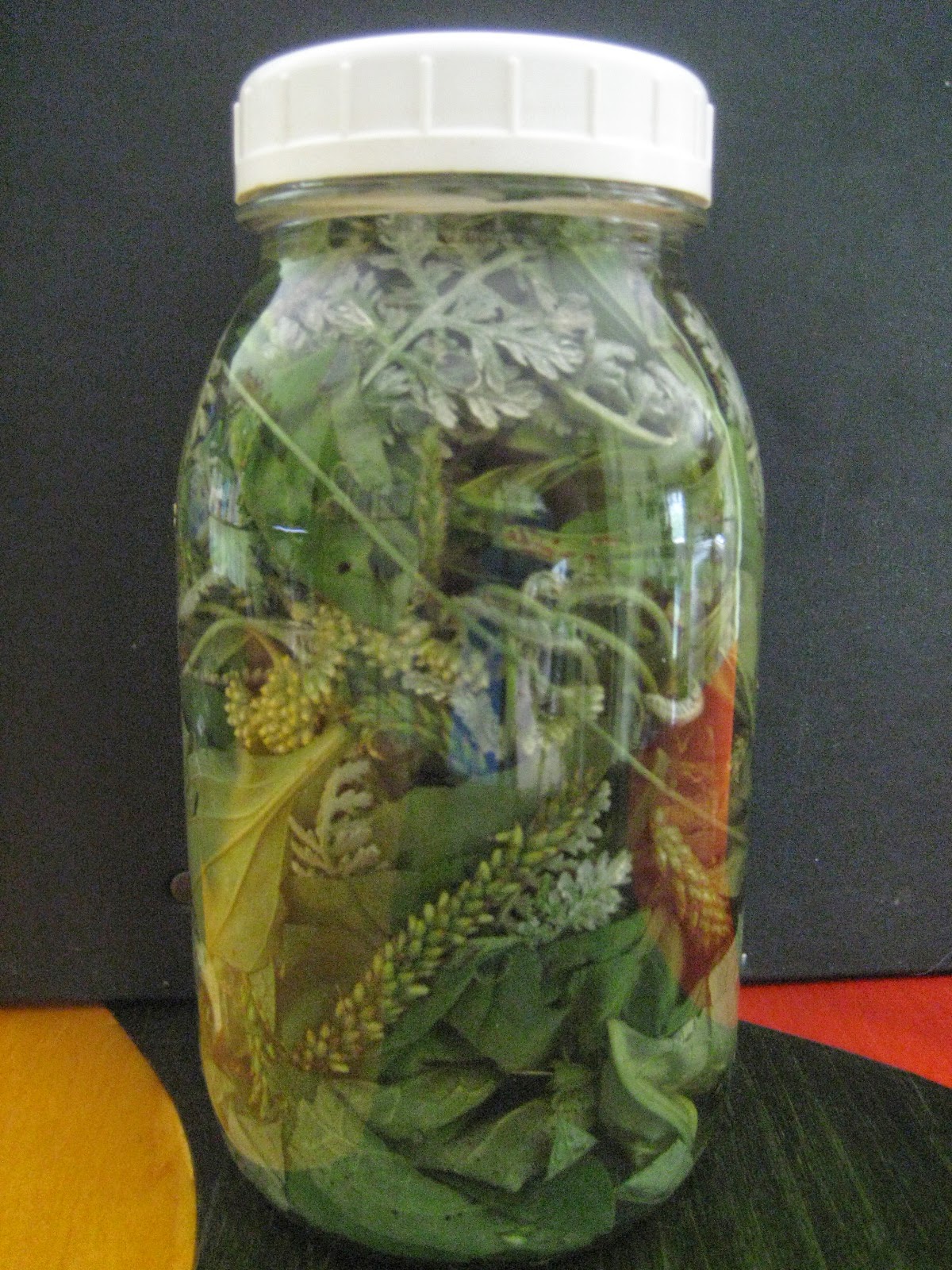
The vinegar based sprays are ideal for people who are seeking an organic, herbal product but would rather avoid the concentration of essential oils. We're relying solely on the strength of the herbs themselves. Vinegar as a base is good for three reasons; bugs don't care for it, it makes for great herbal infusions, and it evaporates, therefore there is no need to worry about smelling like vinegar.

We have two choices for apple cider vinegar herbal infusion bug sprays. Plantain, Yarrow and Comfrey in the first and Plantain and Lavender in the second. They are both very good and given choices, people like to compare to see which herbs work better for them. Also, being Yarrow and Comfrey should be avoided during pregnancy, the Plantain and Lavender spray is a safer choice while pregnant.(Lavender essential oil is optional). Without the potency of added essential oils, if used on young children it is better to choose either of these sprays rather than the Yarrow Tincture spray or the Herbal Body Oil. Those are more potent due to the essential oils and are best for older children and adults.

Plantain, Yarrow, Comfrey Vinegar
Plantain, Lavender Vinegar


Apple cider vinegar can also be used as a safe alternative to help repel fleas on your pets.
Fleas don't like the way vinegar tastes and smells. As some of the chemicals used for topical flea treatments can be just as dangerous as the pests themselves, knowing other ways to keep them off your pets are always good to know. Depending on the type of dog or cat, you may find it best to dilute it first with water. Being dogs have such a keen sense of smell, straight vinegar may be too unappealing for some. Also, depending on the thickness of your dog's fur, the amount that actually touches the skin will vary, and direct contact for some dogs may be drying for the skin. The bottles hold 4 oz. so add another 4 oz of distilled water and put into a larger spray bottle. Avoid getting the spray into your pet's eyes. For use with pets, especially cats, only use the herbal based deterrents without the essential oils. (Lavender essential oil can be used at a low dilution) Cat's don't have the enzymes to break down some essential oils and over time they can become toxic to the liver and kidneys.


Plantain (Plantago major), also known as the “Mother of Herbs,” it is one of the top backyard medicinal plants. A commonly seen "weed", one of those plants we step on without a thought, but should you suffer a bee or bug bite quickly chew a leaf to get the juices flowing and apply to the bite. You'll be amazed at how quickly it neutralizes the sting. It has astringent, soothing, antimicrobial properties that make it a very beneficial herb to use for our all natural bug deterrent spray.

Gardeners who utilize companion planting are probably aware that Yarrow (Achillea millefolium) is used for warding off detrimental insects.The wild white Yarrow is more medicinal than the garden varieties, so that is what is used for the infusions.
Yarrow is usually associated with the story of Achilles' using it to stop the bleeding wounds of his soldiers in battle. Its astringent, antiseptic and analgesic properties add up to it being a first aid kit in one plant.

Another wonderful healer is Comfrey (Symphytum officinale)  a large fuzzy garden herb. Rich in chlorophyll, minerals and mucilage the leaves are an ally for cooling and soothing irritated skin. Comfrey is a great aid in easing irritation from bug bites already there.

Lavender (Lavandula) has been used as a bug repellent for centuries. It was used in the past to protect clothes and linens from the infestation of moths and other insects. The strong scent of lavender is disliked by numerous types of bugs, flies and mosquitoes are just what usually comes to mind as the problem pests. Lavender also prevents the spread of infection caused by existing bug bites and controls the itching and inflammation often associated with them.


Yarrow Tincture Herbal Spray
The Yarrow Tincture spray relies on three effective essential oils: Catnip, Citronella and Lavender.
This spray should not be used on pregnant women or very young children. It is too potent with the concentration of the added essential oils. It can be used on dogs if diluted, not at all on cats.

Catnip (Nepeta cataria) has many other uses besides entertaining our feline companions. Studies have found that nepetalactone, a compound found in catnip was more effective than DEET at repelling mosquitoes. DEET can cause rashes and eye irritation so if there is an alternative why not try it?
A pricey essential oil but it works.
Citronella (Cymbopogon, various species) is a strong, potent lemon scented plant  in which most of us are familiar with in patio type candles.


Herbal Body Oil
  For those who worry about the tincture or vinegar based sprays being too drying for their skin, there is the choice of an herbal infused body oil. So you would get a moisturizer and bug repellent at the same time. Beat It Bug Oil is also very soothing as an after-bite remedy by reducing itch, swelling and inflammation. For spot treatments it may be easier to apply to a cotton ball first. Use your own discretion as to how often you will have to reapply.

A variety of bitter garden herbs are first infused in an olive oil base for an extended period of time. Rue, tansy, sage, feverfew and southernwood are a few of the choices one has for repelling mosquitoes, no see ums, knats, and black flies.

Strong acting essential oils such as citronella, lavender, geranium, peppermint, eucalyptus and lemongrass are excellent examples of strong aromas pesty flying insects do not like. Various combinations of these oils are used for their antiseptic and insect repelling qualities.


So get out there and enjoy the great outdoors.


Monday, April 21, 2014

Traditional Remedies for Sunburn and Minor Burn Care

After a long cold winter season, many people look so forward to spring, that as soon as an opportunity presents itself, they soak up those warm rays by laying out in the sun. As therapeutic as that is for our moods, and most likely we do need the vitamin D, too much of a good thing all at once can easily result in a nasty sunburn.

Or perhaps, a distraction while preparing something on the stove resulted in a burn from the burner, a hot frying pan grease spatter, or even scalding water while draining pasta. Accidents happen and if you know how to handle these mishaps quickly, you can treat a first degree burn at home and help the damaged tissue to repair itself without too much pain or blistering.

Burns affect the skin by setting off immune responses within the body. It depends on the severity of the tissue damage that prompts a particular immune response.
When the immune response is prompted, platelets and inflammatory cells are sent to the affected area and cause the swelling and redness. With serious burns, infection is a threat, therefore the immune system sets off chemical reactions to stop invasion of bacteria.

With a first-degree burn the outer layer of skin, called the epidermis, is damaged. This results in inflammation and reddening. These burn types can be treated at home.

A second-degree burn has damage to not only the epidermis but deeper to the next layer of skin called the dermis. This results in not only the reddening and swelling, but also blistering. Blisters are very painful and infection is a possibility, therefore should be treated with medical attention.

The most serious burns are called third-degree, where multiple dermal layers have been burned away.
Third-degree burns require immediate medical attention. Depending on how much of the body is affected, these injuries are often down to the bone and can result in shock, infection and possibly be life threatening.

The following home remedies use ingredients that are known to help heal the damaged tissue from burns, but if you suspect your burn involves more than that described as first-degree, go to the doctor for advice on treatment.

The Meadow Muffin Gardens shop carries four varieties of sunburn and/or minor burn home remedy choices.

One uses the benefits of herbal oils and coconut, one uses the wonderful aloe plant,  one uses the properties of apple cider vinegar, and the last uses raw honey. They are all beneficial and suited for the different preferences of the consumer. Some people find salves too greasy for their liking, others don't like the smell of vinegar and others may have to be careful with allergies. So here you have choices from which to see what works for you.


The herbal balm/salve is based on the therapeutic properties of St. Johnswort and Comfrey. St. Johnswort flowers contains hypericin, which is beneficial for injuries involving the nerves.
Comfrey contains allantoin, which stimulates and accelerates tissue repair.
Coconut oil is wonderful for its cooling nature and often used for burn remedies. The unique combination of fatty acids in coconut oil help relieve inflammation and provide the needed moisture.


Added are three very beneficial essential oils: lavender, rosemary and carrot seed.
Lavender's reputation for burn treatment originates with the "father of aromatherapy", the french chemist Dr. Rene-Maurice Gattefosse. He burned his hand very severely and quickly immersed it into a vat of lavender oil. He was amazed how quickly his hand healed without scarring.
Rosemary, a cleansing and antiseptic oil, combines with lavender to increase circulation, reduce inflammation and relax the muscles. All of which aid in regenerating new tissue.
Carrot seed oil is added because its beta-carotene levels have been shown to protect against ultra-violet-induced skin cancer.

In using a salve on a burn, you have to remember to first cool down the skin. Don't apply the salve immediately since you don't want to trap in the heat.
First step for burned skin is to cool down the damaged skin with wet, cold compresses. Don't use ice water or ice cubes. Once the burn is cool, it is ok to apply applications of this soothing salve. You don't want to apply it before the skin is completely cooled or you'll be trapping in the heat. The advantage of a salve is that it stays put and provides protective coverage without needing a bandage, therefore the burn has needed exposure to the open air.


Radiation as part of cancer treatment can result in reddening to the treated area of skin. This herbal salve/balm can be very beneficial to help with radiation burns or if used right from the start of treatment, to help prevent the reddening.


The second choice is a very cooling Aloe Vera Spray utilizing the great reputation of Aloe Vera.
If the idea of touching your child's sensitive sunburned skin sends him/her into a panic, then perhaps a spray treatment is more ideal than a salve.

Aloe Vera (Aloe barbadensis) is known for its use in cooling, soothing and healing burns. The sword like leaves of this tropical plant contain a gel and a sticky yellow residue called latex. It's the perfect aid for burn emergencies. Aloe juice reduces inflammation and redness, heals the skin and helps prevent scarring.

As in the salve, this Aloe Vera spray contains the wonderful benefits of lavender and carrot seed essential oils. Aloe Vera gel or this type of spray can be applied as soon as possible. They will do a great job to cool down the heat in the skin and perhaps prevent the inflammation and reddening. Again, this is referring to first degree burns.


Next, we have yet another use for utilizing  popular Apple Cider Vinegar and Witch Hazel.

Rose & Elderflower Vinegar Spray uses the natural anti-inflammatory properties of Apple Cider Vinegar. When applied to sunburn, the skin receives soothing pain relief, and the nutrients naturally in apple cider vinegar help replenish those lost in the skin when damaged.

Vinegar acts as an antiseptic, meaning it prevents proliferation of bacteria, viruses and yeast that could trigger infection.

Roses have long been used in skin care due to their high content of vitamin C and ability to calm down inflammation.

Women have long used Elderflowers for their mildly astringent and stimulating properties. It was used to keep the face smooth, youthful and free from blemishes. Elder flower water alone is very good for sunburn, infusing it in vinegar enhances the therapeutic value even more.

The floral vinegar infusion is diluted with the cooling, astringent, anti-inflammatory benefits of witch hazel. Witch hazel is a standard home remedy in many a household.


Last we have the reemerging respect for using honey as a burn remedy.This picture and listing promote this as a facial mask but it can also be used for burns.

 Honey was a conventional therapy in fighting infection up until the early 20th century, at which time its use slowly vanished with the advent of penicillin. Topical use of honey has a long history. In fact, it is considered one of the oldest known wound dressings.
Now the use of honey in wound care is regaining popularity again, as researchers are determining exactly how honey can help fight serious skin infections.

When considering using honey for the treatment of wounds, it's extremely important to understand that there's a major difference between raw honey and the highly processed "Grade A" type honey you find in most grocery stores. The latter is more akin to high fructose corn syrup, which is more likely to increase infection, and should never be used to treat topical wounds.  High quality RAW honey will help draw fluid away from your wound and suppress the growth of microorganisms. Part of what gives raw honey its antibacterial properties is an enzyme called glucose oxidase, which the worker bees excrete into the nectar. This enzyme releases low levels of hydrogen peroxide when the honey makes contact with your wound. A chemical reaction between the honey and the tissue also makes your wound smell good. Heated honey will destroy this perishable enzyme which is why you want to only use raw honey for this application.
When applied to the skin, honey may serve as a barrier to moisture and keep skin from sticking to dressings.  covered it with a piece of gauze and changed the dressing with new honey every 12 hours.

St. Johnswort

Comfrey
Lavender
Aloe Vera
Rose and Elderflowers


Sunday, March 9, 2014

Go Natural in Bird Housing with Gourds


Returning birds are scoping out the areas for ideal nesting sites.
If you planted birdhouse gourds last year and have them drying somewhere, March (we are in zone 6)
is the time to clean them up and get them hung.


Gourd houses for wild birds are the oldest bird houses used by man. They make excellent bird homes. Native North Americans were the first to craft gourds into bird houses to attract wild birds. - See more at: http://www.the-scoop-on-wild-birds-and-feeders.com/gourdhouses.html#sthash.qF3iepda.dpuf
Gourd houses for birds are the oldest bird houses used by man, and it is said that Native Americans were the first to provide such a craft to attract the wild birds.

Birds that are cavity nesters are the types who are most likely to use gourds for their nesting sites. Swallows, wrens, chickadees, woodpeckers finches and bluebirds are all types who will  take up residents.
Wrens, in particular, like a swaying birdhouse and most likely will check out several of these gourds before choosing one.

Tree Swallows

Purple Martin
Purple Martins prefer gourds over most other nesting materials. Being social creatures, swallows prefer to nest within close proximity to one another of their own species, so it will work to hang the gourds along a line or around a pole system.  Other cavity nesters are often territorial and will chase away other birds of their own kind while being tolerant of a different species nesting nearby.


Gourds have many advantages over a typical box type bird house.
Being this type of gourd us usually 8 to 10 inches across, this provides a very roomy area for the young, avoiding any crowding.
There is more depth from the entrance hole to the bottom, so it is much safer from predators. Sparrows are known to invade the nesting areas of other birds, much to the aggravation of people trying to encourage Bluebirds and Purple Martins to take up residence. Sparrows can be a problem with Bluebird boxes but don't seem to like swinging gourds.
Metal Purple Martin houses are often made of metal. Though lightweight and easier to hoist up on the pole, metal is a poor insulator from heat and cold. Natural materials such as wood and gourds are much better at protecting the young from temperatures that could prove fatal, such as a cold snap in June or unusual heat.
Last, the natural color of gourds seems to be preferred by wild birds than those houses that are brightly decorated.

Gourd houses for wild birds are the oldest bird houses used by man. They make excellent bird homes. Native North Americans were the first to craft gourds into bird houses to attract wild birds. - See more at: http://www.the-scoop-on-wild-birds-and-feeders.com/gourdhouses.html#sthash.qF3iepda.dpuf

wallows, Purple Martins and other social species of birds. These species like to raise their young in close proximity to one another of the same species. To accommodate these types of birds, gourds can be strung up on a line or a pole system with arms that provide a place to hang the gourds. Hanging the gourds in clusters like this will support the setting these social birds thrive on.
Wrens, Chickadees, Woodpeckers, House Sparrows, Bluebirds, and some Finches are all cavity nesters who will use a gourd house. (Don't be surprised if some birds use your gourd for a place to roost and not bother to build a nest in it.
- See more at: http://www.the-scoop-on-wild-birds-and-feeders.com/gourdhouses.html#sthash.qF3iepda.dpuf
By early spring, your gourds have been drying for about 5 - 6 months and if they made it through without rotting they should look like the picture on the left.

They will be very light in weight, the seeds inside will rattle, and the outside appearance will look like dried, flaky mold spots.
Just take a wire brush or sandpaper and brush this off till it is nice and smooth.

With a serrated knife cut out a hole about midway from the bottom with a diameter hole size of about 3/4 - 1 inch. If you want to attract Purple Martins in particular, make the hole about 2 inches and in the shape of a crescent. This shape is easy for the Martins to get in and out, but deters Blackbirds and Starlings. Poke additional little holes or small slits into the bottom of the gourd for drainage.

Using an ice pick poke holes through the top near the stem so that you have two holes, one on each side. Now take a crochet hook and poke through both of these holes. Loop a length of about 12 inches of weatherproof cord rope around the hook and pull back through these holes. Now your cord rope is through the birdhouse and it is ready to hang.

Be sure to hang these bird house gourds at least five feet off of the ground to be out of the reach of nosy predators, such as cats. They can be hung in groups to attract the social types or spaced out around your area to attract those species who are more territorial.

It is difficult to clean these types of birdhouses after the season is over, so I don't even bother. Usually by winter's end, they either have fallen, have woodpecker holes in them, or they become a home to a mouse or a bees nest. I never cared since I try to have a fresh batch of gourds each spring.


Need to know how to grow birdhouse gourds?


Tuesday, March 4, 2014

An Orange Belly, a Flash of Blue, Spring is Not Far Behind


There are many who believe it is only a hobby when we feed the birds. That it is nature's way for them to survive without the need for our interference. Very true if the natural habitat of our wild animals hadn't been so tampered with by the effects of suburban sprawl and the destruction of their sources of food, water and shelter.

The cost of bird seed is definitely a worthwhile expense worked into the budget of many people. Never knowing if there really is enough available food and water, it is very satisfying to know that perhaps the birds in one's own backyard are surviving because of a little help.

Bird stations attract the many seed eating birds at the feeders and clinging type birds at the suet feeders. But what about when we notice the early return of the insect eating birds such as the robins and bluebirds?

During the warm season when there is an abundance of all kinds of food, the adult bird's diet is usually about 60% plant (mostly fruit) and 40% animal (mostly worms and insects). But during cold weather, robins must switch to eating almost nothing but fruit. Birds keep warm by shivering, and the sugar from berries give them the energy to shiver. A source of fruit trees, shrubs and vines also helps fuel them for the remainder of their migrations.

During the winter the cold weather keeps hanging fruit fresh, but eventually the old fruit starts to ferment, which means the sugars turn to alcohol. If robins eat too many fermented berries, they get clumsy and are at risk for accidents and predators. As soon as the weather warms up and insects emerge, robins ignore the old berries and concentrate on worms and the early bugs.

A berry favored by the bluebird is that of the Flowering Dogwood (Cornus Flordia). Dogwood berries are higher in fat content than many other berries. However, these trees are usually stripped bare by mid-winter. Bluebirds can also feed on Pokeweed berries, Virginia creeper, Sumac, Rose hips, Mistletoe, Hackberry, Cedar, and Holly.
The female Holly provides an abundance of berries for late winter and early spring.

Winter weary bird lovers are thrilled when we get our first glimpse of a robin or the flash of a bluebird. Spring cannot be far behind once we see the return of these creatures.

Once we see the swallows, we can rest assured that the bleak, cold weather is behind us.


To make life easier for these flying friends of ours we can offer the mealworms and raisins, but better yet, if you have the space, we can plan ahead and add berry supplying trees, shrubs and vines to our lawns and naturalized landscaping.

A list of good berry sources include:
Ash,  Chokecherry, Chokeberry, Dogwood, Hackberry, Hawthorne, Holly, Magnolia, Mulberry, Serviceberry, Viburnums, Autumn Olive (this one is now considered an invasive but the birds do love the berries), American plum, Wild cherry, Wild crabapple, Barberry (also considered an invasive).

These three bushes pictured below usually have berries still on them by March.

Viburnum

Winterberry Holly

Barberry bush

Most of these berry bushes are very manageable for smaller landscapes. They are beautiful in the spring with either white or pink blossoms, therefore add interest to your yard throughout all the four seasons.
Check your garden supply centers as a source for native trees and shrubs for your area. However, be aware that many sold at the typical nursery are for ornamental purposes and may not be what you want if your goal is for late season berries. An example is the Bradford Pear. Though beautiful in the spring with its white flowers, the resulting berry is too large and hard and not really a desired food source.
Check the Extension Office for your county to learn where you can find native trees and shrubs for your zone.

Welcome Spring!
Flowering Dogwood

Washington Hawthorne

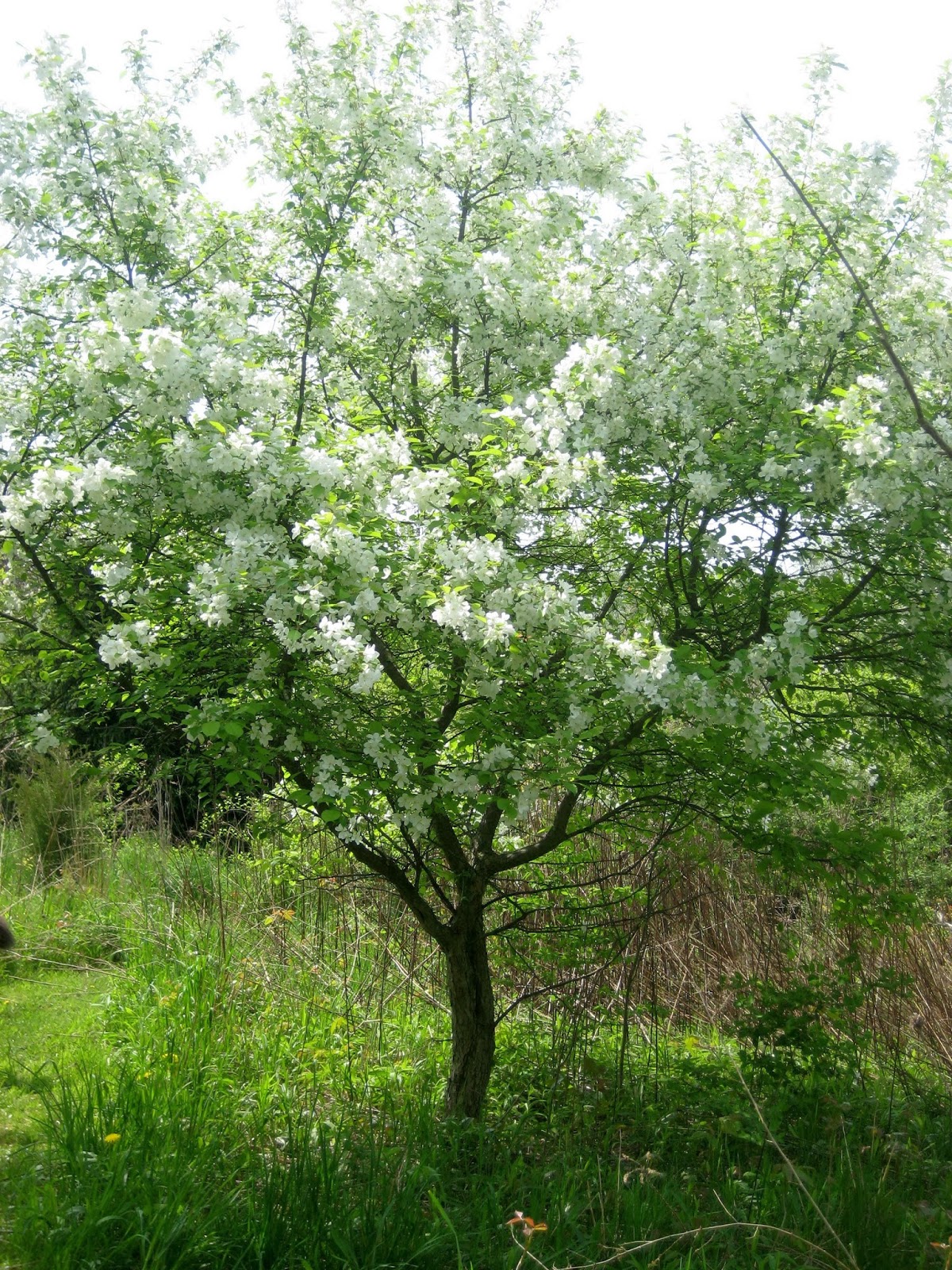
Wild Crabapple